When we think about microorganisms our minds quickly jump to herpes and mould, disease and decay. But not all microbes are malign. In fact, many of them are indispensable to our diets, are used in the production and refinement of foodstuffs, and are often responsible for their aromas and tastes. To name just a few examples, think of bread, beer, salami, and cheese.
The production of soy sauce in accordance with the traditional Japanese model also requires microbes. This was one of the reasons that motivated Caroline Kulangara to try her hand at making a shoyu soy sauce for her own use in her kitchen at home. Around fifteen years ago, she carried out some small experiments with mould fungi in a few fermentation crocks. As a microbiologist, she had no fear of microscopic organisms, she had been working with them for many years at the Swiss Tropical and Public Health Institute in Basel. Another motivation was her voracious consumption of soy sauce. “I love soy sauce and I use it instead of salt in almost every dish I prepare,” she is telling me all this in her soy sauce brewery in the Iselin district, which she opened in 2018. The early experiments in her kitchen are far in the past now.
Multicultural and complex processes
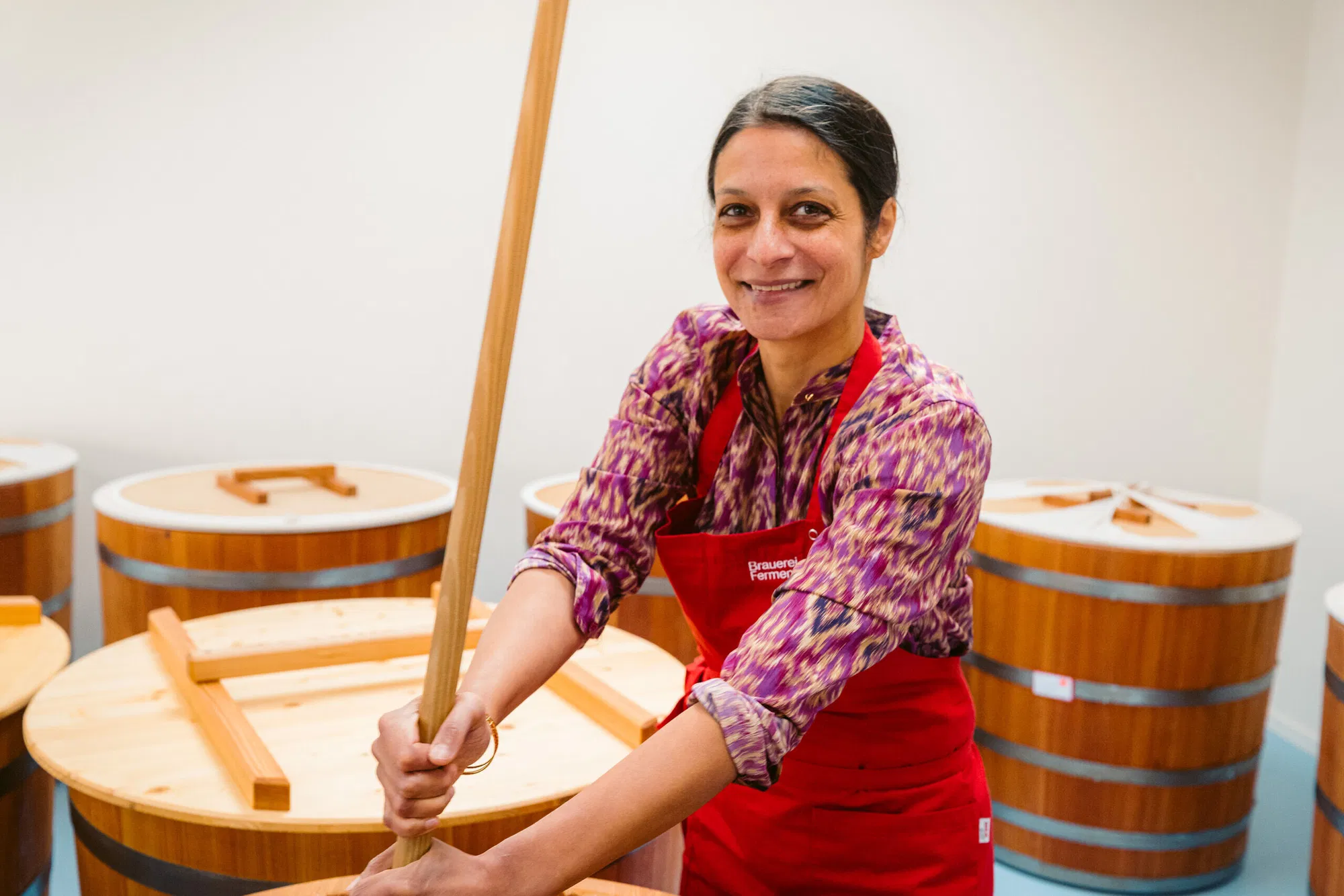
“In Japan, the art of brewing soy sauce is passed down through the family.” Caroline tells me as she shows me the equipment she uses to make her shoyu, her bracelets jingling gently. Her filigree jewellery, the colourful patterned blouse, her complexion, and eyes – it seems pretty clear that Caroline’s ancestors were not Japanese. “My father is Indian, my mother is German,” she laughs. “Whenever I say, ‘that’s how they do it in Japan,’ I only know because I have read about it.” Caroline has never been to Japan; she has never visited a traditional shoyu brewery. Nevertheless, she is a professional when it comes to the three-stage fermentation process for soybeans.
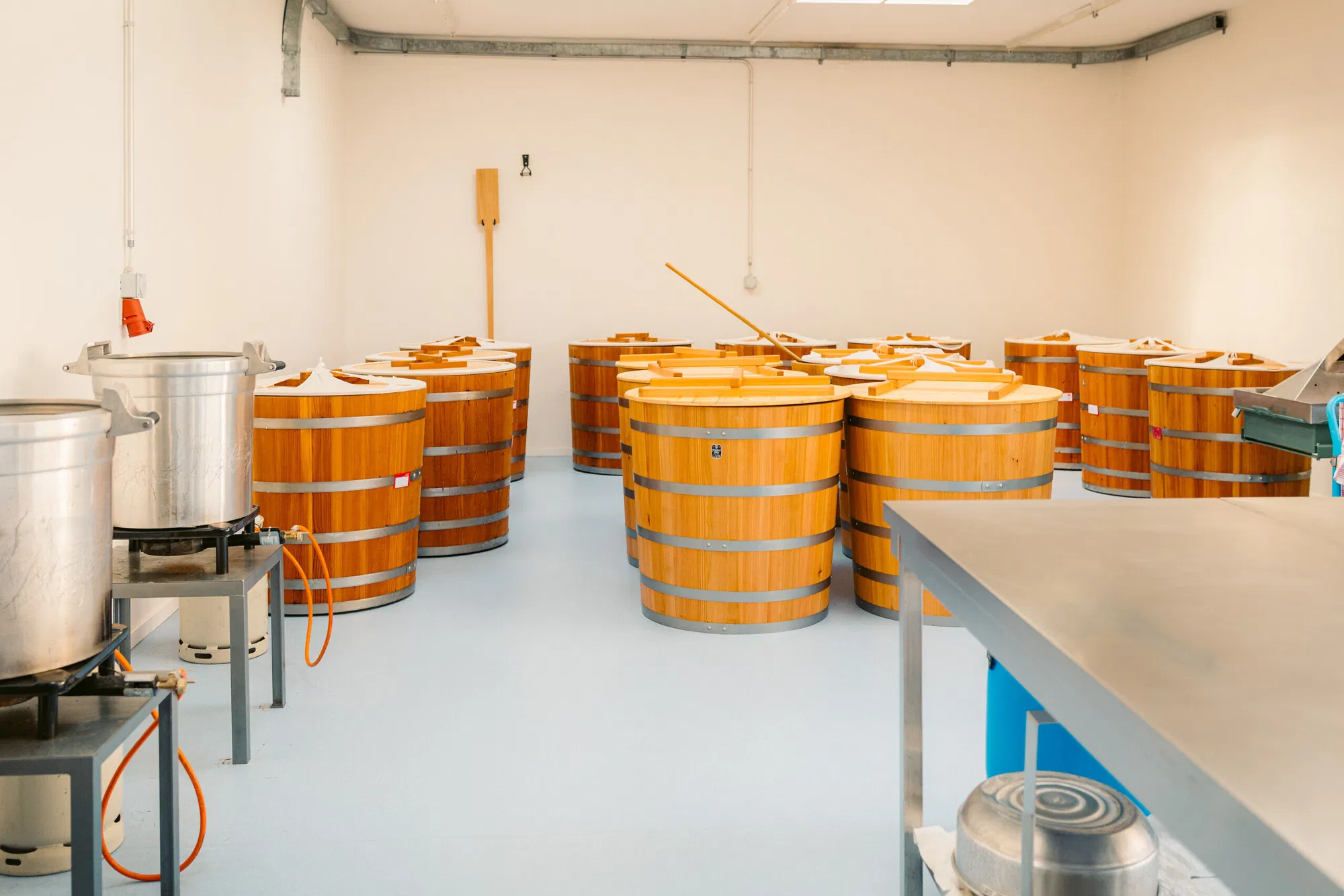
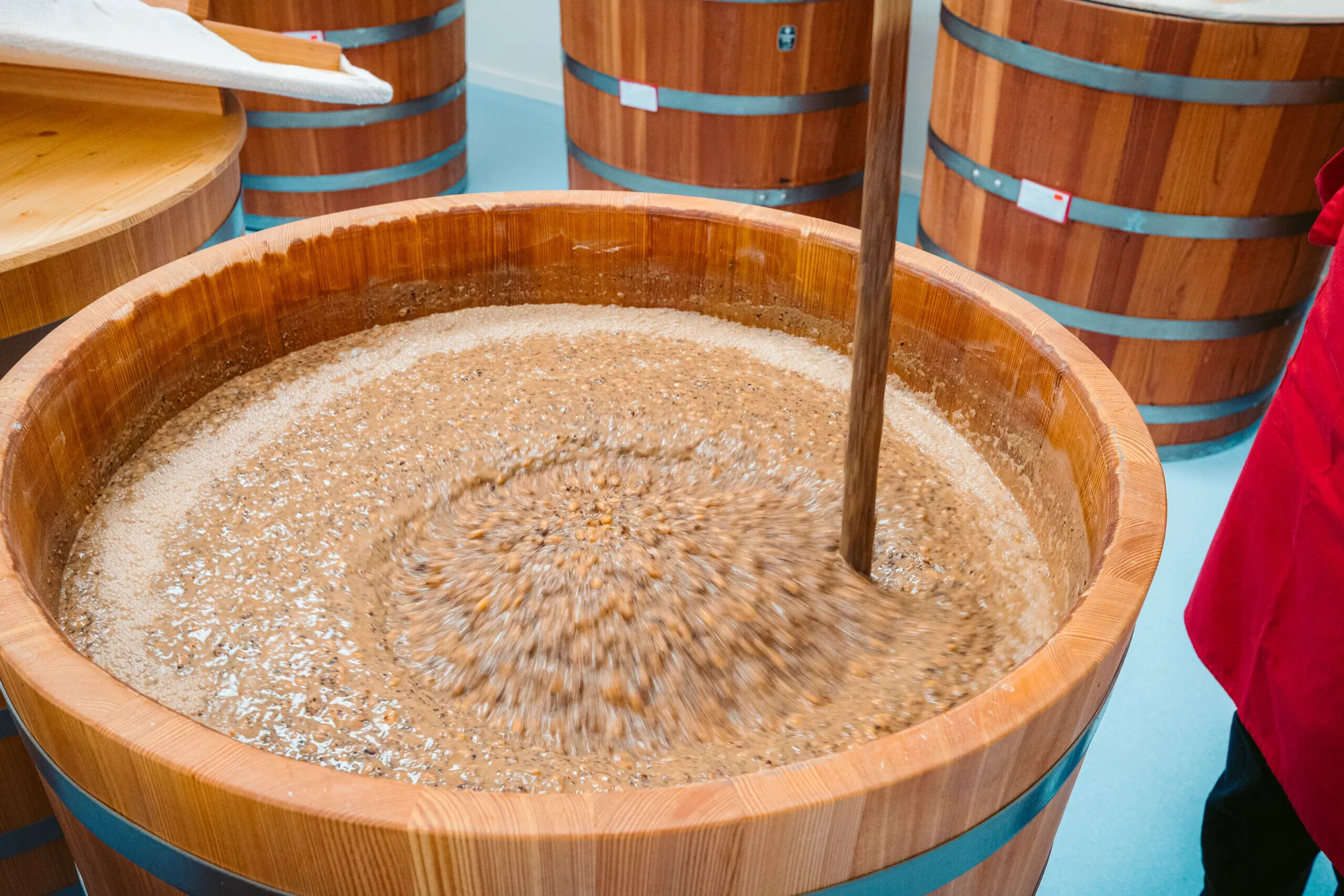
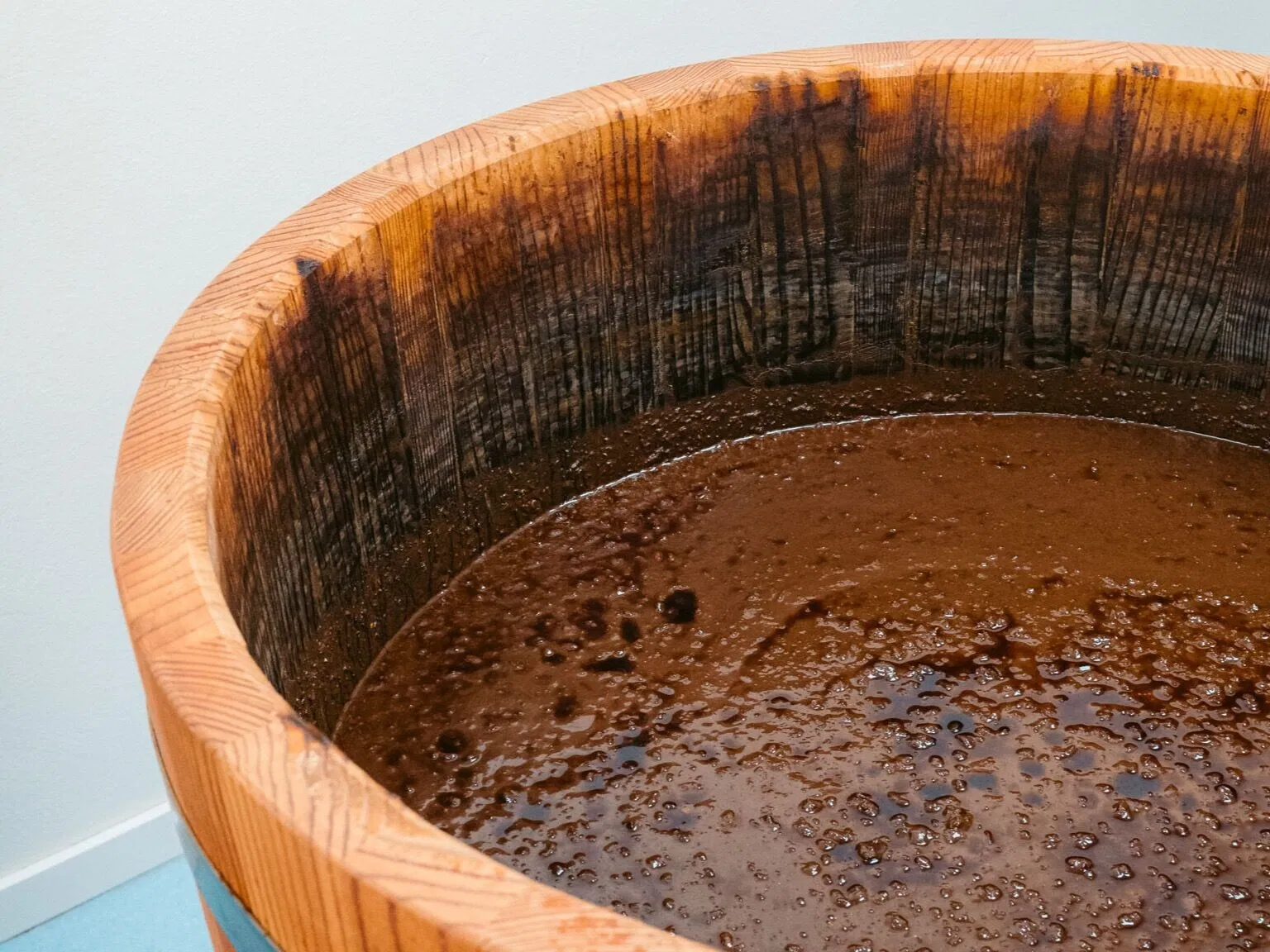
She chats away about amino acids, enzymes, hydrolysis, buffers, and peptides as though she is describing her last holiday – my head is spinning and, to be honest, how precisely the transformation occurs is still a mystery to me. My senses, on the other hand, are taking in what is happening very clearly and distinctly: if you lift the lid of the larch wood vat that has only been maturing for a few months, the mash – called moromi – is relatively runny, light-brown in colour and when you smell it from up close, it is only moderately enticing. The vat with the mash that has been fermenting for several years is quite a different matter: by now the water has evaporated which means the mass is more viscous, the colour has turned a rich dark brown and the room becomes suffused with its spicy-aromatic notes.
A leap into the unknown, starting her own business
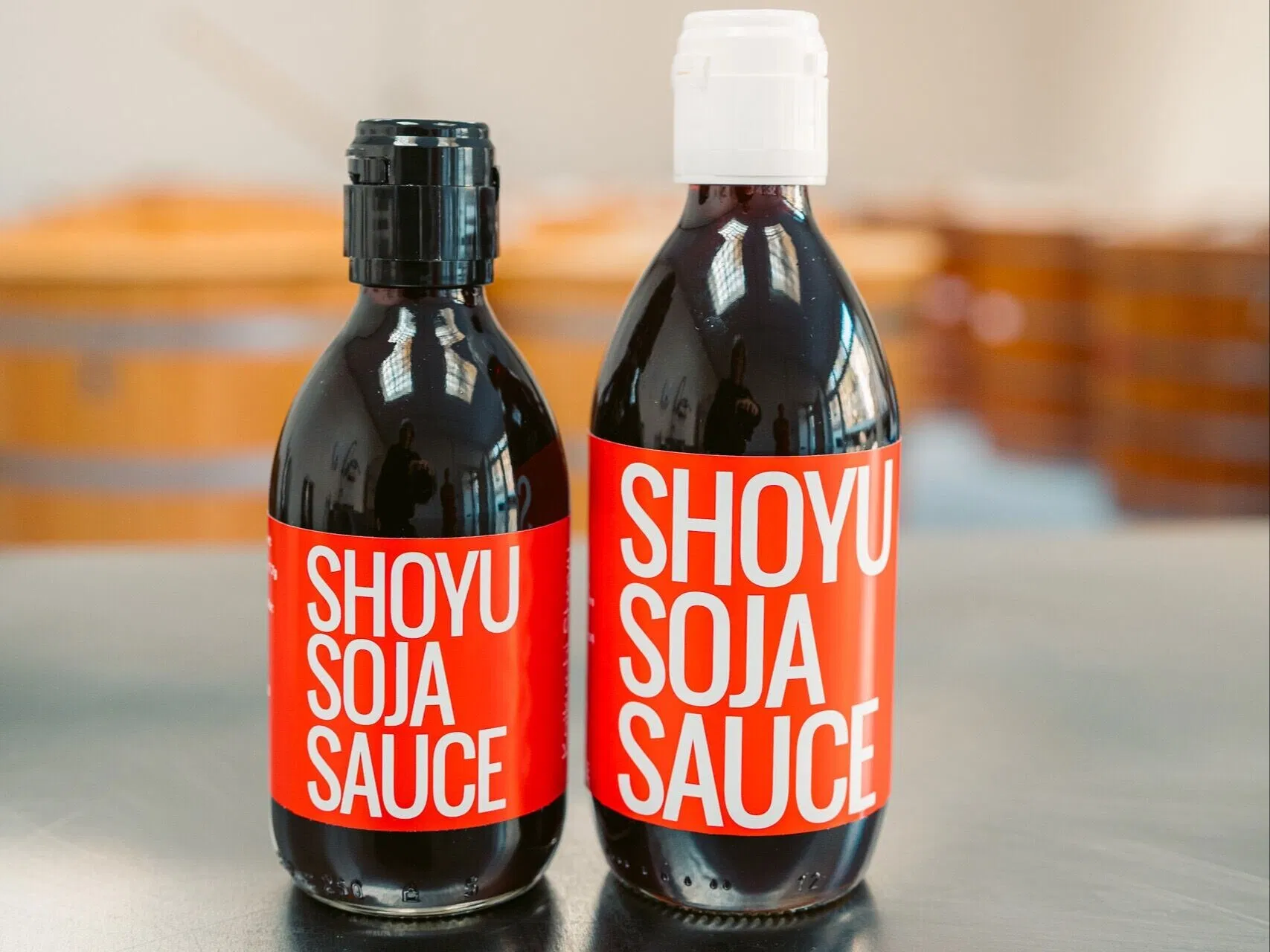
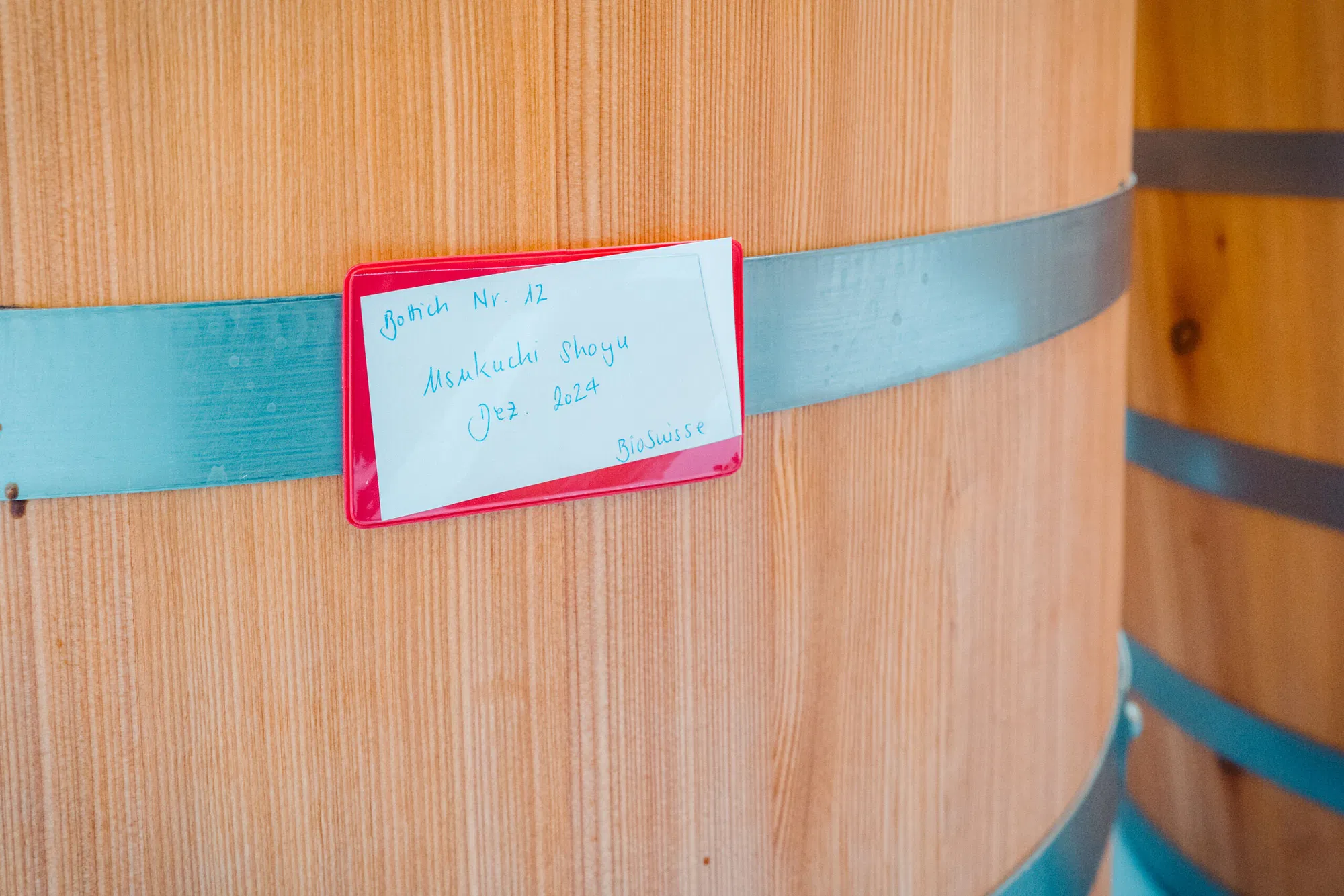
When Caroline had filled the first vats with her nascent soy sauce in the summer of 2018, she had no idea, for a whole year, whether the result at the end of it all would be a palatable foodstuff. A year is the absolute minimum for fermenting soy sauce. In Japan, some sauces are left to lie in wooden barrels for up to 20 years. Caroline rented the premises for her brewery, had the wooden vats made, bought the equipment, and then finally stirred the bubbling, quietly fermenting mash every day, with no certainty that the process which had worked well in small quantities in her kitchen, was also going to work when grossed up into hundreds of litres. But it did. After a year Caroline reaped her reward, her first usukuchi shoyu, soy sauce brewed for one year, which is still her best seller today. A few years later she added the koikuchi shoyu to her range; this is fermented for 24 months. In 2025, this year, it will be joined by the koikuchi shoyu matured for five years.
Even now Caroline still stirs, presses, filters, pasteurises, fills, labels, and packs every single litre of soy sauce by hand. She quit her previous job five years ago to dedicate herself completely to her small enterprise, the only soy sauce brewery in Switzerland. In addition to family and friends, Caroline now also supplies many restaurants and shops in Basel and the surrounding area with her certified-organic sauce. The ingredients are sourced in Switzerland. The salt is from Pratteln, the water from the alps, the wheat is Swiss and the Swiss soyabeans are sourced from a mill near Bern. The only thing she has to order from Japan are the mushroom spores she needs for the kōji, the first stage of the fermentation process.
“When I made my first kōji at home in my kitchen, I measured the temperature every two hours and recorded the readings in a spreadsheet. Even at night.”
Fresh air for the kōji
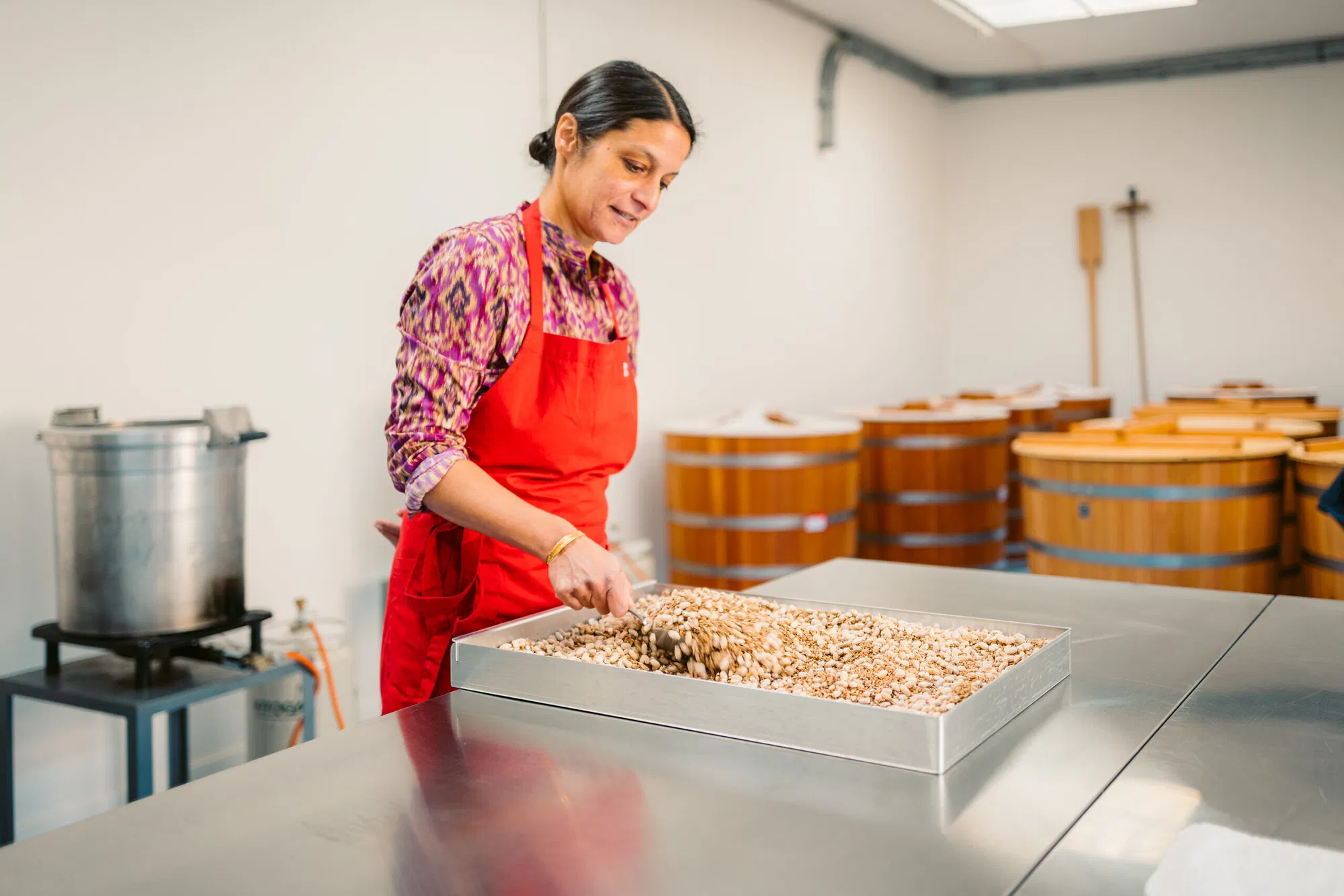
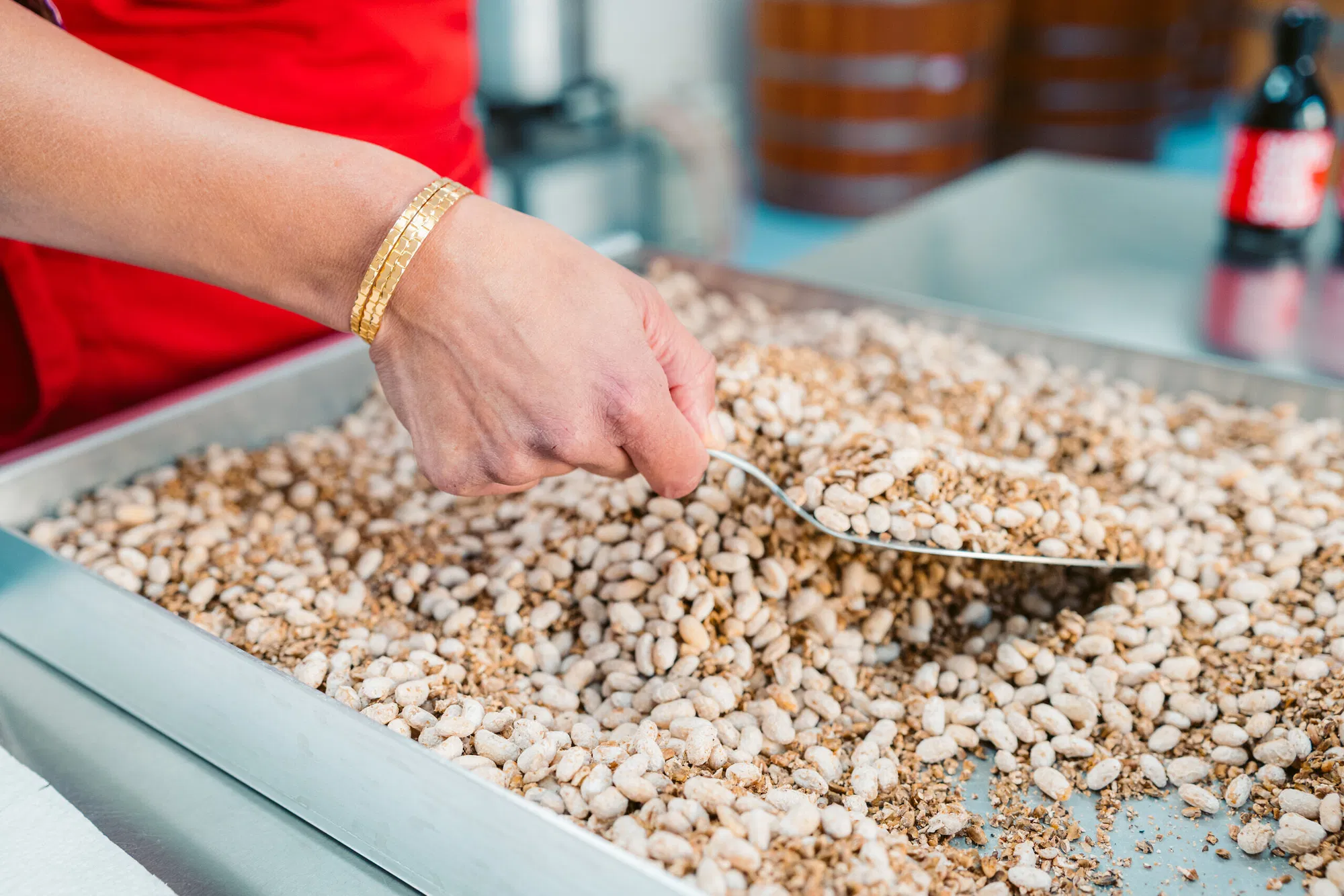
“The kōji is the key element;” explains Caroline. “It is what makes the sauce work.” She pulls a tray out of a large stainless-steel appliance, a machine usually used in bakeries, a fermentation interrupter. The fungus mycelia are growing on the tray, feeding on a mixture of soya beans and roasted wheat; this is the kōji, pronounced “koshi.” “The fungus requires an initial temperature of 30 degrees to form the mycelium. Then, in its exponential phase it produces heat and has to be cooled.” Caroline explains all this while she aerates the bean, wheat, and mould fungus mixture with a cake server. “When I produced my first kōji at home in the kitchen I measured the temperature every two hours and jotted down the measurements in a table. Even at night.” Caroline laughs. “I was really determined to get everything just right. And I was used to working meticulously from my job in the lab.”
These days she is more relaxed. “Soy sauce is an ancient foodstuff; it was already being brewed 3,000 years ago. If the fermentation process were that complex the sauce would have disappeared long ago.” Caroline is quite sure about that. “And even in biochemical terms, you can see how robust the fermentation process is: the soy mash is extremely salty and thanks to the lactic acid bacteria its pH value is consistently low. This allows yeasts to grow that produce a slightly alcoholic content. It is impossible for most organisms to thrive in such an environment.” What seems to me almost a miracle is for Caroline a logical chain of biochemical processes. But what counts in the end is the taste, which is almost unparalleled in terms of aroma and spiciness. All thanks to those microscopically tiny mould fungi spores. What wonderful biochemistry!