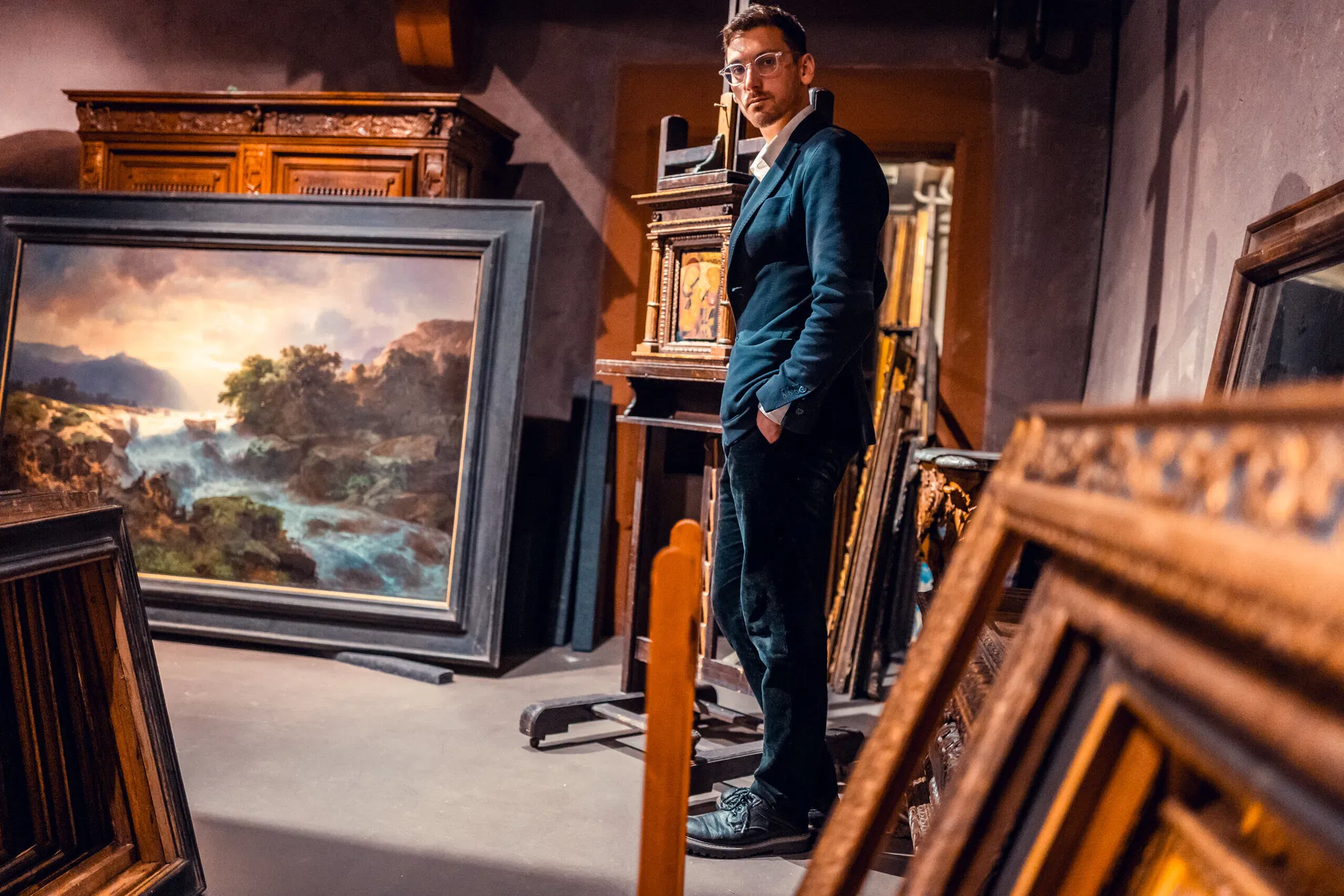
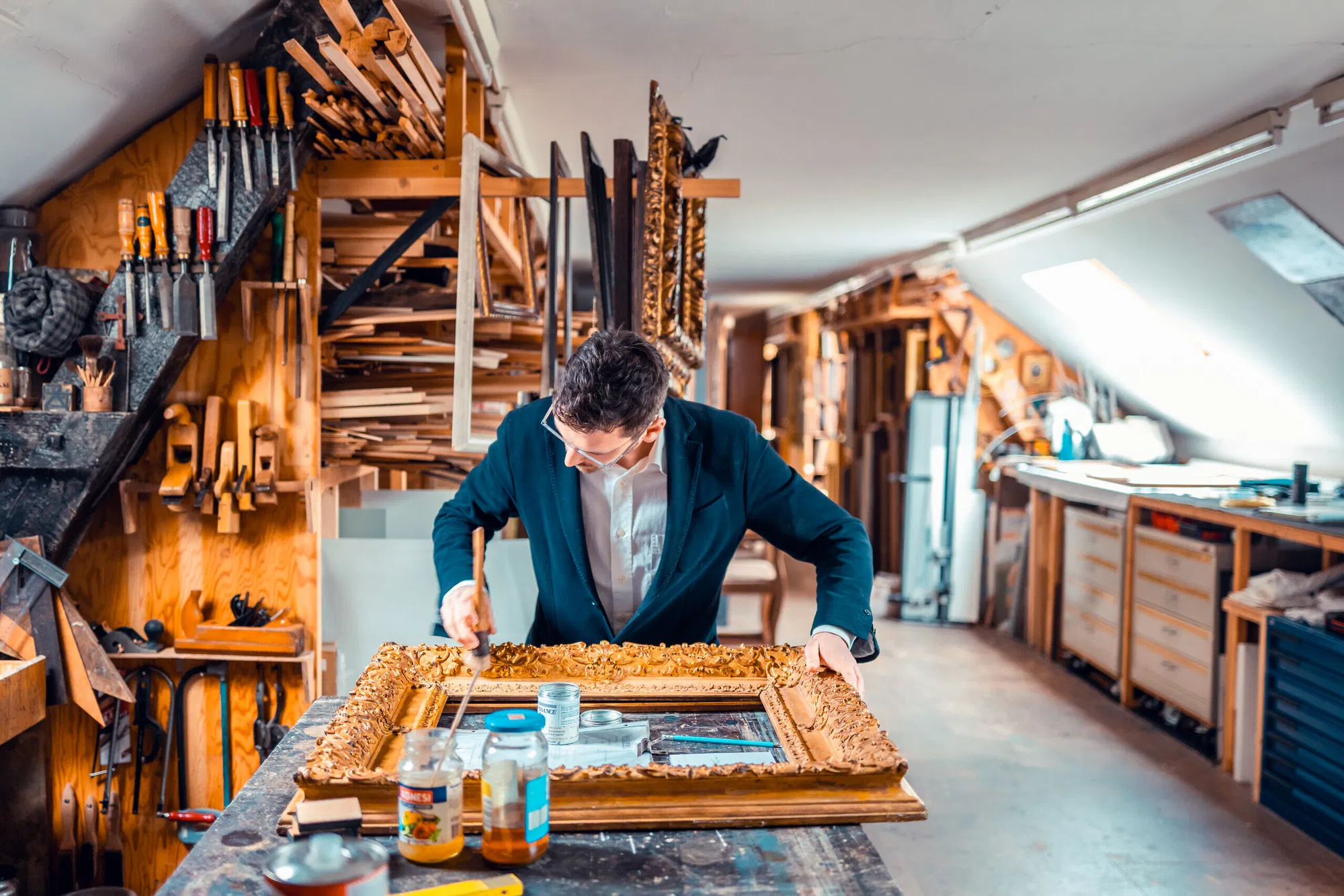
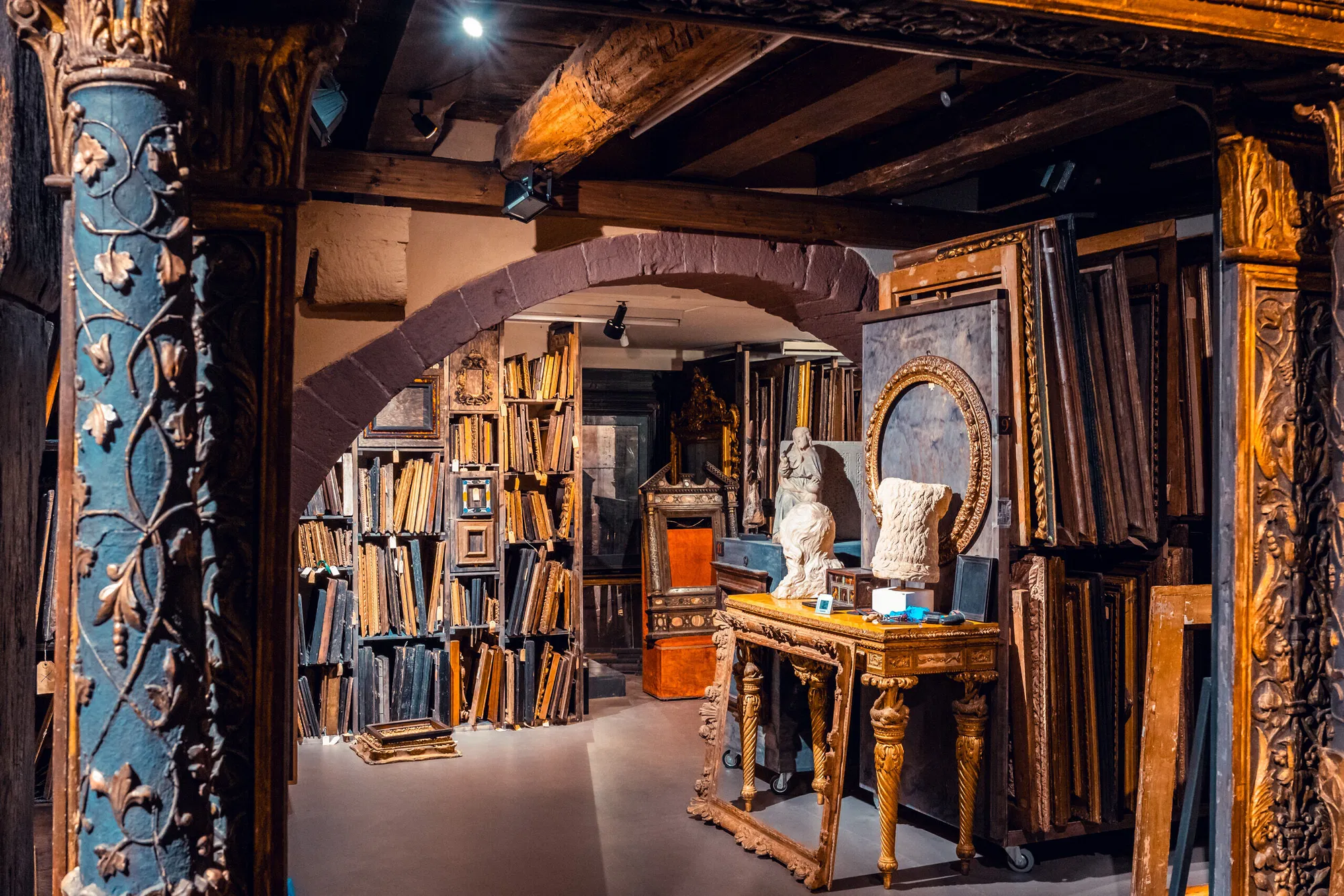
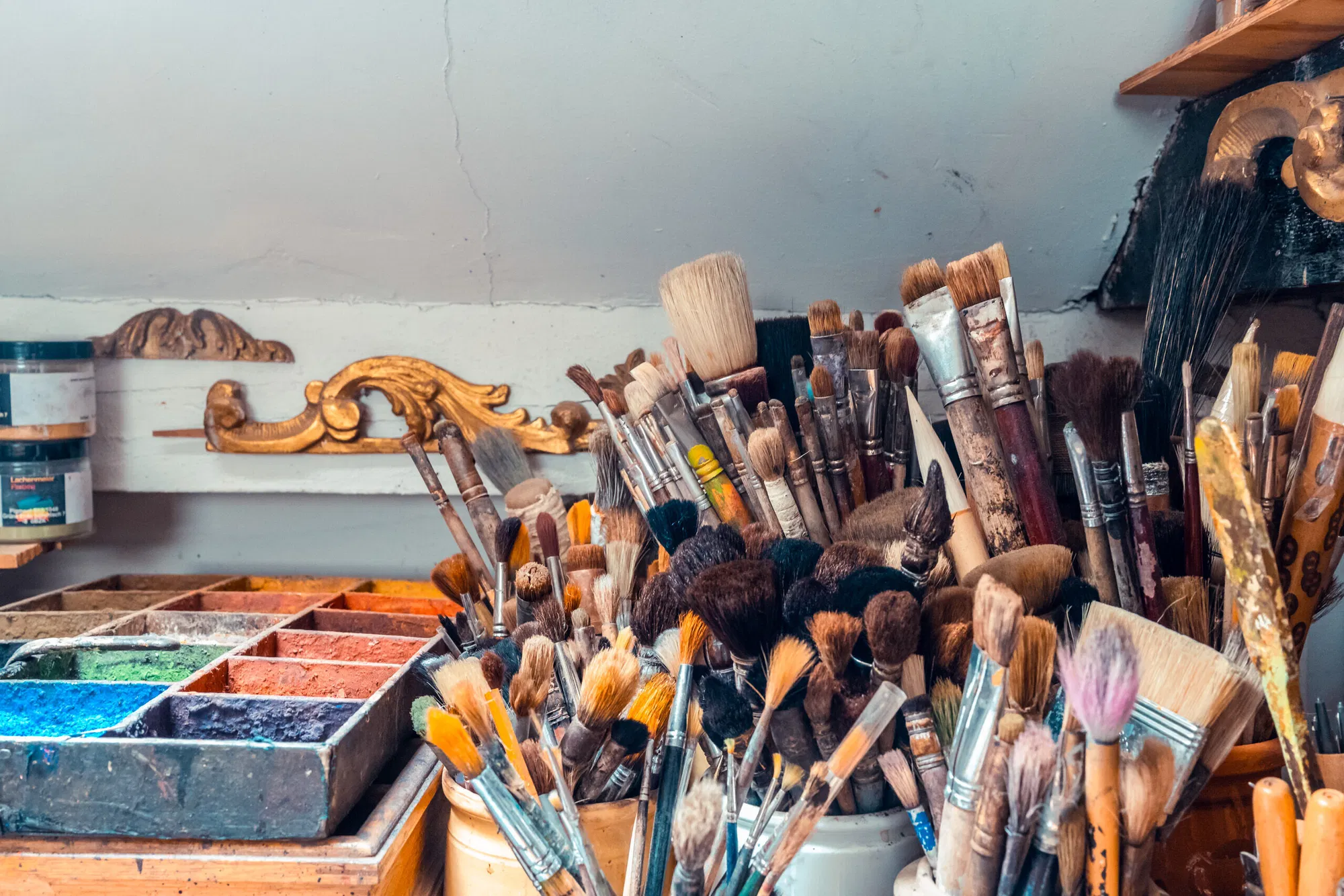
The archival storeroom of Knoell Frames, in the historic Erasmus House located in the Bäumleingasse, could have come straight out of a historical swashbuckler film. The vaulted cellar is dimly lit and a little eery, precious historical artefacts are everywhere and it feels as though time stood still a century ago. In fact, it is indeed so, that this Basel establishment can look back on four generations of family history, during which time it has made a name for itself in the business of collecting, restoring, procuring, and selling historical picture frames from the Renaissance through to the Modern.
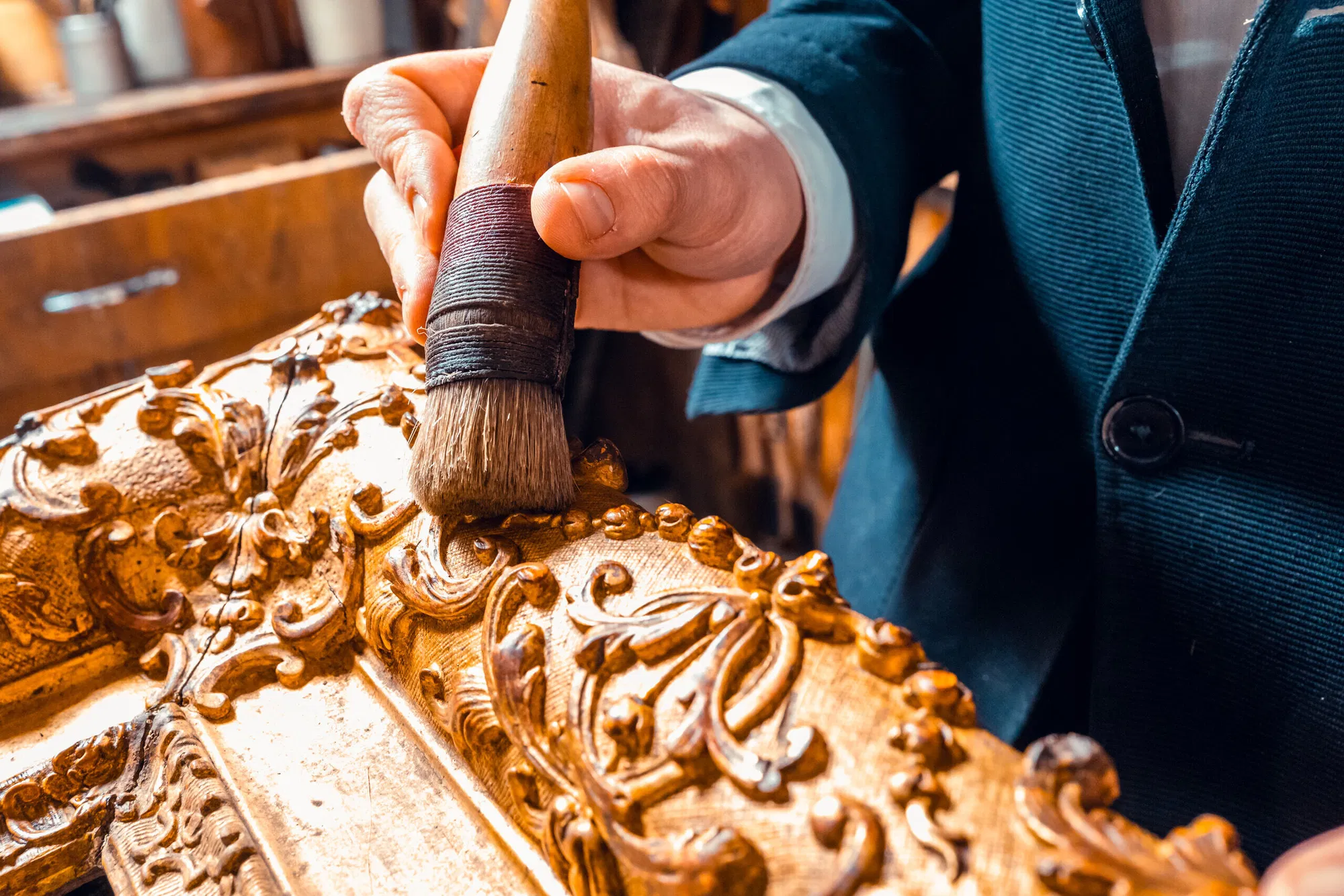
Framing the visual field
Robert Knöll now runs the business founded by his father, Thomas Knöll, in the 1980s, which in its turn was founded on the gilding trade built up by his father and grandfather. “Unlike the three generations that preceded me, I initially chose an academic path. I first studied art history and philosophy but eventually slipped into my father’s business,” Robert tells me as he wanders through the workshop and the treasured stores, in which a mere four people work on assignments from all over the world. “I realised pretty quickly what an exceptionally precious and rare niche it is that we find ourselves in here. Furthermore, it is so fragile that it requires a great deal of effort to keep it alive it for future generations. Twenty years ago, there were still a handful of similar experts specialising in antique frames in Paris, London, and Berlin. But in the meantime, our profession has become ever rarer.”
“When you remove the frame, the work looks like it did when it was first completed – just as the artist created it.”
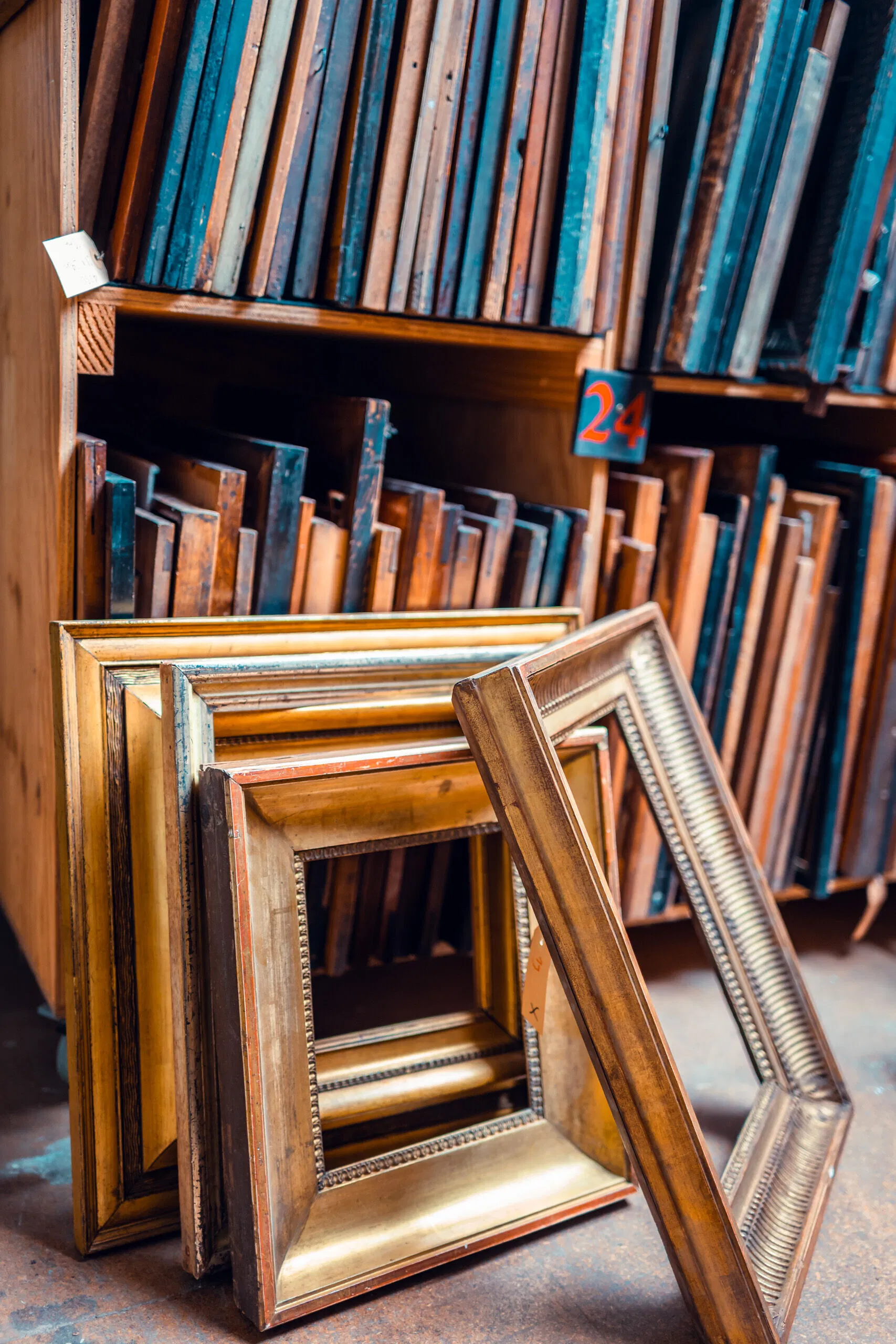
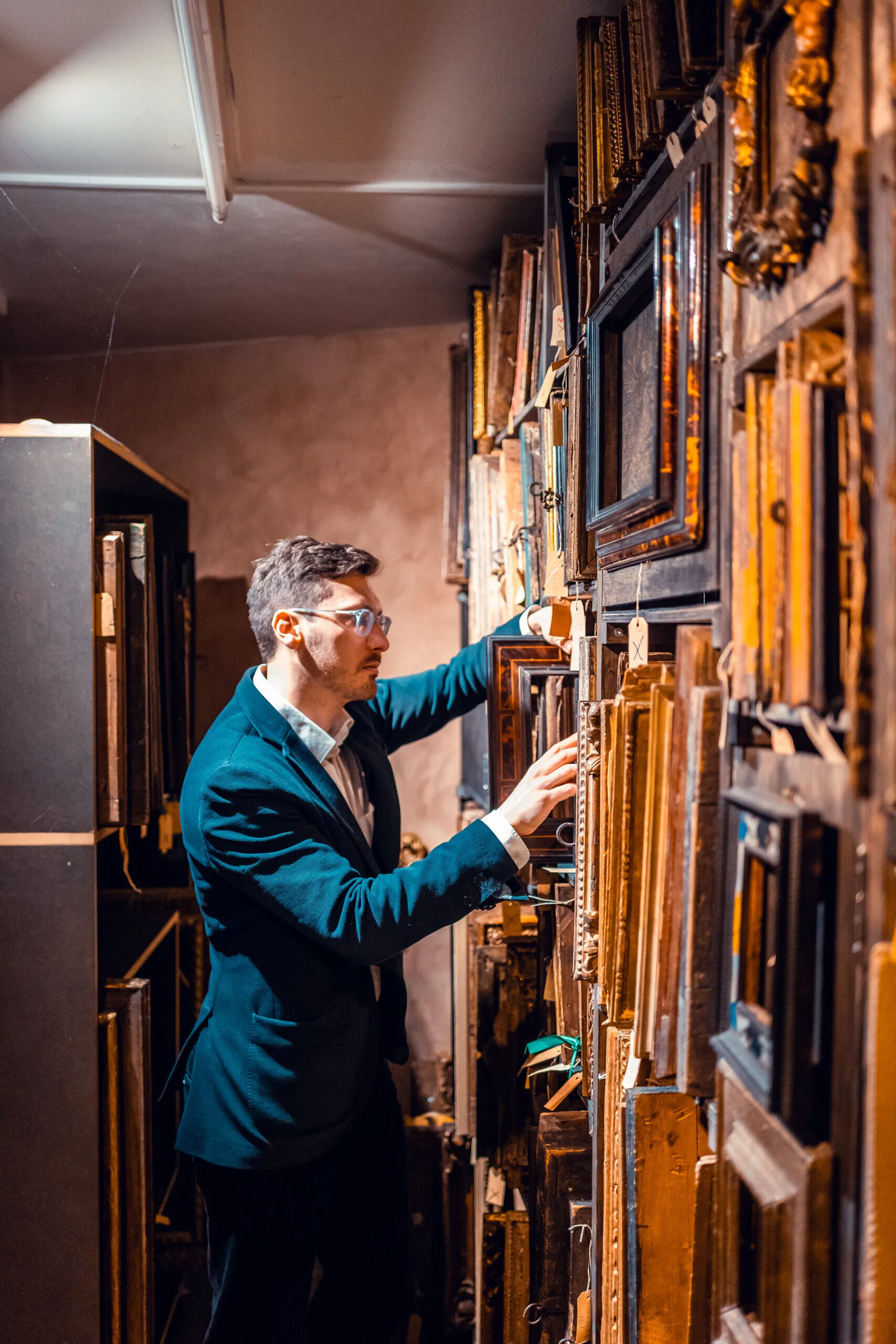
Every single frame stored in Knoell’s storerooms has a story to tell. “I feel a genuine responsibility for preserving this history so that it is still here for future generations,” says Robert, as he pulls one of the frames from its shelf and examines it with an expert eye. By history, he also means the skilled craftsmanship and expertise on picture frames which the family business has built up over four generations, and which should be preserved at all costs. “What does a piece of walnut wood look like when it is 400 years old? What does something look like if it has only aged for 100 years? This kind of knowledge is incredibly important for our tiny field and it means that we are now the place to go to for the most important museums and collectors in the world, when it comes to historical picture frames.”
Mit Geschichte meint er auch das handwerkliche Wissen über die Bilderrahmen, welches sich das Familienunter- nehmen über vier Generationen hinweg angeeignet hat und das nicht verloren gehen darf. «Wie sieht ein Stück Nussbaumholz etwa aus, das 400 Jahre alt ist? Wie sieht etwas aus, das nur 100 Jahre gealtert ist? Dieses Wissen ist für unsere kleine Branche unheimlich wertvoll und führt dazu, dass wir heute DIE Anlaufstelle für die bedeutendsten Museen und Sammler der Welt sind, wenn es um historische Bilderrahmen geht.»
The search for a perfect frame
will set out on a search for a new frame. If, for example, the National Gallery in London, the Pinakotheken in Munich, the Fondation Beyeler in Riehen or the Kunstmuseum Basel are looking for a precious Venetian Renaissance frame for an important artwork that the museum has restored and now wants to present in a new light, then Knoell Frames are brought into play. Their archive of around 5,000 frames dates back as far as the 15th century A.D. The time the process takes from the initial contact through to the definitive choice of frame is often several months. When searching for the perfect frame, it is not just the desired period of art nor the frame’s appearance that influence the choice, other specific evaluations are also required: for example, an evaluation of the climatic conditions the work and its new frame will be exposed to in the museum; clarification of what is expected in terms of how the inner side of the frame is structured; or how much of the painting may be concealed by the frame. “This protracted process illustrates just how important the framing actually is,” Robert stresses with infectious fascination. “Although the frame itself is never the centre of attention, it has the power to guide our perception of an artwork in a specific direction.”

An intimate perspective
His discreet work with some of the world’s most important museums and galleries brings a very special privilege with it, one that gives Robert enormous satisfaction each time: it brings him closer to the work of art than anyone else. When a new frame is being chosen, Robert gets the chance to see the work in its unframed, bare state, so to speak. A Monet, a Picasso, a Munch, a Hodler or a Giacometti unframed? An unusual, almost intimate spectacle. “When you remove the frame, the work looks like it did when it was first completed – just as the artist created it.” This prerogative of his craft rekindles his passion for art and his family’s heritage time and again. A fragile niche in the art market, overshadowed by the works of art themselves, and which yet has a mighty influence over them.
Knoell Rahmen
Bäumleingasse 18
knoellrahmen.ch