There is a casino in the middle of Basel. But you won’t find a single roulette table there, nor are there any slot machines. This is because, when this casino was built, the word “casino” had a different meaning. At the time, a casino was a building with rooms where society would meet. And the city was in desperate need of such a building, because until the beginning of the 19th century there was scarcely a public venue where middle class society could gather. There were no museums, and apart from the churches, only one single hall where larger concerts could be performed.
The state provided no funding for cultural events during that era, cultural life was organised by private individuals and societies. They would arrange lectures, concerts and exhibitions. The origins of the Stadtcasino were also at the initiative of a private society: Starting in 1808, the members of the Allgemeinen Lesegesellschaft (public reading society) would meet together in a location they rented at the Münsterplatz, to drink, eat, play billiards, chess and bridge together. Of course, the society was exclusively for men, “wenches” were barred from entering.
Young architect realises ambitious building project
The lack of a concert hall continued to pose a problem. Anyone who wanted to listen to secular music had to rely on the private events organised by wealthy families. “Stars” such as Clara Schumann and Franz Liszt really were invited to perform on these occasions – but the average citizen would not receive an invitation to such house concerts. In the context of the Swiss Music Festival in Basel, the gentlemen members of the Public Reading Society finally founded the “provisional committee for the erection of a Society House”. The new building with its concert hall and ballroom, games room, refreshment rooms, cloakrooms and an apartment for the caretaker was planned with a budget of 96,000 Swiss francs. Fixtures and fittings included.
After the project had been put out to tender, a 22-year-old architecture student, Melchior Berri, was chosen to realise the project. In 1824 the Casino Society of Basel was officially founded. The opening of the Stadtcasino was celebrated in 1826. From this moment onwards, the members of the Casino Society met every Sunday in the music chamber on the first floor to listen to Mozart, Beethoven and Rossini. The well-to-do ladies sat on the right, while women of the middle classes sat on the left. At least they were now tolerated as companions to the gentlemen.
Superb acoustics were a coincidence
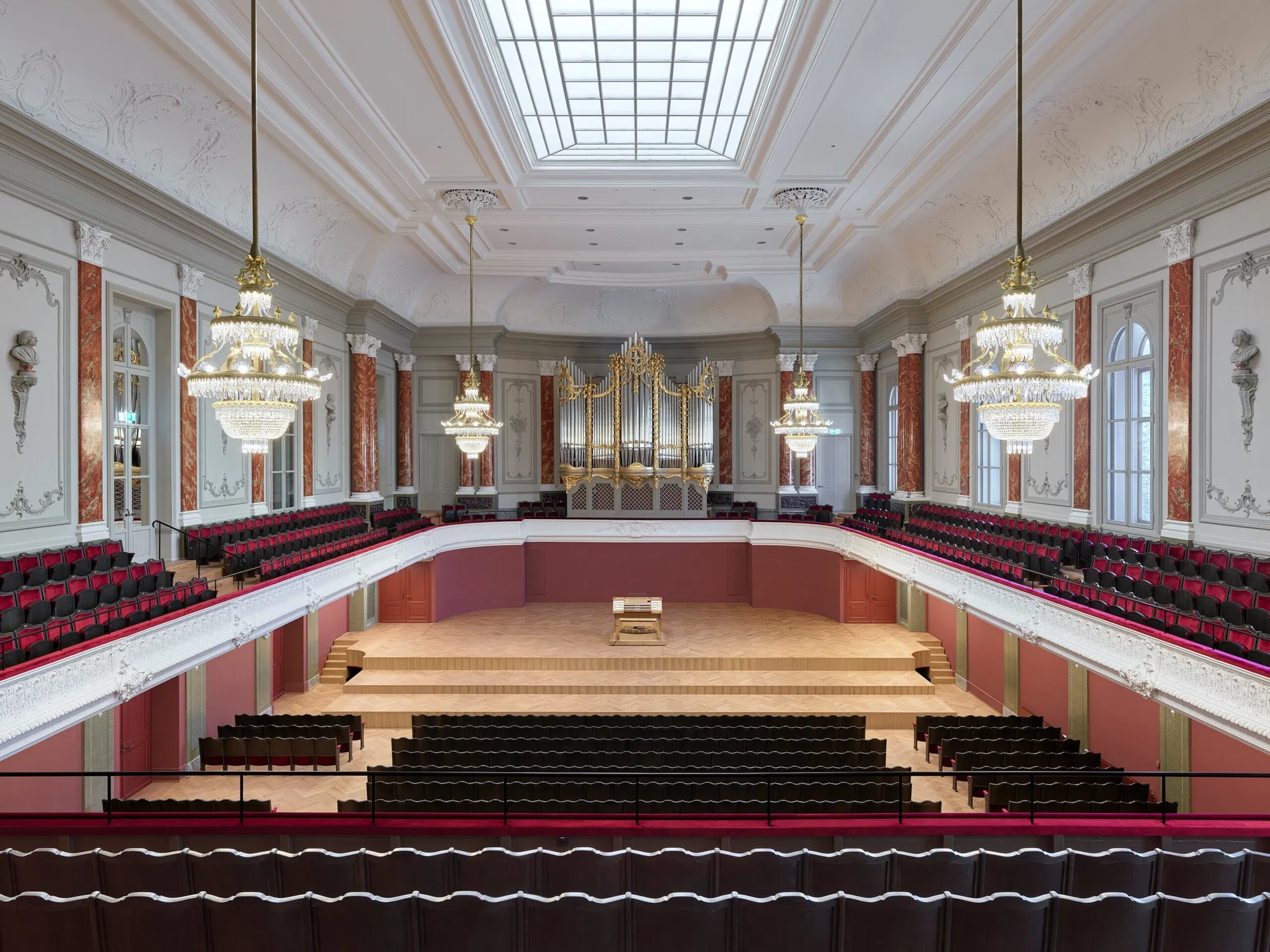
The Stadtcasino was very popular with the general public and the number of visitors it received grew, as did the number of concerts. It wasn’t just Liszt and Schumann who performed in the Stadtcasino, Johannes Brahms and Anton Rubinstein conducted here too. It wasn’t long before the building no longer fulfilled the requirements on a contemporary concert hall. Which was why the Basel architect Johann Jakob Stehlin the younger was commissioned to design a concert hall that could hold up to 1,200 people. He devised an unpretentious rectangular room with a high ceiling, designed to be added on to the existing casino. “Without any particular objective in mind” Stehlin made his hall 21 metres wide, 36 metres long and 15 metre high. Only later did it become clear that these ratios were the reason for the hall’s excellent acoustic properties. When the new concert hall was inaugurated in 1876, the superb acoustics were a delightful surprise. This was confirmed by an expertise in 2016: In a worldwide comparison of halls with top-class acoustics the concert hall of the Stadtcasino Basel ranked 6th. Within Switzerland it was the best.
But plenty of other events have always been held here too, in addition to the concerts: for example, in 1877 the first Basel trade exhibition opened in the Stadtcasino. For two months 450 exhibitors presented their furniture, foodstuffs, art, musical instruments and a wide range of other products. The foundations had been laid for what later became the Swiss Trade and Sample Fair (Basel Mustermesse). Another milestone in history was the First Zionist Congress in 1897: It was here in the Stadtcasino that the grounds were laid for the establishment of a Jewish state. The congress was actually held ten times in the Stadtcasino until the state of Israel was finally founded in 1948 – more often than in any other town or venue in the world.
Again and again: problems with space and renovations
The wide variety of events being held here soon made it clear that the Stadtcasino’s capacity was already, once again, reaching its limits. Jakob Stehlin had had to make considerable reductions to the projected adjoining rooms when he was planning the Concert Hall, due to financial constraints. The result was that the rehearsal rooms were too small and the changing rooms too cramped. And the building was due for a renovation. So, in 1938, the original casino building by Melchior Berri was torn down and replaced by a building designed by Kehlstadt & Brodbeck, the merits of which are still considered debatable to this day. But at least various commissions managed to prevent the original plan for a 16-storey high-rise building being realised.
In the years that followed, in addition to the global political and economic crises, there were frequently also internal problems. They arose partly because of the different uses the building was put to: alongside the concerts with world-famous musicians, there were award ceremonies, auctions, fashion shows and even boxing matches. The noise level of the events which were sometimes held simultaneously were a regular source of irritation. Moreover, the architecture itself was only just withstanding the ravages of time, and repeated renovations to Jakob Stehlin’s architecture were required. Because the growing noise of the trams and cars had begun to disturb the concerts in the hall, the decision was taken in 1964, for example, to brick up the windows facing the road. The tram noise remained a problem compounded by other difficulties such as lack of space, technically outdated equipment and the constant need to renovate.
Herzog & de Meuron to the rescue
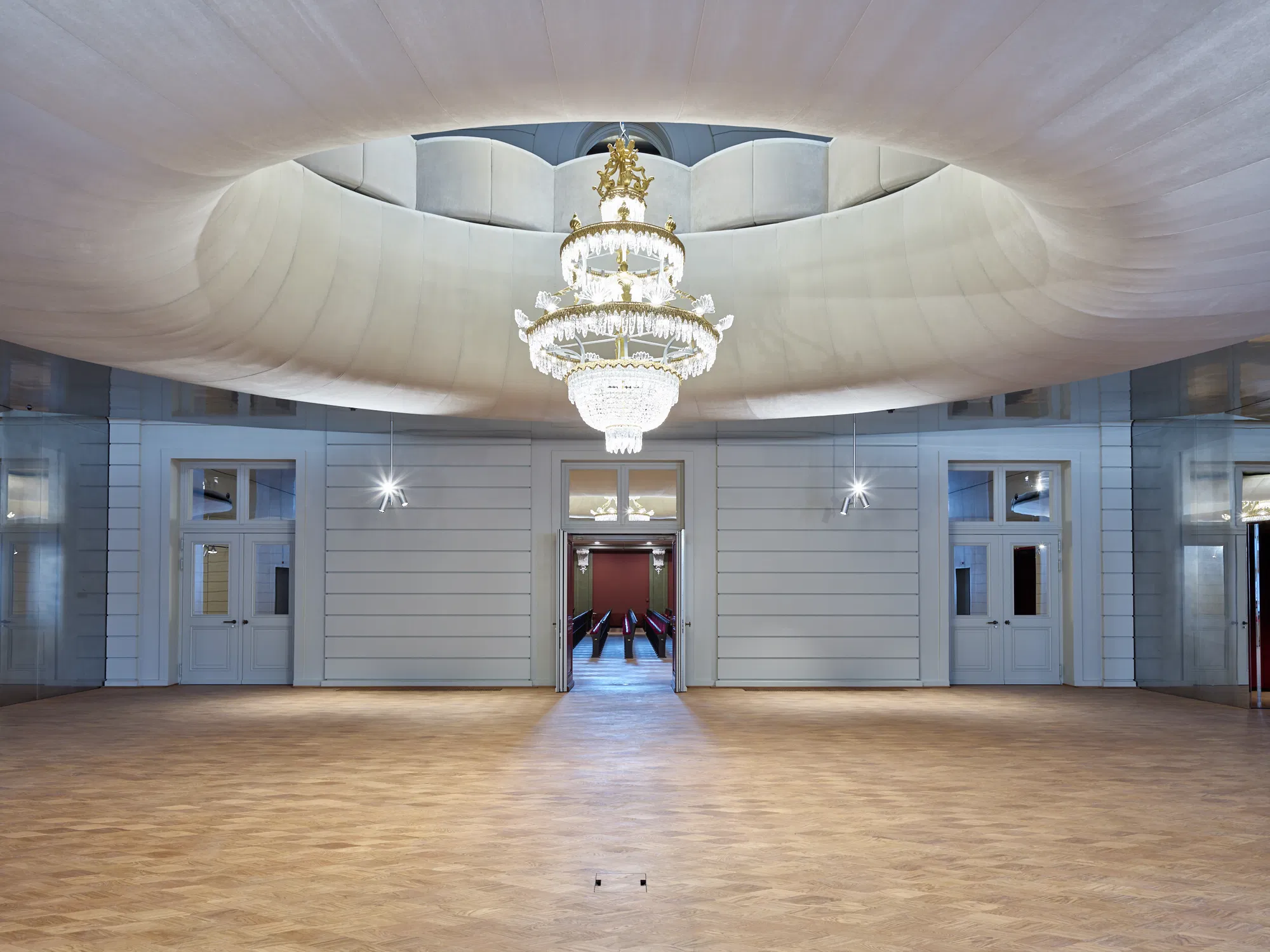
At the turn of the millennium, plans were being discussed to replace the 1939 casino with a completely new building. The Casino Association tendered an invitation to submit plans to an international competition. The winner was the monumental project submitted by the Iraqi-British architect Zaha Hadid, but the project was vetoed by the population of Basel in a vote in 2007. In the years that followed the Basel architect’s office, Herzog & de Meuron, drafted a project that was acceptable to the populace: there was to be no new architecture, just a widening of the building itself in the existing style. In 2016 work could finally begin on the conversion. In the interior, key original elements were restored, the old concert hall was separated from the 1938 Stadtcasino and the additional rooms now required were integrated on the side of the building facing the Barfüsserkirche.
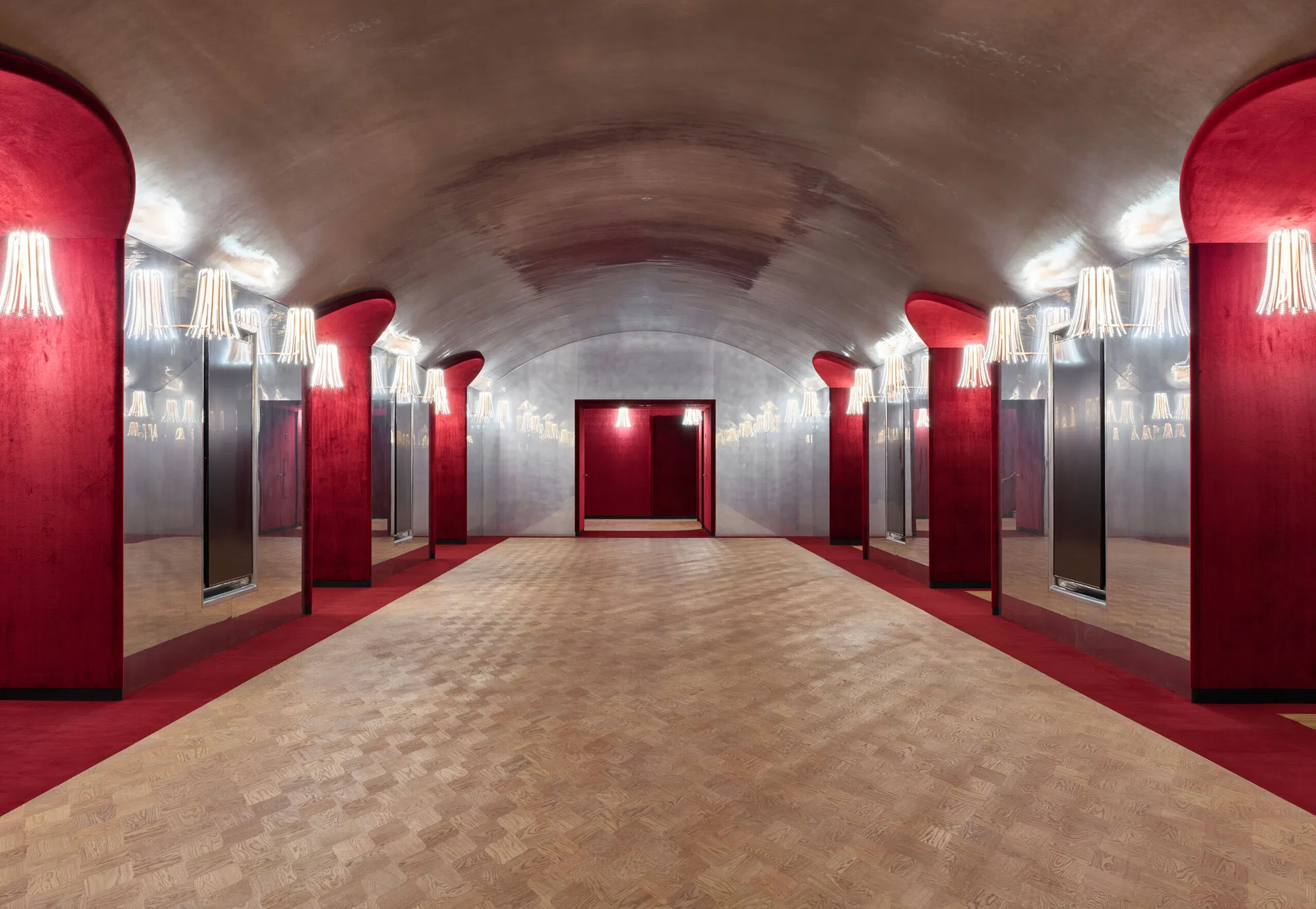
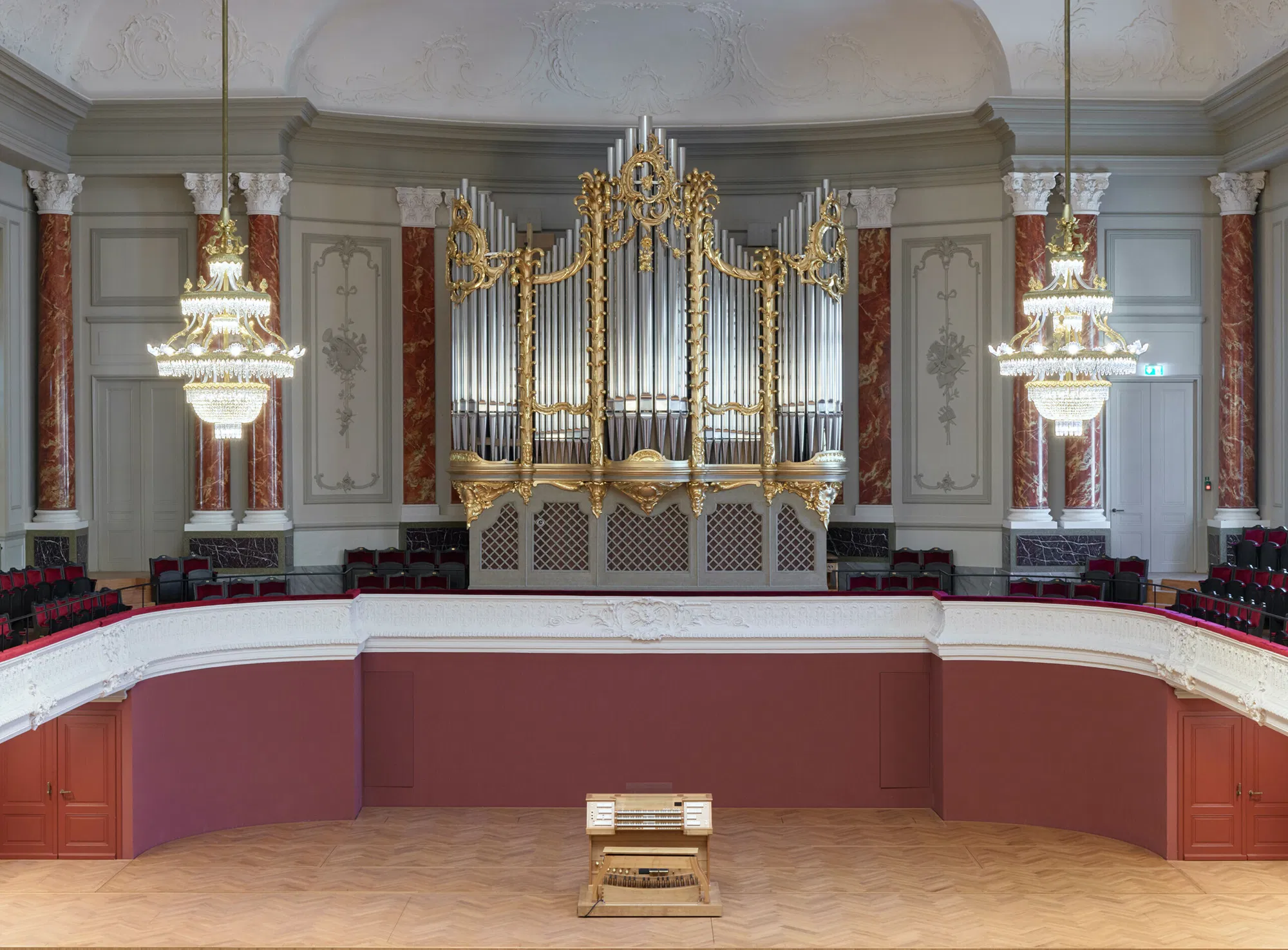
The Basel Stadtcasino’s exceptional acoustics made the expansion and renovation immensely costly. Every alteration to the concert hall had to be monitored by acoustic experts. All the work undertaken was planned in close cooperation with the department for the preservation of historical monuments. The windows which had been bricked up were reopened, the seating faithfully reproduced according to the originals and the former colour scheme was restored. After four years of building work, the new concert hall was finally reopened in August 2020.
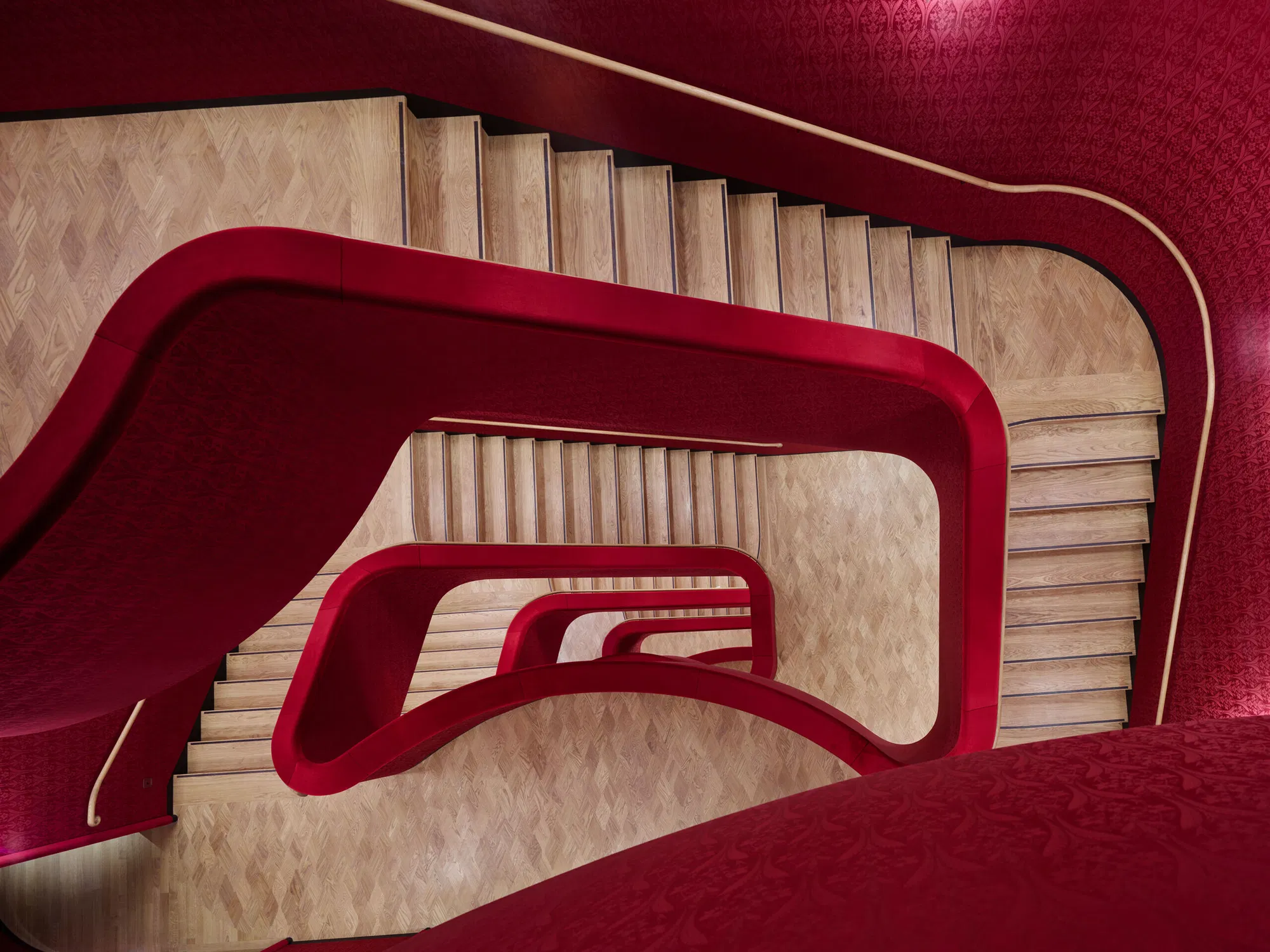
Why is it worth a visit? Well because of the superb acoustics, of course. Preferably attending one of the excellent concerts performed by the Basel Symphony Orchestra. But also because of the outstanding architectural combination of tradition and modern. On the outside the building is low-key, but the interior can now compete with the most famous concert halls in the world, and no longer only in terms of the acoustics. The deep red brocade wallpaper, the opulent stairwells, the parquet flooring developed especially for the Stadtcasino Basel and the unexpected views, both inwards and outwards, have probably turned the new Basel Concert Hall into the most glamorous spot in town. And that makes perfect sense. After all, Clara Schumann, Johannes Brahms, Franz Liszt and Leonard Bernstein all gave concerts here.