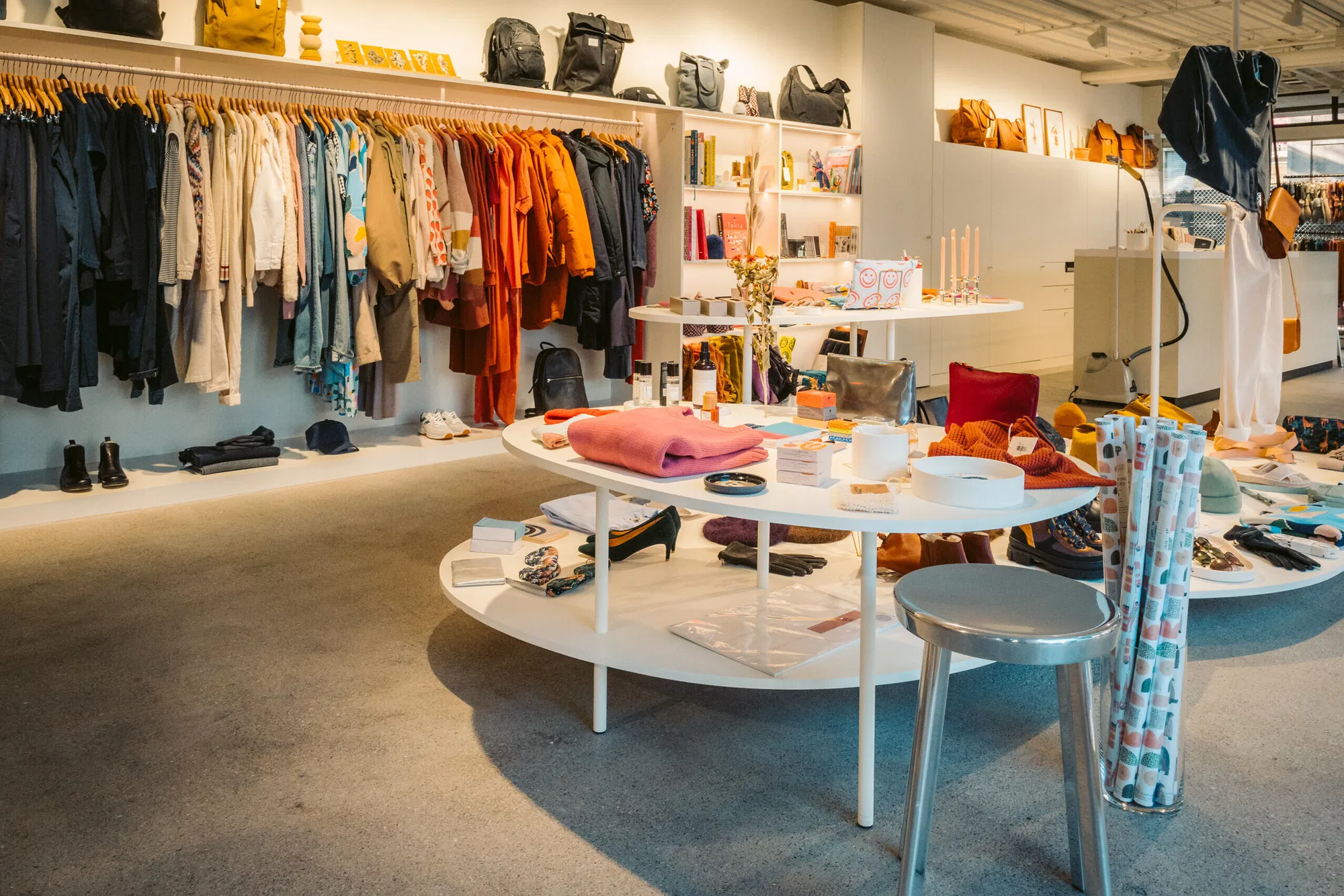
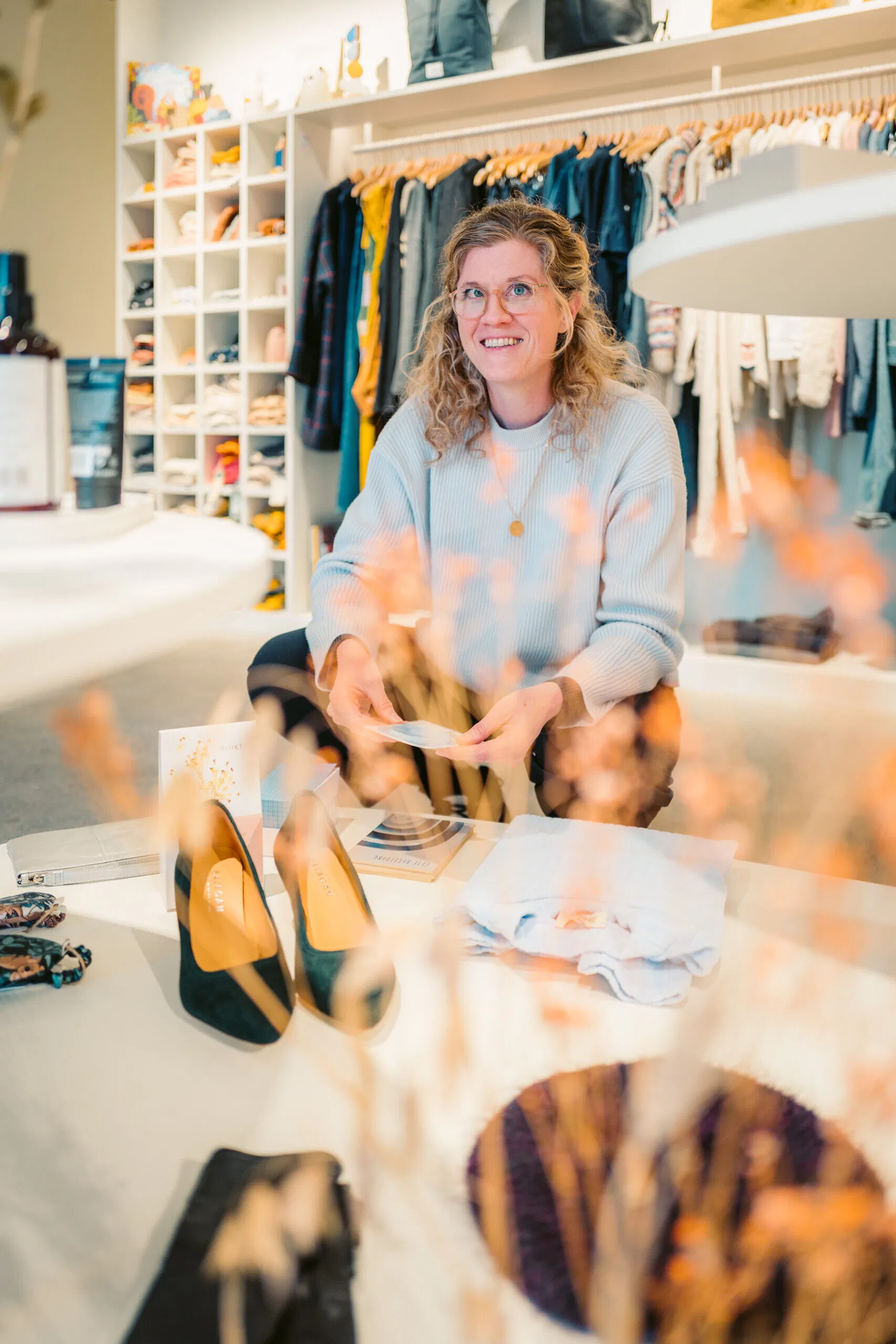
It was about twenty years ago that the subject of upcycling made it to Basel. Marianne Mumenthaler, a trained graphic and advertising designer, was producing her own small recycling products at the time and selling them at flea markets and evening markets. “I somehow never really found the right platform for my things”, she tells me during our conversation. “That’s why I created my own.” She took over a small shop on the Feldbergstrasse, christened it Marinsel and started selling unique handmade pieces and Swiss fashion. She now has ten employees and successfully runs three fashion stores – Marinsel, Ooid Store and Planet MO, all known for their sustainable fashion produced by small labels from all over the world, products that would be hard to find anywhere else in Basel.
It doesn’t seem to have been your plan to end up running three shops…
No, not at all! And for a long time, it wasn’t easy either. I did the whole thing out of a passionate conviction and never expected to ever earn any money out of it. It took seven years till I could pay myself my first wage. At that point there wasn’t so much demand for this kind of thing in Basel. You would only find concept stores in Paris, Tokyo or New York. There were only a few sustainable labels and an appreciation of the need for sustainability in fashion was only just emerging. These days we have arrived at a completely different point. Now it’s seen as uncool if you don’t buy organic cotton.
What have you learned about the fashion preferences of the people who live in Basel over all these years?
In Basel it has to be wearable on a bike! Stilettos and a miniskirt or a long skirt without a slit – not so popular. At least not among our customers. It shouldn’t be overly flamboyant either and they don’t immediately chase after every new trend. People like pieces that are rarely found. I would like to bring in clothes that are a bit more fashionable. So for the Ooid Store array I sometimes choose pieces from a collection even though I know I probably won’t manage to sell them so quickly. But they are so flawless that I would be disappointed if I didn’t have them in the selection… and maybe that one person will wander in and fall in love with that article!
The concept of sustainability in fashion was still in its infancy. Today, we're in a completely different place.
Have you noticed any developments in the world of fashion?
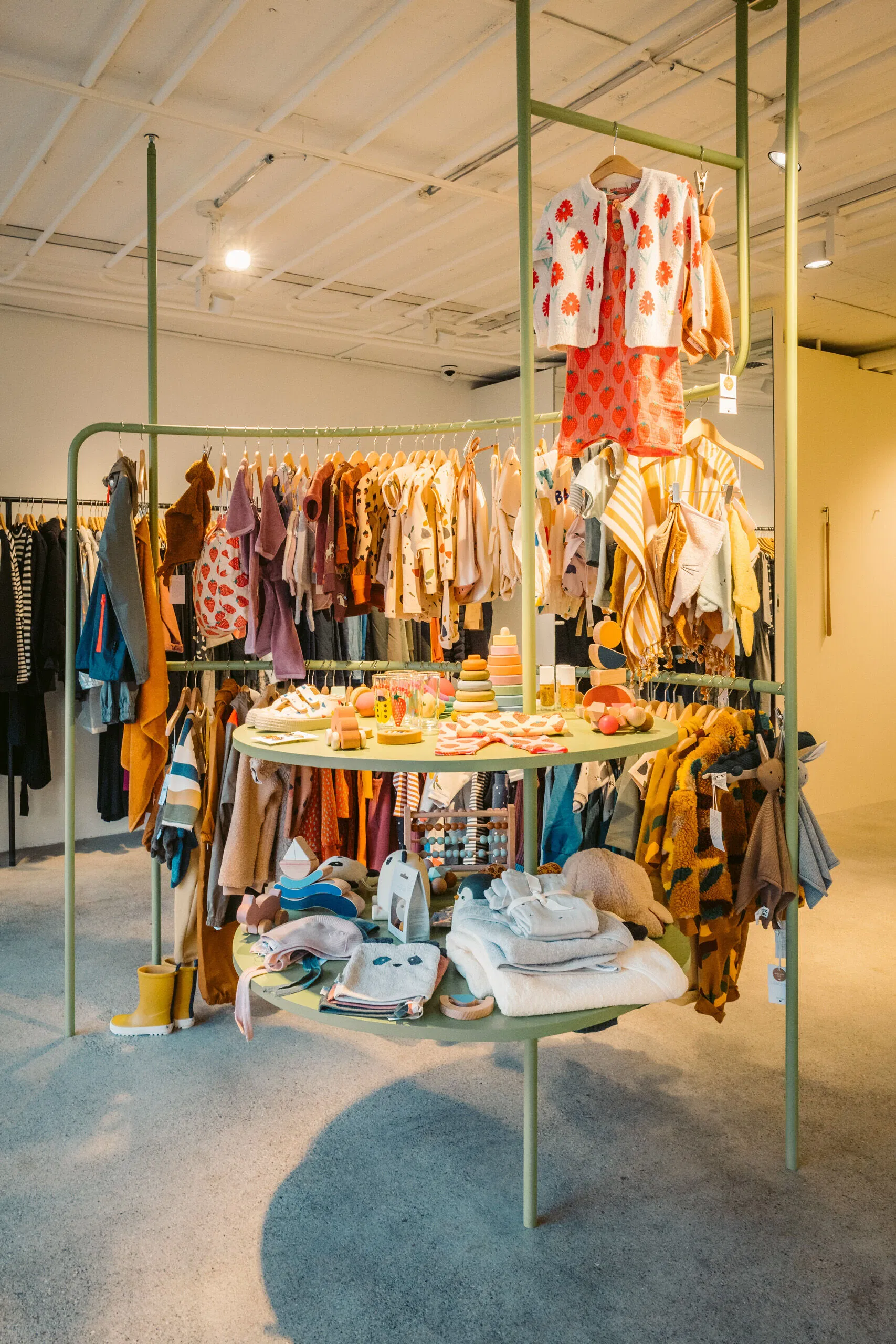
Yes, of course! A lot of things just take some time. For example, ten years ago we already had jumpsuits in our range. Unfortunately, not many people were interested in them. Now we offer them in more than 15 different styles, we practically specialise in jumpsuits, because they are in incredible demand and they suit almost everyone. By the way, we deliberately only have a few of each item in the sale. We don’t want to encourage people to buy items at ridiculously reduced prices and thus create an incentive to buy fashion that is never actually worn in the end. In our new shop, Planet MO, we only sell fashion from former collections at reasonable prices. Quite often we only have one size left. With solid advice and a bit of luck you can put together a whole outfit for very little money. That’s how we fill the gap between second hand and new items. I see it as a contribution to sustainability. And a good access point for people with a more limited budget.
Is sustainability one of the criteria you apply when you include a new brand in your range?
Yes, at Marinsel all the brands have to be sustainable. A lot of them are family-run businesses or small teams we know personally. Transparency is becoming more and more crucial, which is why you can track how the price has evolved over long distances, or where the products were manufactured. I also think it is important to support craftspeople. I want to highlight the fact that some of the brands use cloth that is hand woven. Or hand knitted. A lot of the smaller companies we work with are having problems sourcing organic cotton at the moment, because the big chain stores are now also converting to organic and buying up all the available resources. This means they have to look for alternatives; some brands are switching to hemp or recycled material, which, as I see it, is indispensable for the future.
And how about at Ooid?
At the Ooid Store we have a range of fashion in a slightly higher price class, so our target customer base there are not quite so young. We haven’t managed to implement a policy of sustainability in organic quality quite so strictly. But we do adapt our range there constantly. Shopping sustainably has many different facets and it includes buying clothes that don’t date. That is certainly true of us. But I have noticed that in the upper price fashion segment recycling, for example, is not yet so widespread. What I did discover recently is aloe vera fibres produced in Portugal. Bamboo fibres have been on the market for a long time already and we already have rucksacks made of banana plant fibres in our range. However, I haven’t yet been converted to the look of shoes made of pineapple leather. At Marinsel we now sell bags made of cactus leather and pullovers made of fibres from recycled denim and the waste from soja production. I find these topics very exciting, and can’t imagine a future without them. I would prefer to replace as many cotton products as possible with alternative materials. We’ll see what the future brings!
Where do you find your brands?
I do that together with Angela Schafer who has been working with me for years. Three or four times a year we go to the fashion fairs in Paris, but I’ve been to Berlin, Copenhagen, New York and Tokyo as well; I keep my eyes and ears open everywhere I go. Every now and then one of our regular customers recommends something as well, or I ask people directly if I they’re wearing catches my eye.
You recently moved Marinsel to the Lothringerstrasse – why didn’t you move into the city centre?
I spent three years looking for a bigger shop and I very nearly did sign a contract for a place in the city centre. But now I’m happy I decided against it. A lot of our clients live and work in the St. Johann area, and our aim is not to reach mainstream shoppers anyway. We prefer to have less hustle and bustle, and be able to spend more time advising our customers, if that’s what they want of course. It’s more relaxing like that and suits us very well. I don’t miss the Freie Strasse at all. Mind you, we do notice when it’s raining, that we don’t have a tram stop nearby and it would be great to have a café to hang out in nearby, that would be a lovely addition to the neighbourhood …
Do you sometimes feel stressed by the responsibility for your shops and your staff?
Not usually. But at the beginning of March 2020, I was a bit overwhelmed. Everyone had questions and I had no answers… Our regular customers were fantastic, they ordered loads of things and gave us the courage to carry on. Our online shop worked out extremely well. During the first lockdown I personally delivered over 150 orders with my cargo bike and enjoyed some very positive encounters in the process.
What fashion faux pas do you have in your own biography?
As a teenager I often went to flea markets and second-hand stores and dressed like an old grandfather. I wore light-blue men’s pullovers with collars and buttons. But I never had buffalos! And I never had a bag with a “Die Baslerin” logo on it either. But I did once own a skin-tight black top with flouncy sleeves. When I think about it now it makes me shudder. But then, what the heck, I was still searching for my own identity back then…
What does your wardrobe look like these days – do you have anything from one of the big chain stores?
If I do, then items I bought at a flea market at some point. But if I still wear something, I don’t feel obliged to get rid of it. Apart from that I practically only have clothes from our shops. I have two or three of some things, because I’m worried that one of my favourite items will be so worn out it can’t be repaired anymore and I need one in reserve.
Anything else we should mention at this point?
We sell clothes for men as well! I think a lot of people don’t even realise that. Pop in and take a look!