There are violins that are mass-produced and available online for 300 francs. A handmade violin, however, costs many times that amount. And then there are the luxury models. Investments that are worth several million. The starting bid alone at the auction of a Stradivari viola was 45 million dollars – it is considered the world’s most expensive musical instrument to date. Alongside Stradivari, Amati and Guarneri are also renowned families of violin makers. They all hail from Cremona in Italy, a small town in Lombardy whose violin-making craft is now part of UNESCO’s Intangible Cultural Heritage.
It was in Cremona, too, that Anna Reber decided to become a violin maker. She had just finished school, was on holiday and looking for new opportunities. Anna comes from a family of musicians. Her father, an organist and school music teacher, and her four siblings – they all played an instrument. Anna, the youngest, played the violin. “Mind you, my father wasn’t very strict with me; I hardly practised at all…”, she laughs. Consequently, she had no ambitions to pursue a career in music. Still, whilst on holiday in Cremona, it dawned on her: Violin making was her calling.
People often ask me if I can make a living from it. And: Is it still necessary these days?
Yes, there’s still a need for it today!
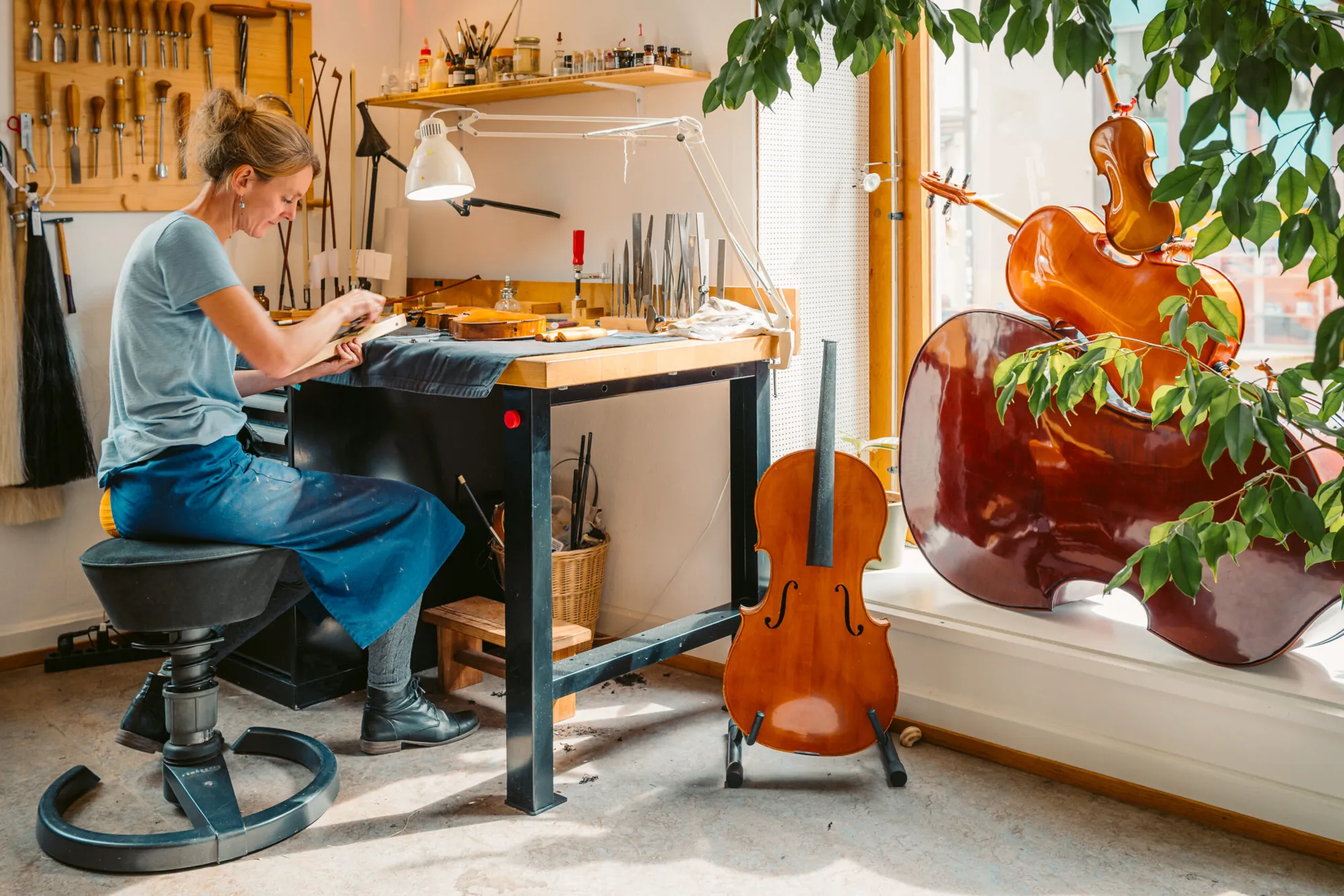
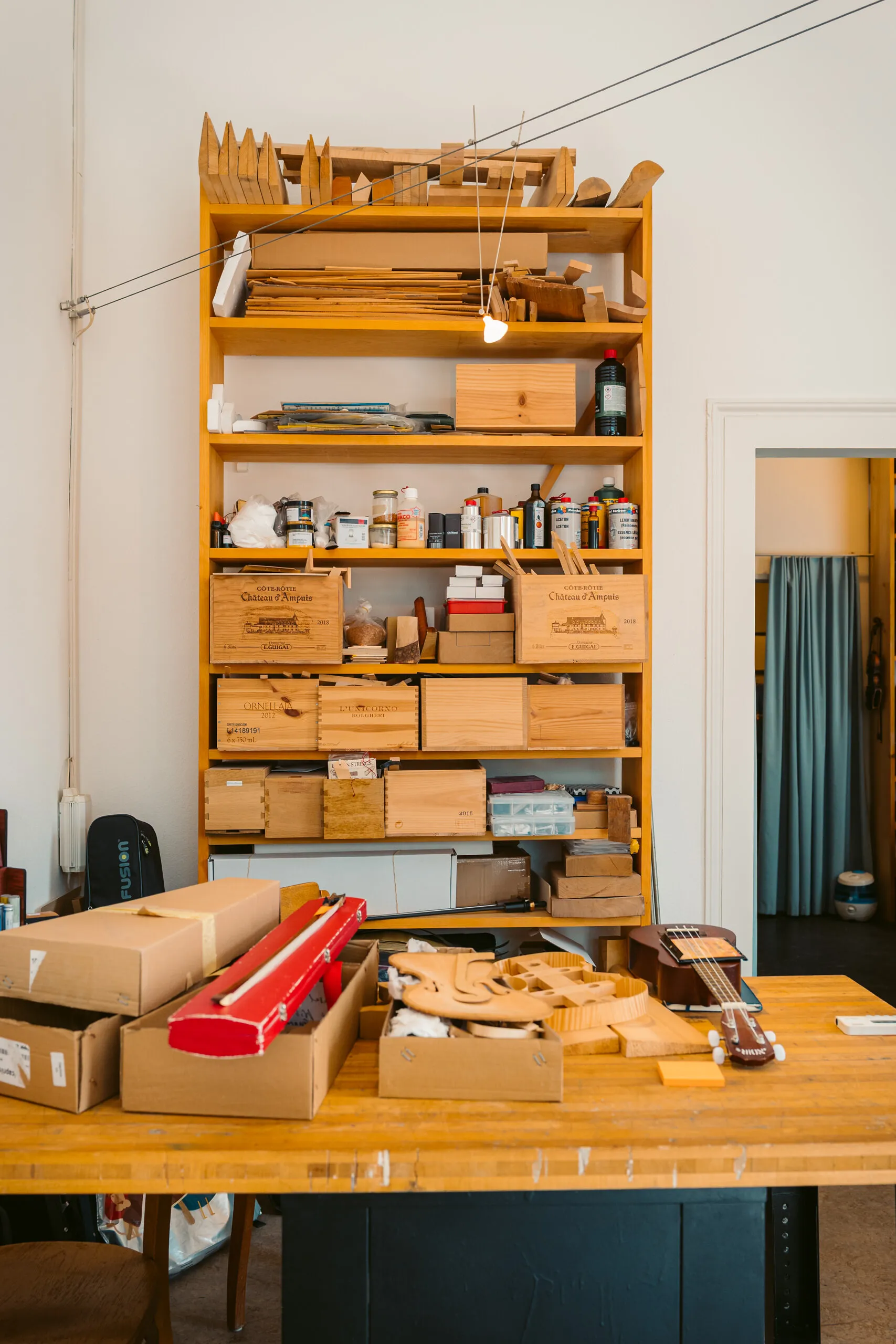
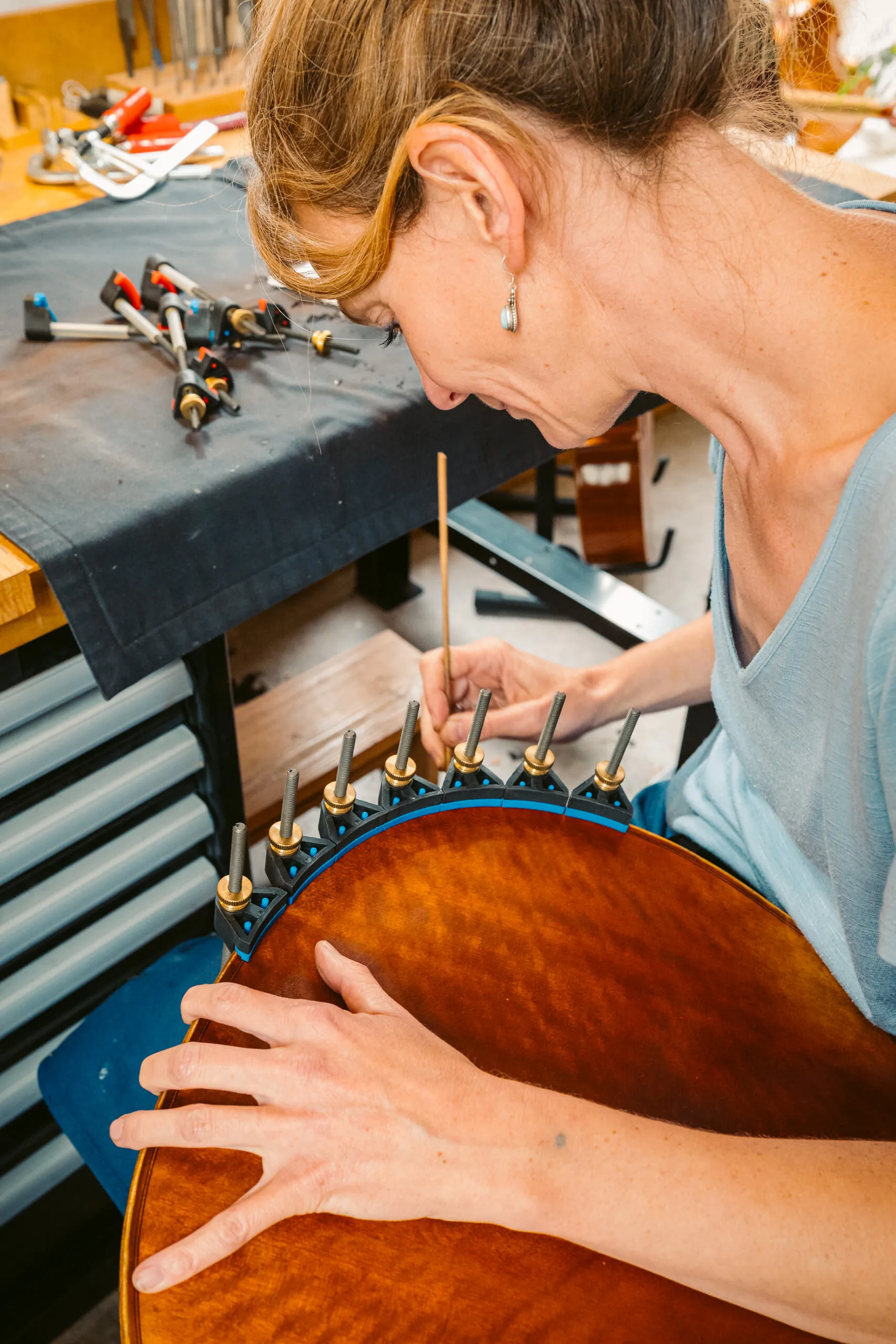
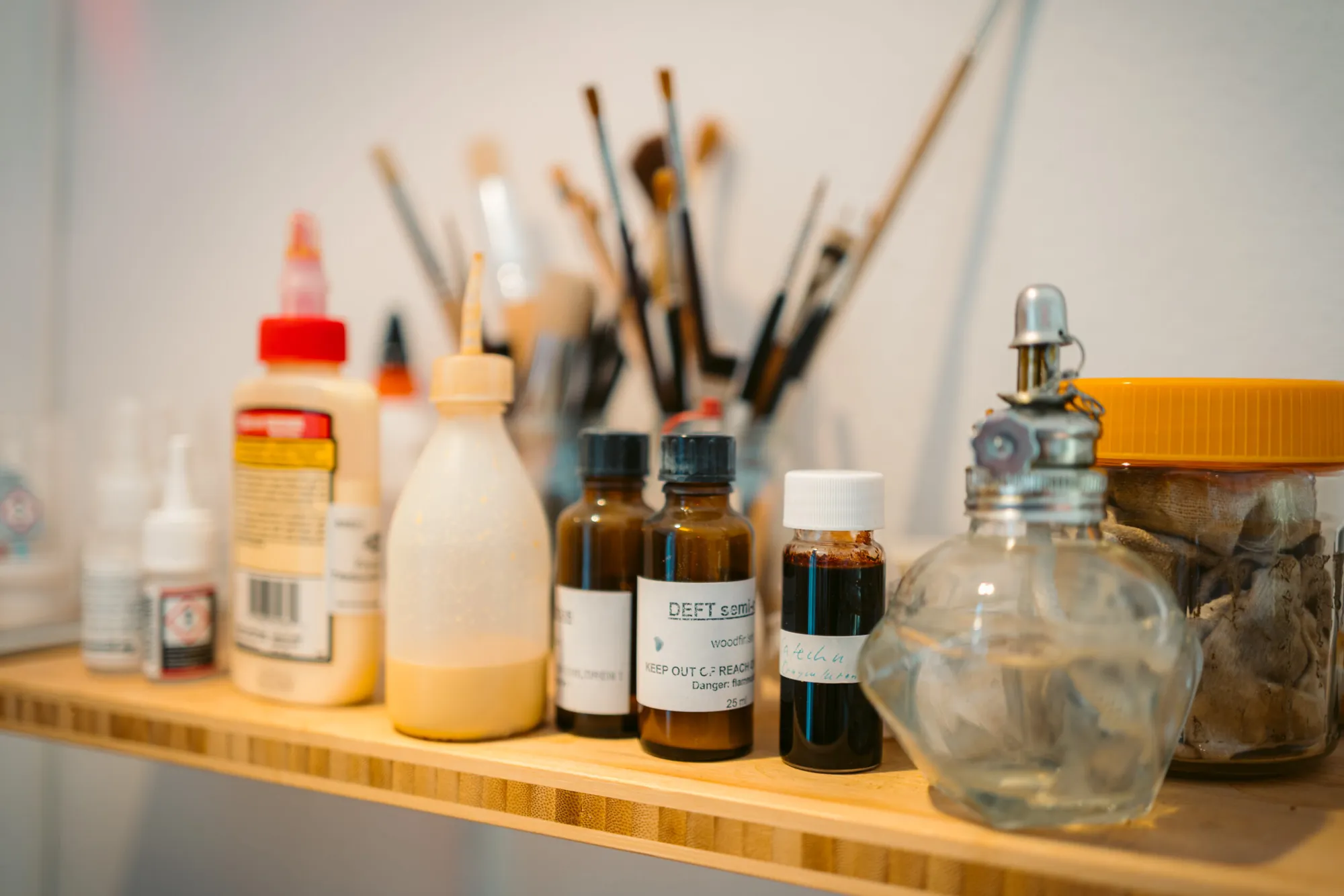
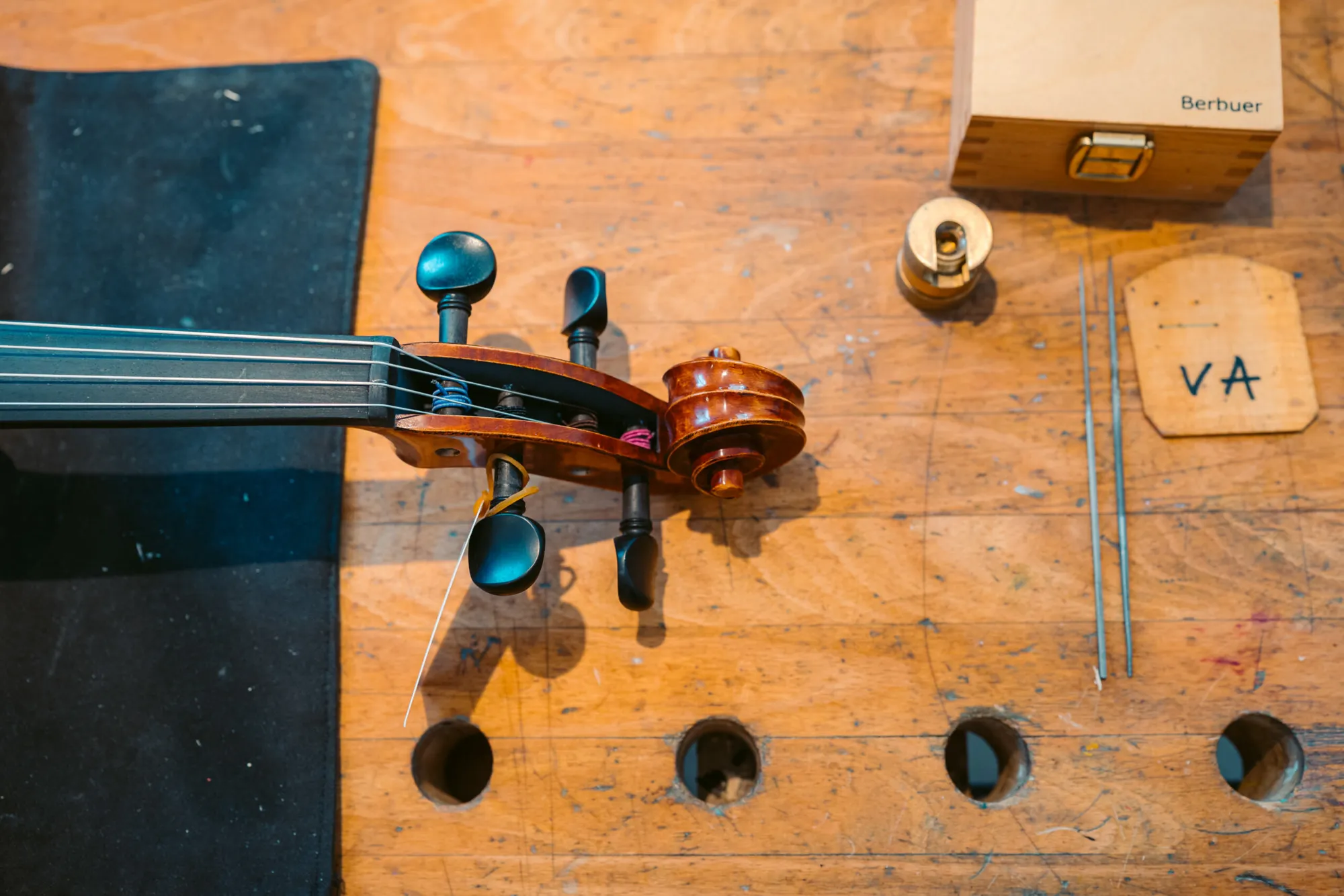
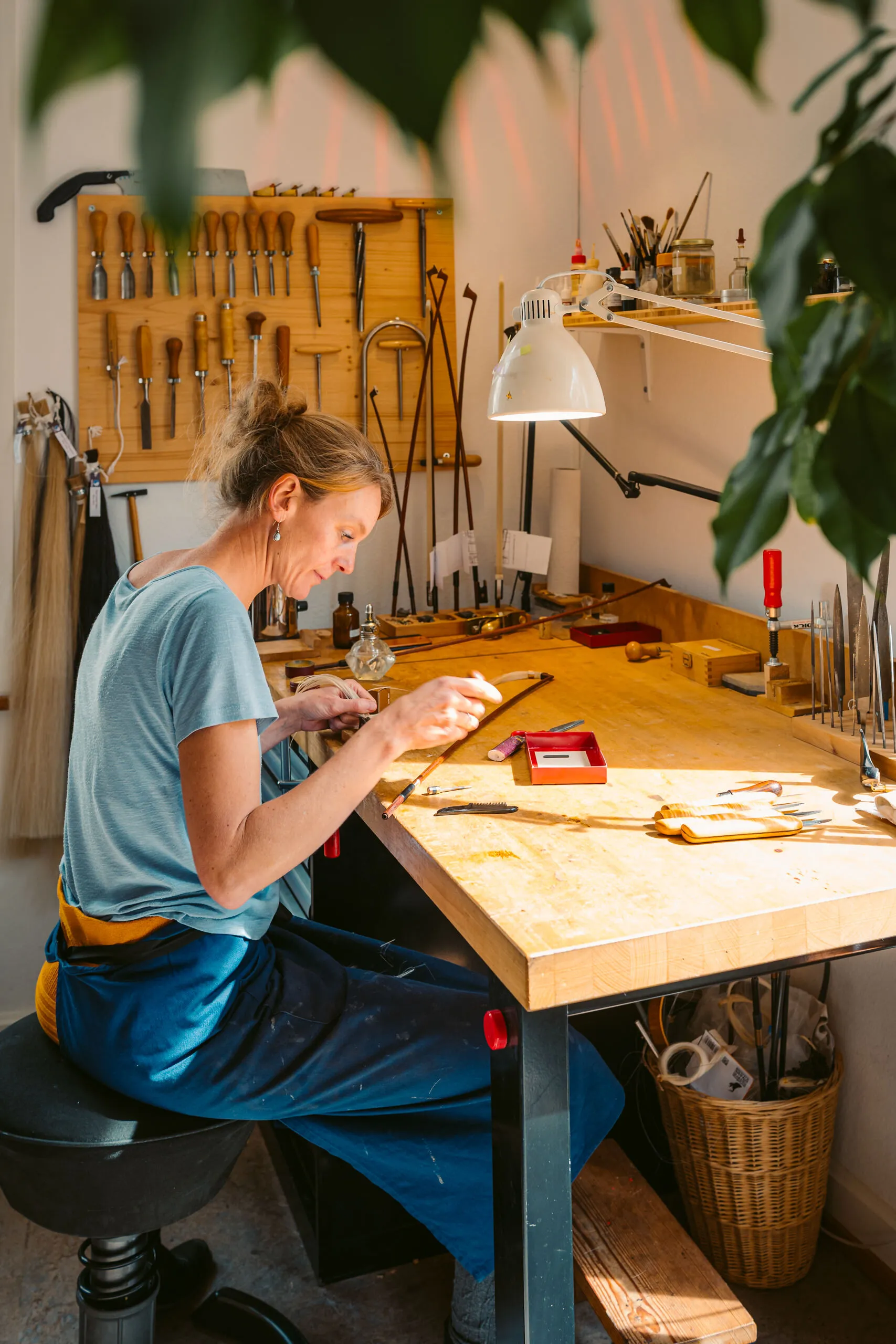
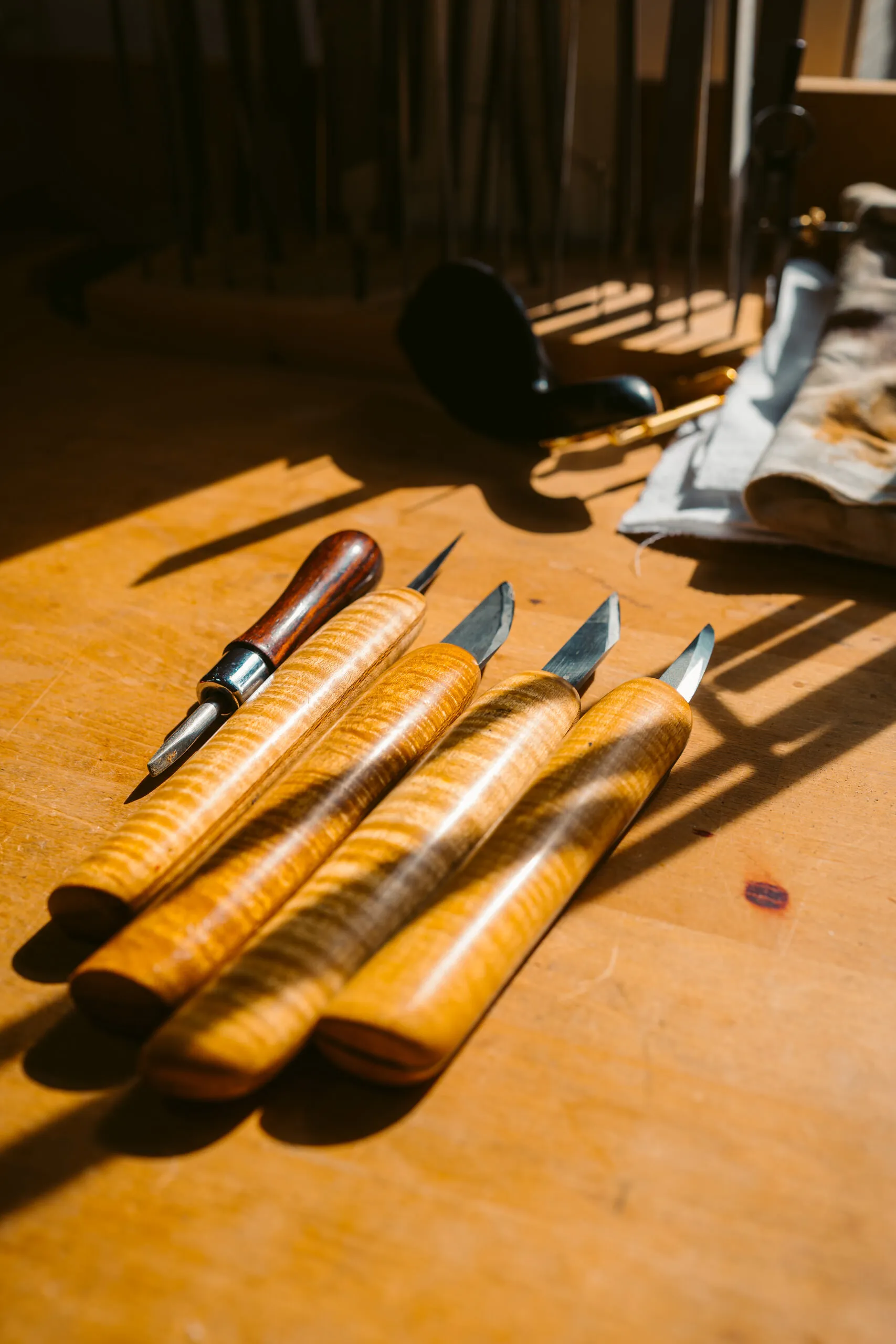
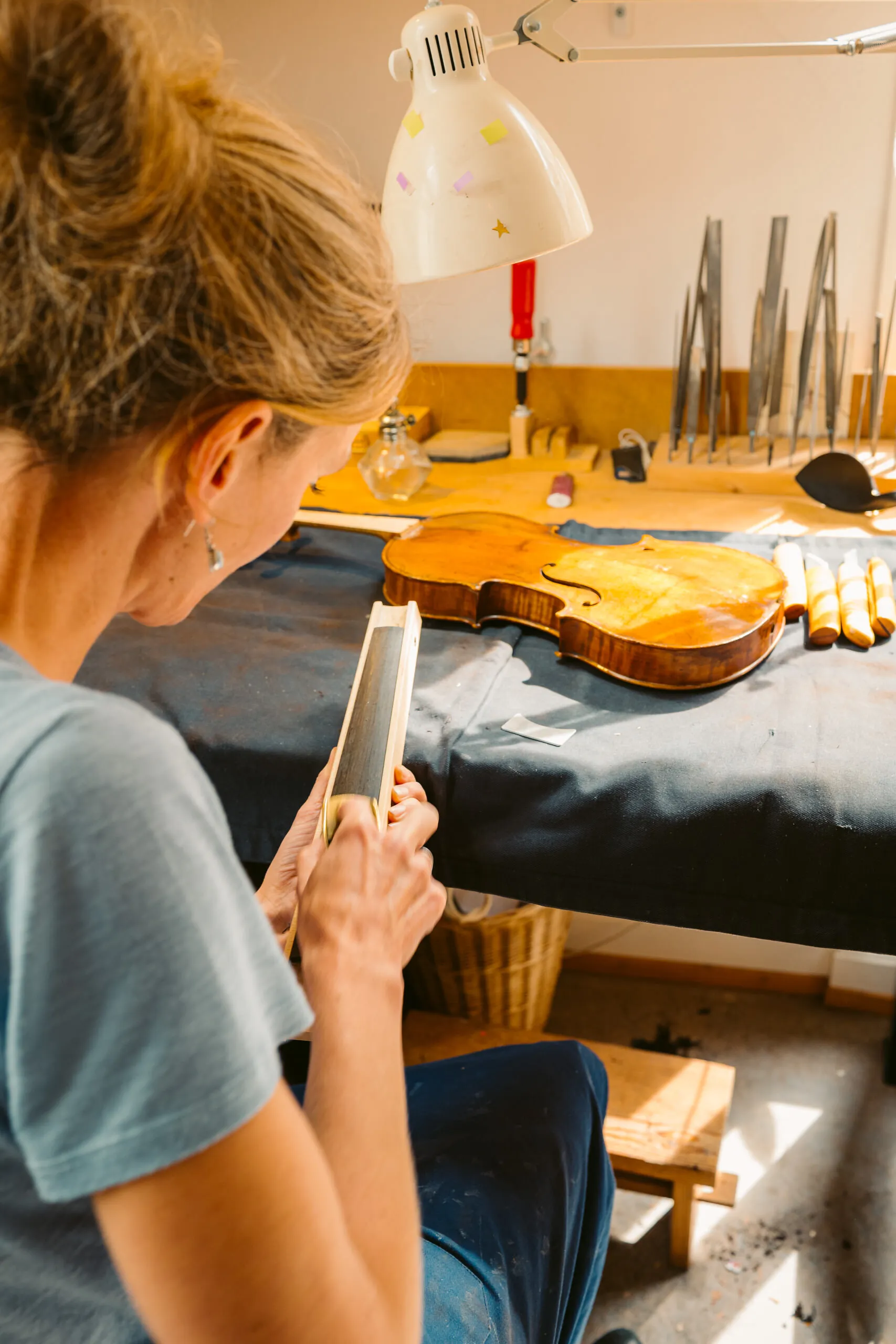
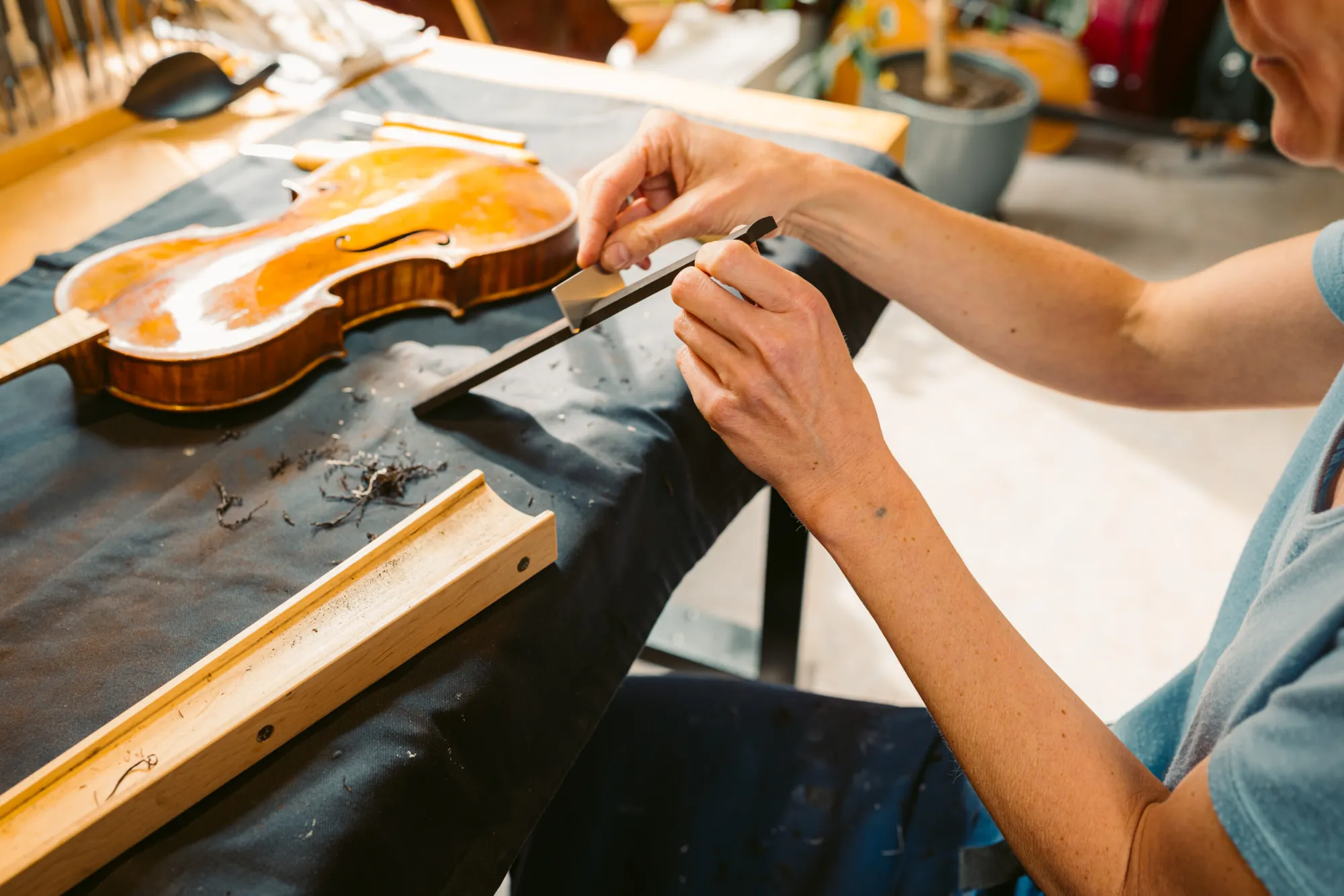
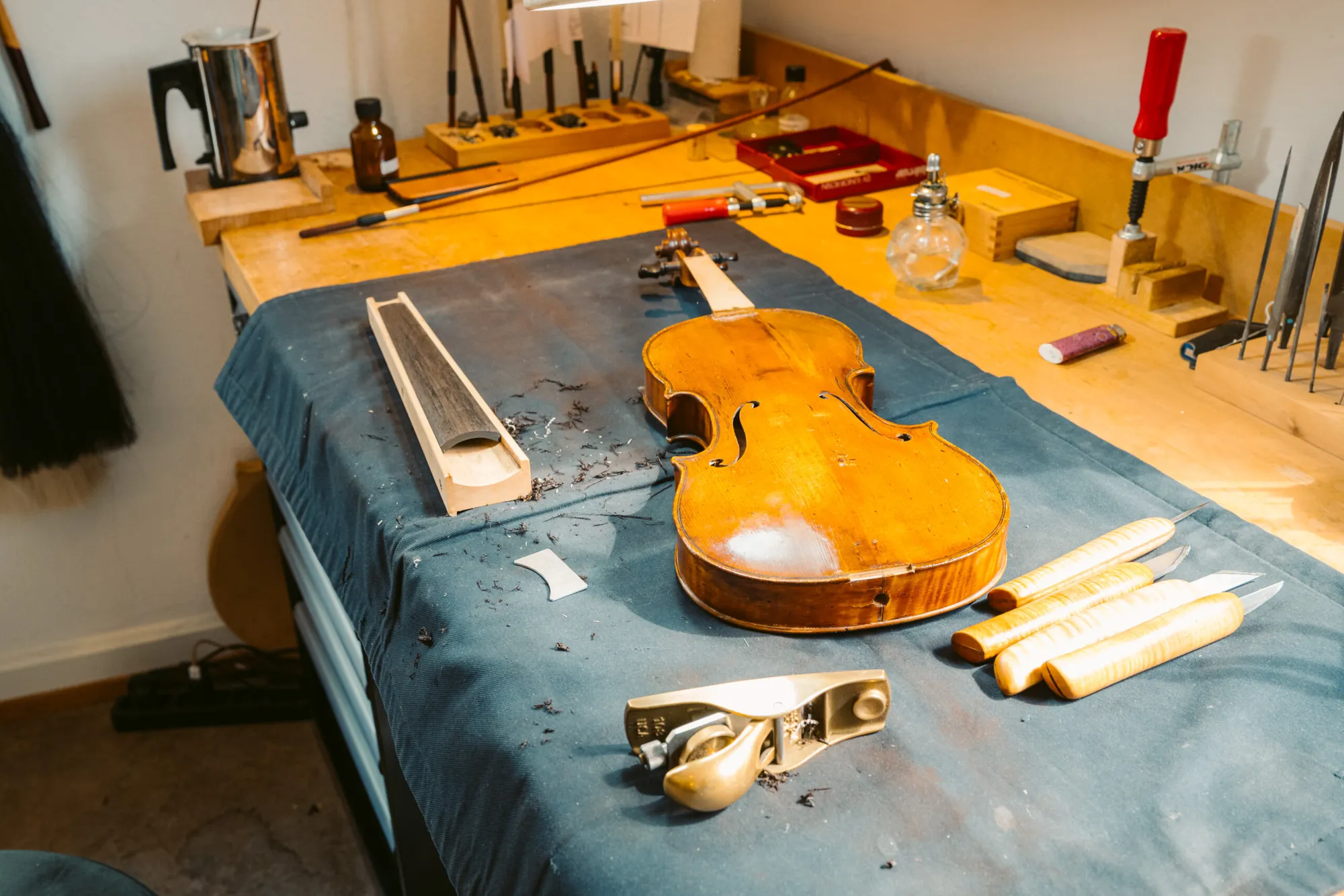
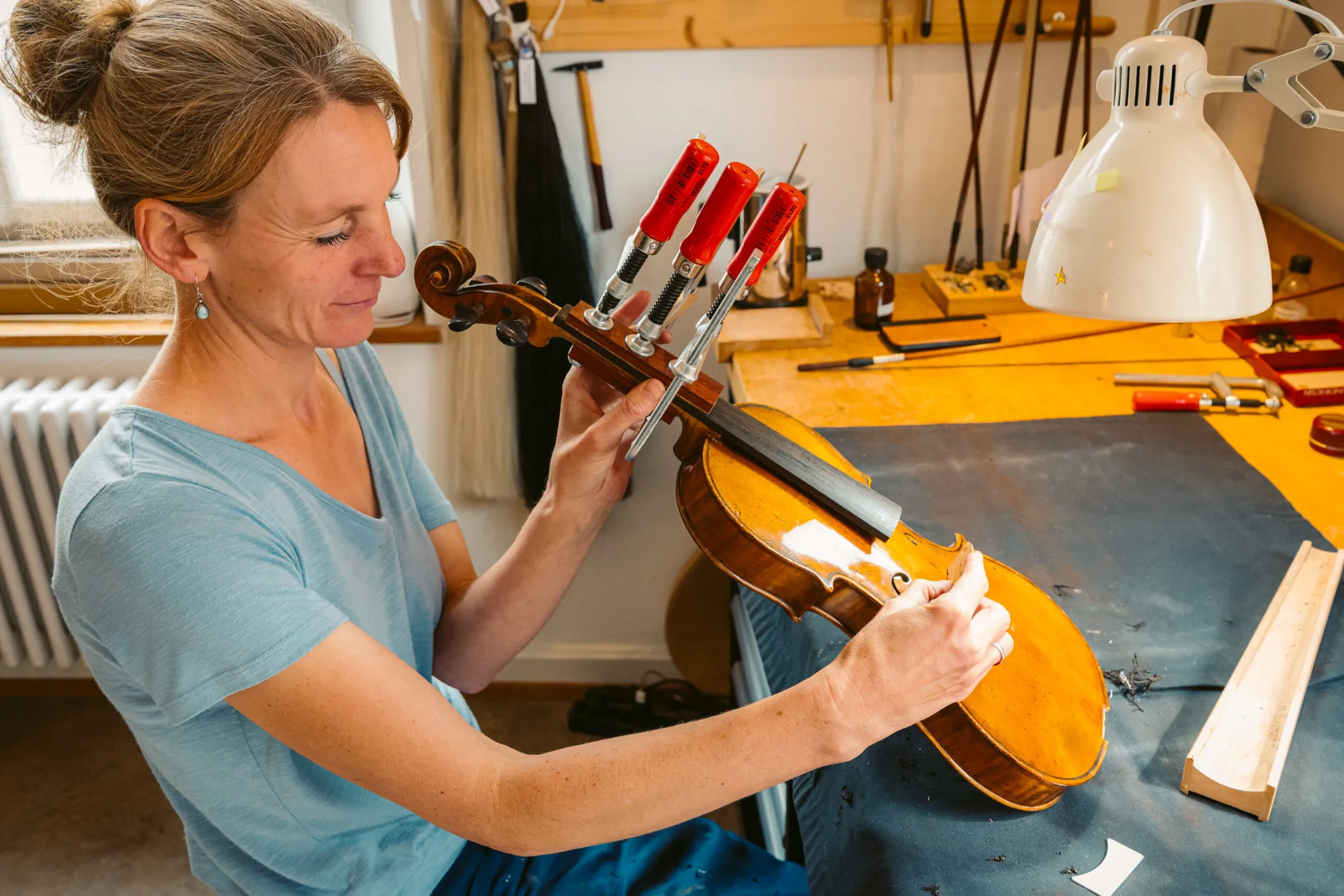
After training at the violin-making school in Brienz and several years of practical experience, she set up her own business in Basel. She has been running her workshop on Petersgraben for two years. “People often ask me if you can make a living from it. And: ‘Is there still a need for that today?’” Anna smiles. She has never been short of work – thanks to the music academy and the Schola Cantorum Basiliensis. Time and again, renowned instruments of great value find their way onto her workbench. That’s when she gets nervous. “With a really expensive instrument, you can’t afford to break anything,” she knows. But where wood is chopped, splinters must fall. And Anna does a lot of woodwork. Her collection of tools is impressive: A multitude of carving knives, chisels, rasps and files lie on the table. Saws, set squares, and hammers hang on the wall. In the drawers and on the shelves are countless specialist tools, bottles, tubes, and tins.
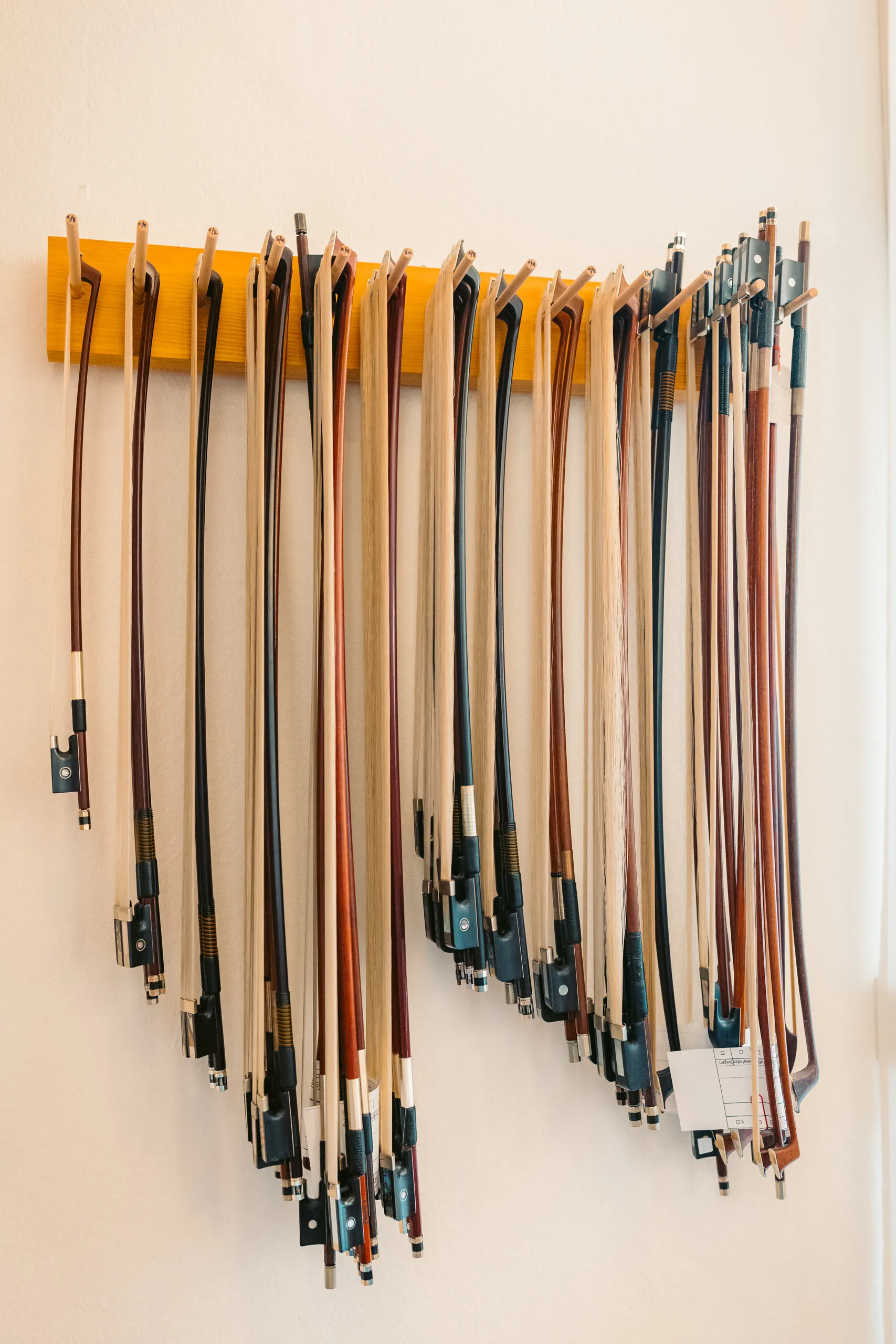
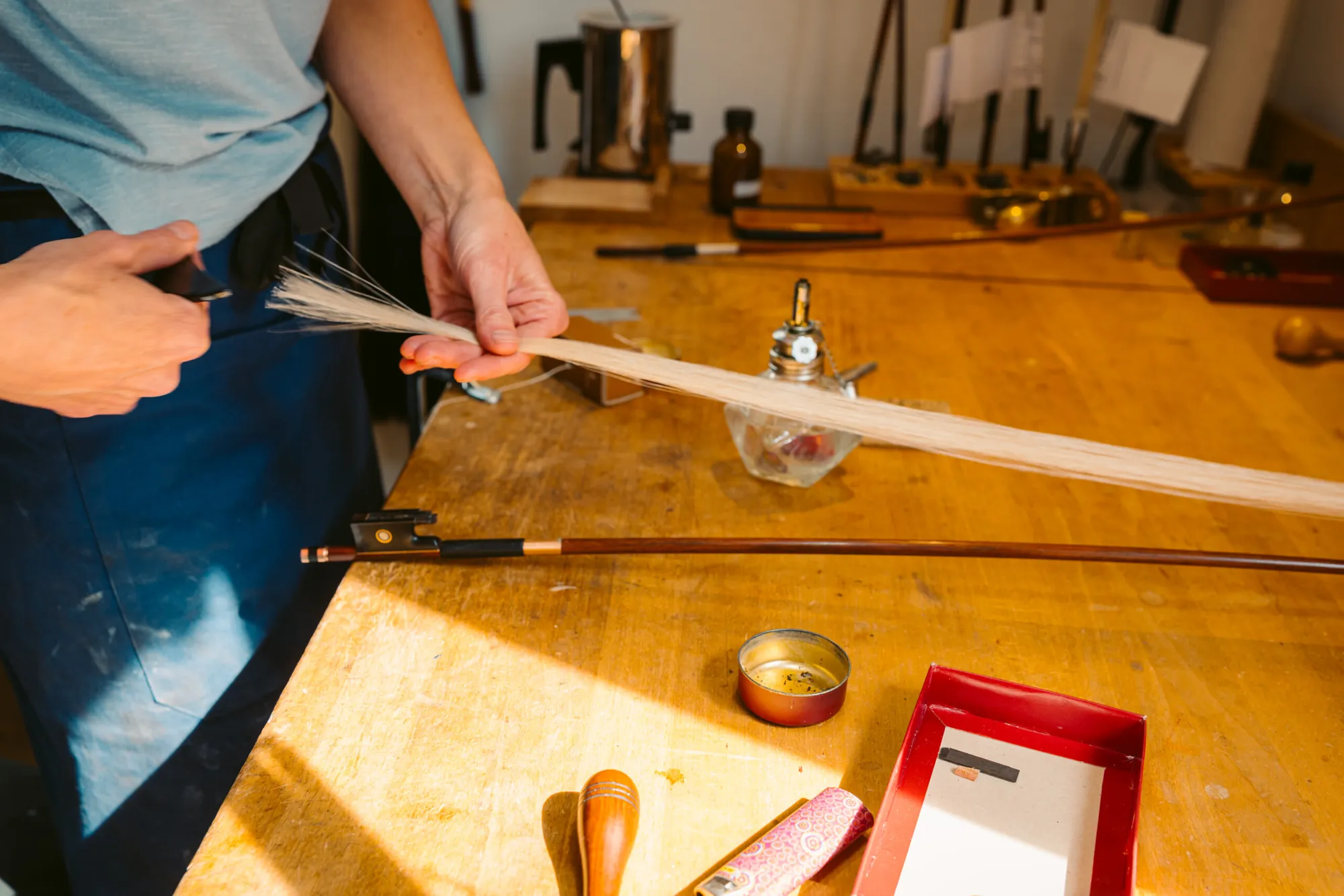
“The good thing is, we can fix anything,” she smiles. “But of course, the thought of having an accident with a truly valuable instrument is a nightmare. After my apprenticeship, I once broke an expensive bow – I’ll never forget that!” A bow can easily cost 5,000 francs or more. There’s a specific training course just for making bows, which takes four years on its own. Anna simply mends the bows and re-strings them. However, an instrument doesn’t necessarily have to be expensive to be of immense value. “You shouldn’t underestimate its sentimental value. A violin might be a wreck, but the owner’s late grandfather used to play it. Therefore, you also can’t let it get damaged whilst you’re repairing it.”
They say that out of 1000 trees, only one is suitable for violin making.
200 hours of work with 200-year-old wood
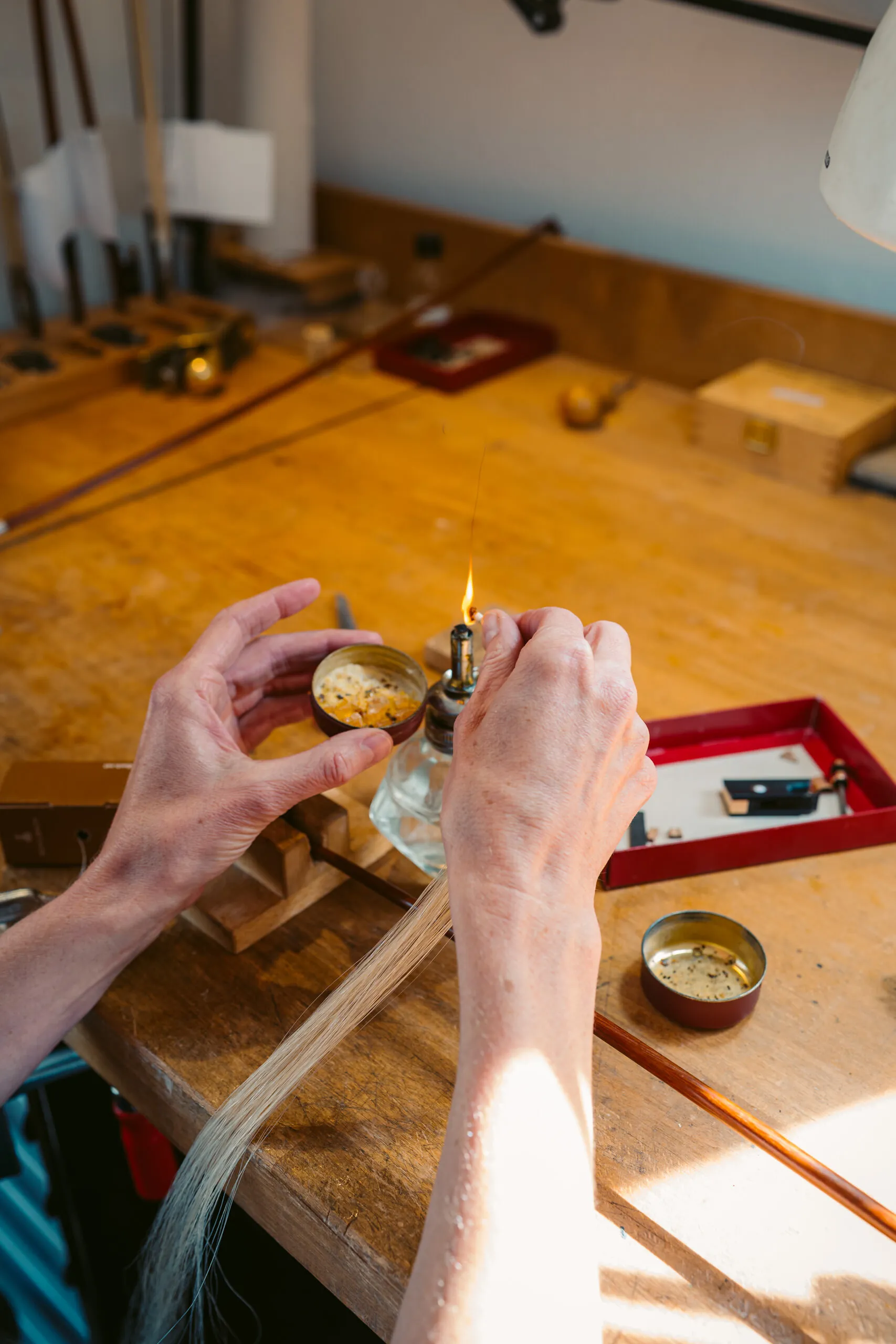
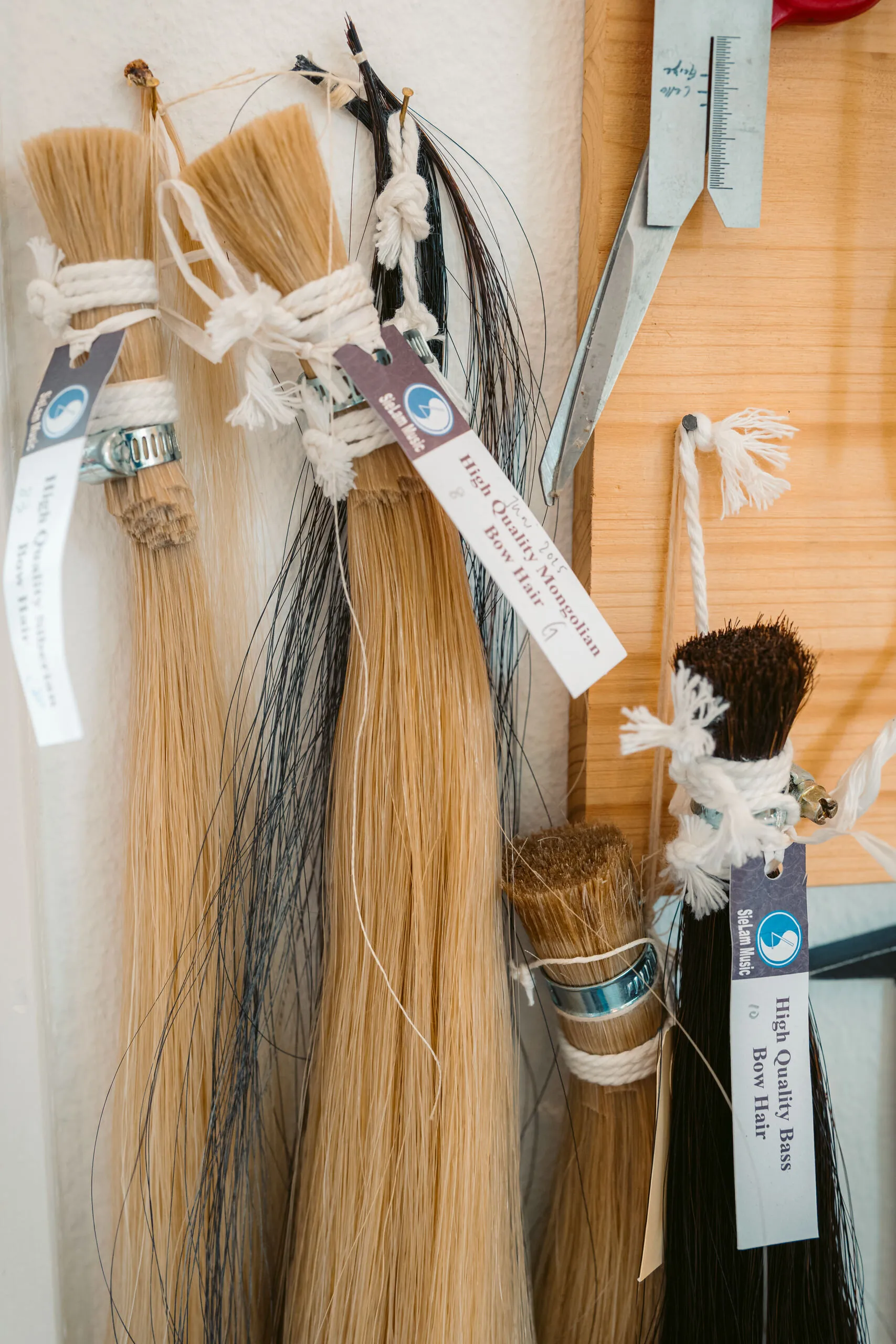
Anna operates in a world of her own. She talks about the bone glue she uses to join the wooden parts, following an old tradition, because it’s elastic and holds incredibly well. And she shows the horsehair hanging in tufts on the wall. It comes from stallions. “You don’t use mare’s hair because mares urinate on their tails. For a violin you need Mongolian hair, Siberian hair for a cello.” The wood, too, is a philosophy in itself. “They say that out of a thousand trees, only one can be used for violin making,” says Anna. “The wood has to be very delicate, meaning it must have grown slowly and densely, so that the annual rings are even and close together. It often comes from the Alps. To build a violin, the tree must have a certain diameter, which it only reaches after about 200 years.”
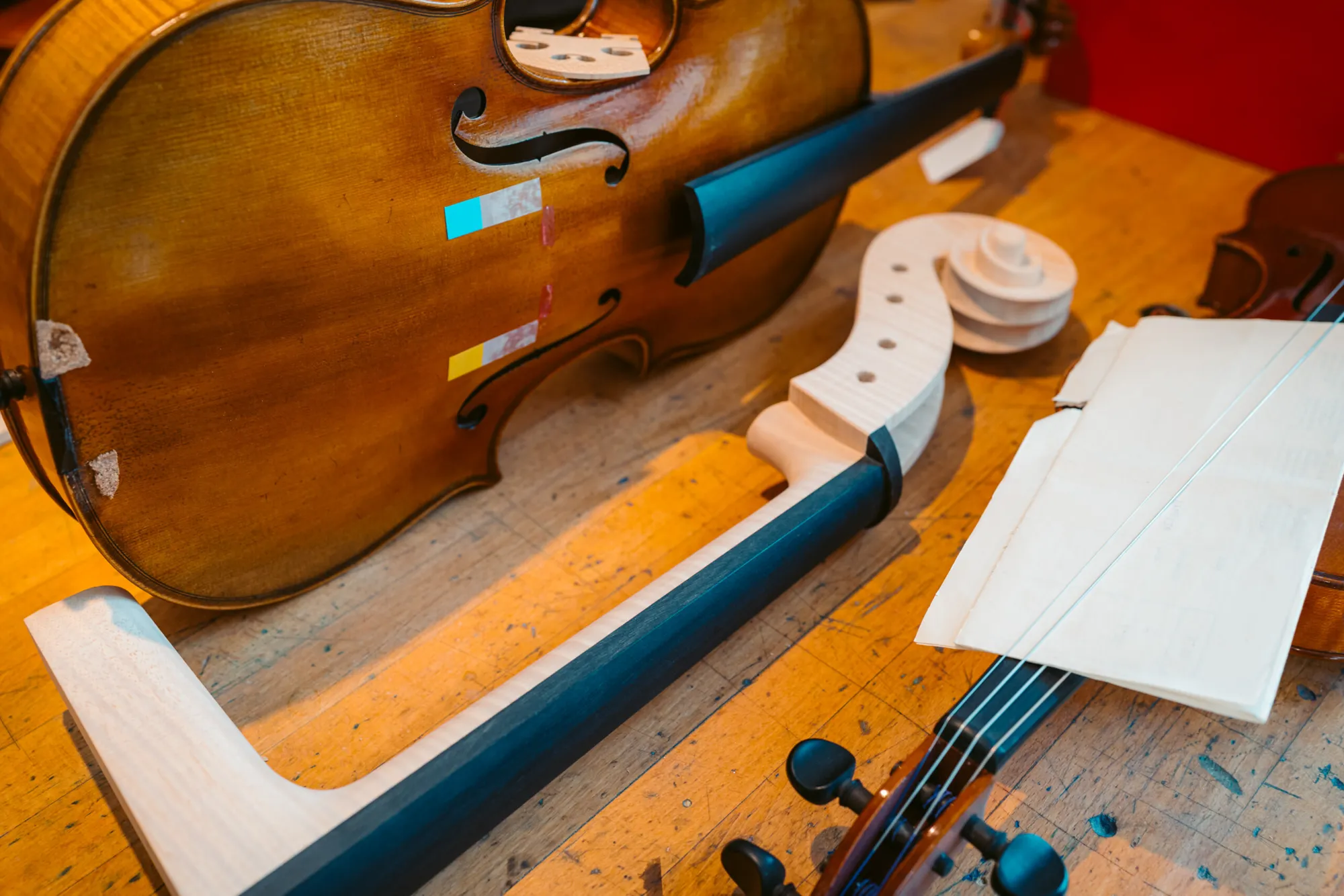
The more Anna talks whilst sanding, gluing, and screwing, the clearer it becomes: The high price of a stringed instrument is justified. It takes a skilled craftsman 200 hours to build a violin. This is only worthwhile for a very few people nowadays – only professionals buy violins costing 20,000 francs or more. Anna is currently building a cello for one of her sons, but otherwise she no longer makes instruments. She focuses on repairs and restorations. She also rents out violins, violas, and cellos to music students. Most of these are more affordable instruments costing a few thousand francs. Even these can sound wonderful. “You can’t tell the price of every expensive violin anyway – often, you’re paying for the name,” says Anna. “As soon as you know you’re listening to a Stradivari worth 3 million, you become awestruck. It’s difficult to judge the sound objectively then.” Nevertheless, these extremely valuable, centuries-old instruments are still played – and not just by stars like Anne-Sophie Mutter or David Garrett. If one of these instruments requires Anna’s professional help, she locks it away in a huge safe after the repairs – better safe than sorry.
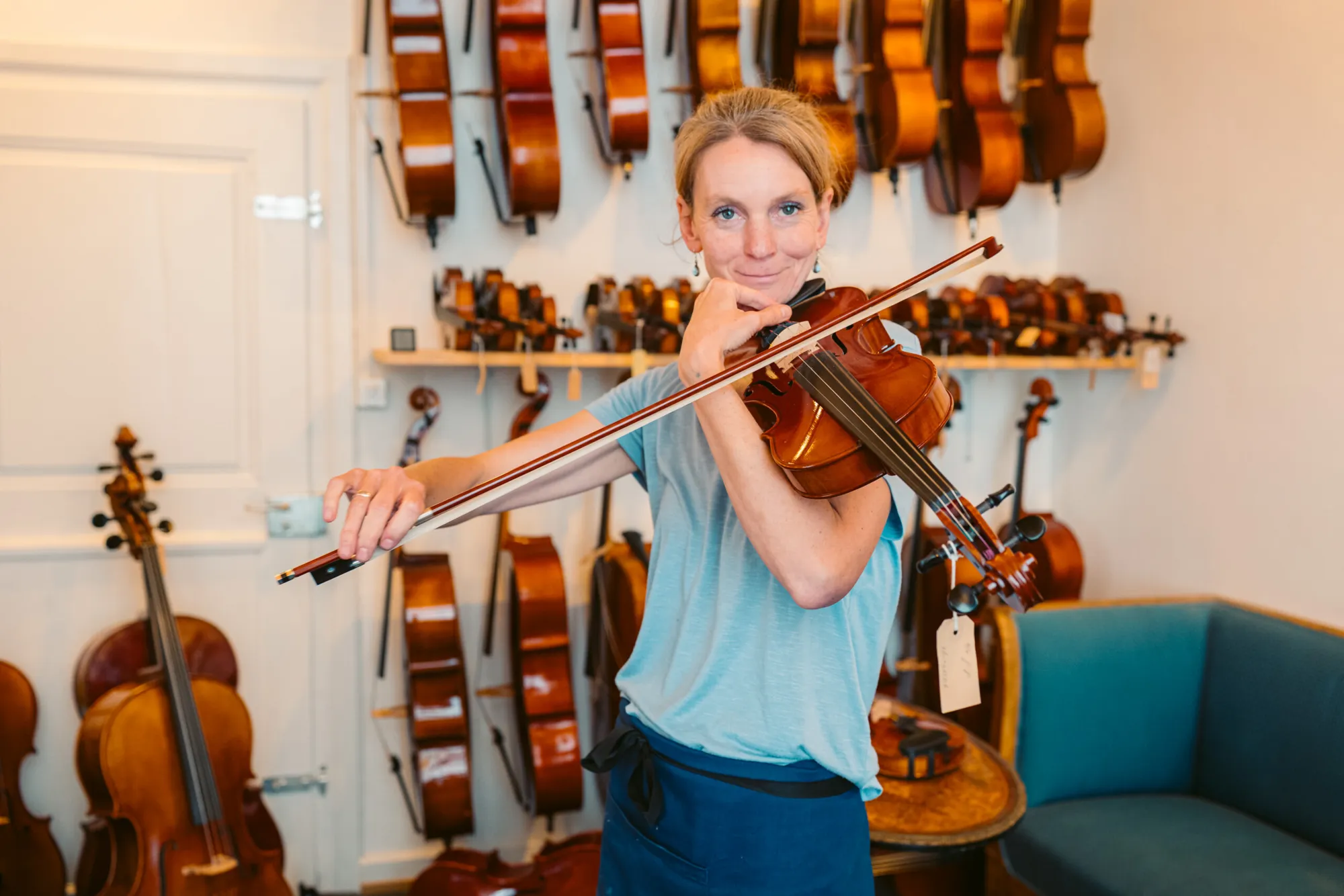
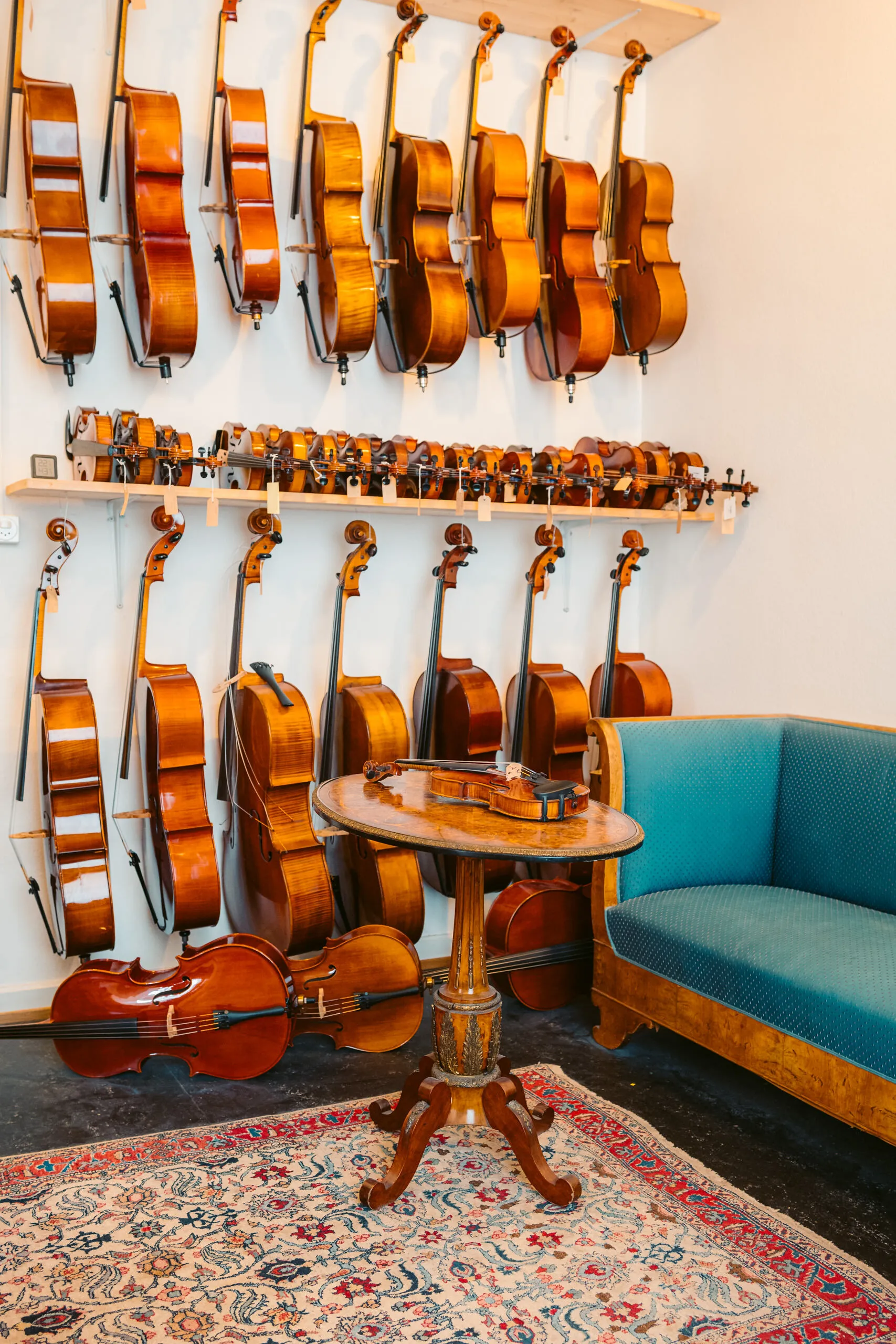
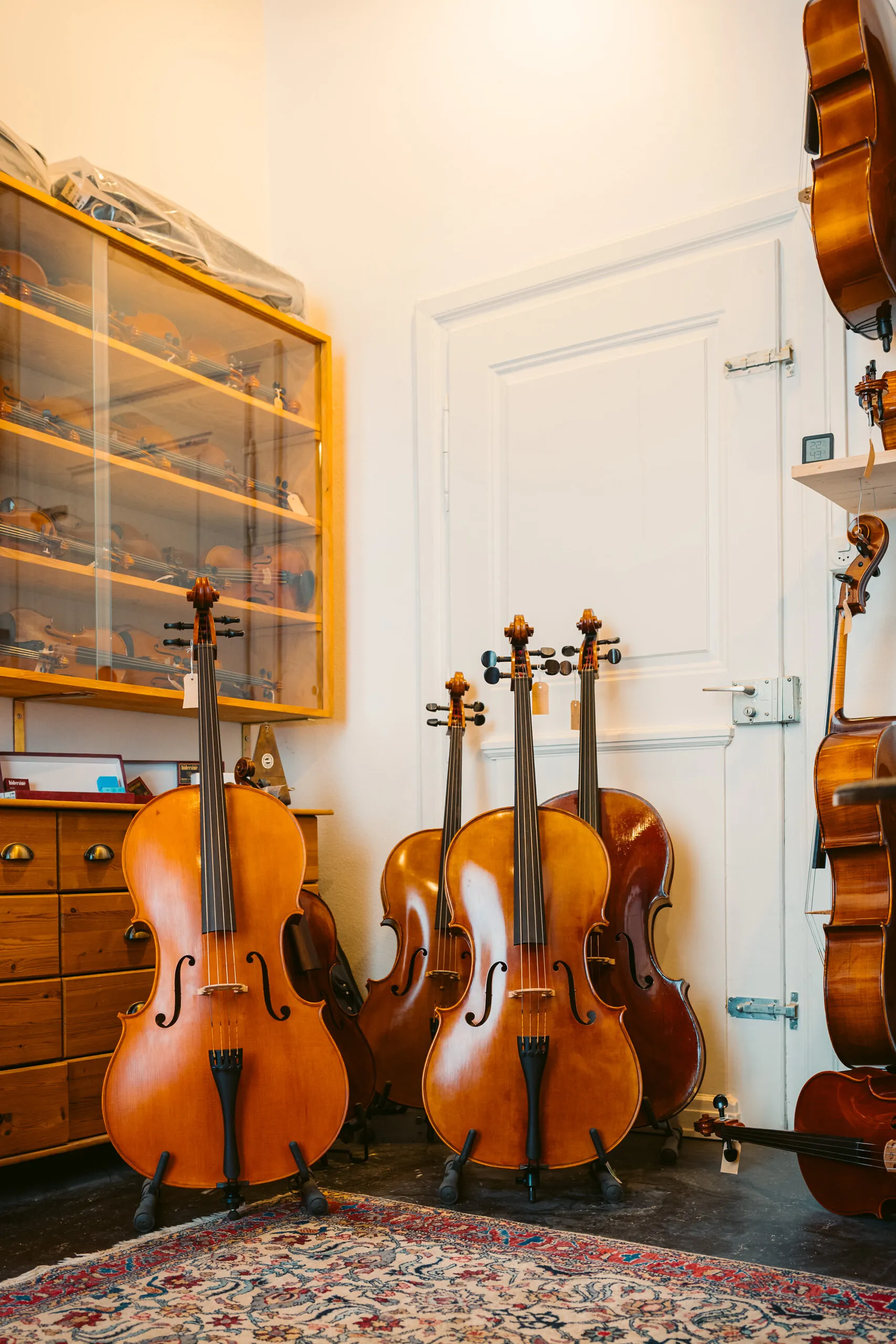
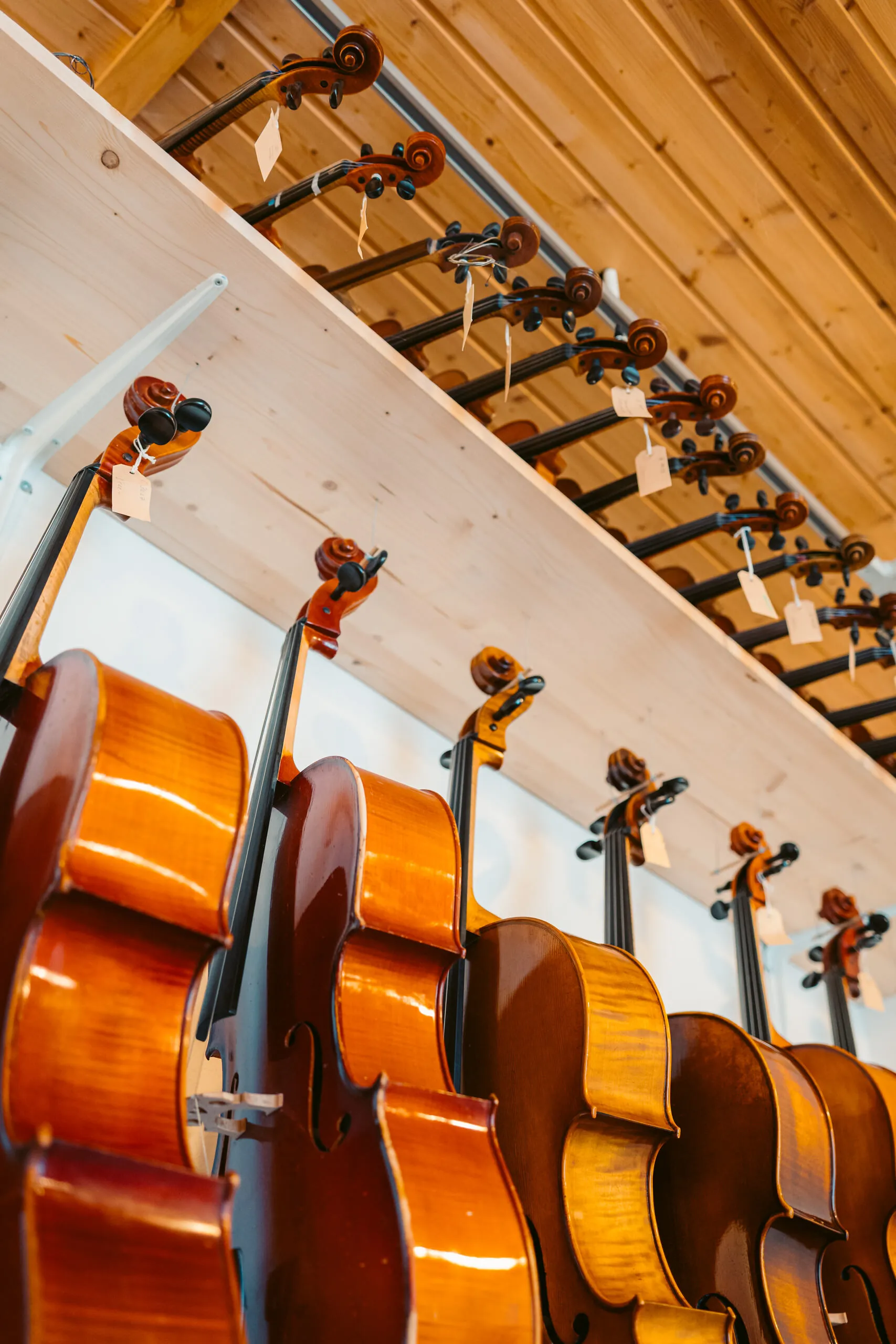
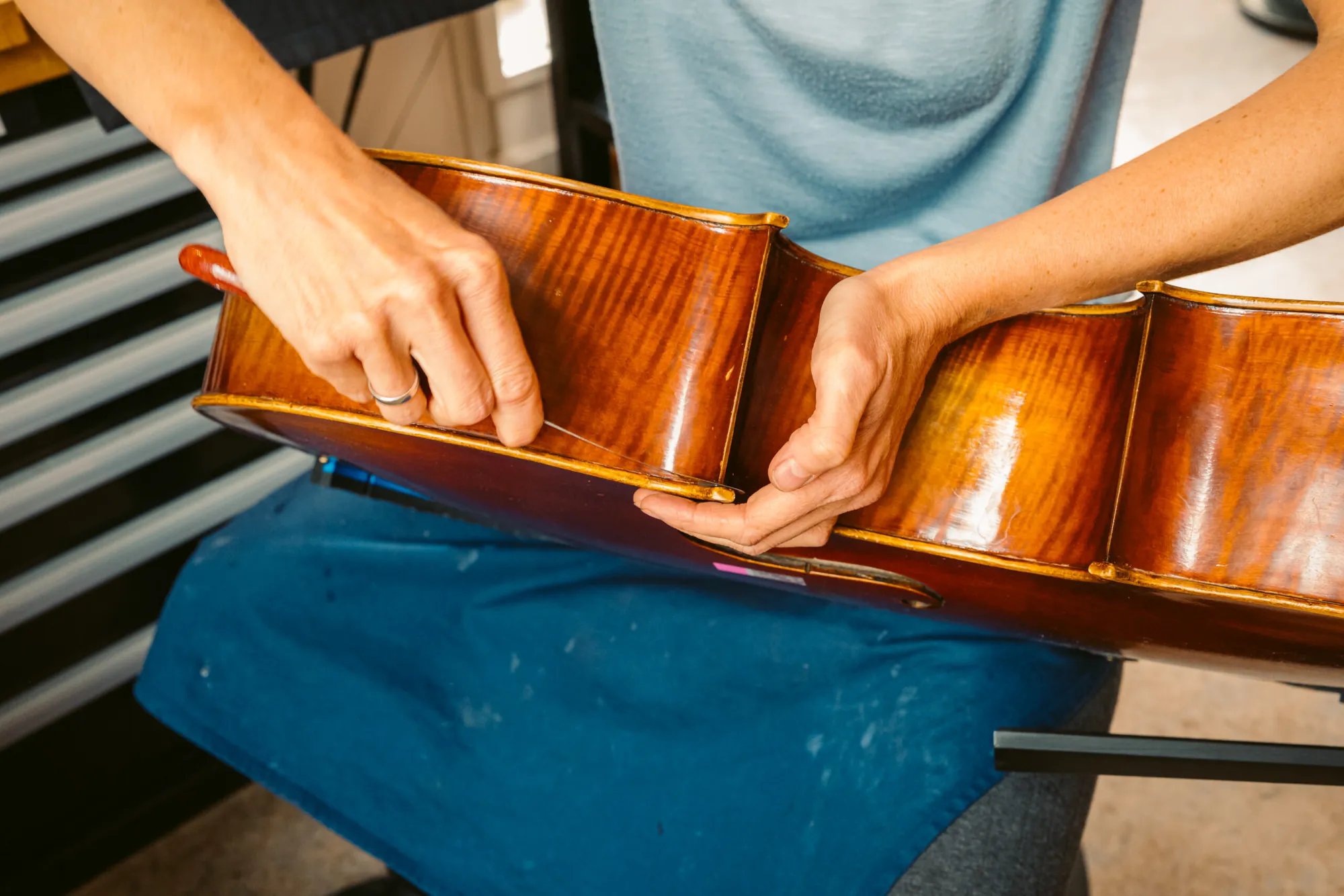
Anna bends over an old children’s cello whose top has come loose. With a firm, practised grip, she handles the instrument, re-glues it, fits screw clamps, and shakes her head: “The repair is only worth it for the sentimental value.” In the back room, instruments are lined up on various shelves and in display cabinets; countless bows hang on the wall, alongside instrument cases, rosin, shoulder rests, strings, bridges, and pegs. Anna knows all this inside out. And she’s equally at home with emergencies involving music students or special requests from star violinists. With her open and pragmatic nature, a tuning fork in her apron, and a carving knife in her hand, she stands with both feet firmly planted in the often somewhat aloof world of music, ensuring that people of all ages can celebrate successes both big and small on their violins and cellos.
Anna Reber Geigenbau
Petersgraben 18
reber-geigenbau.ch