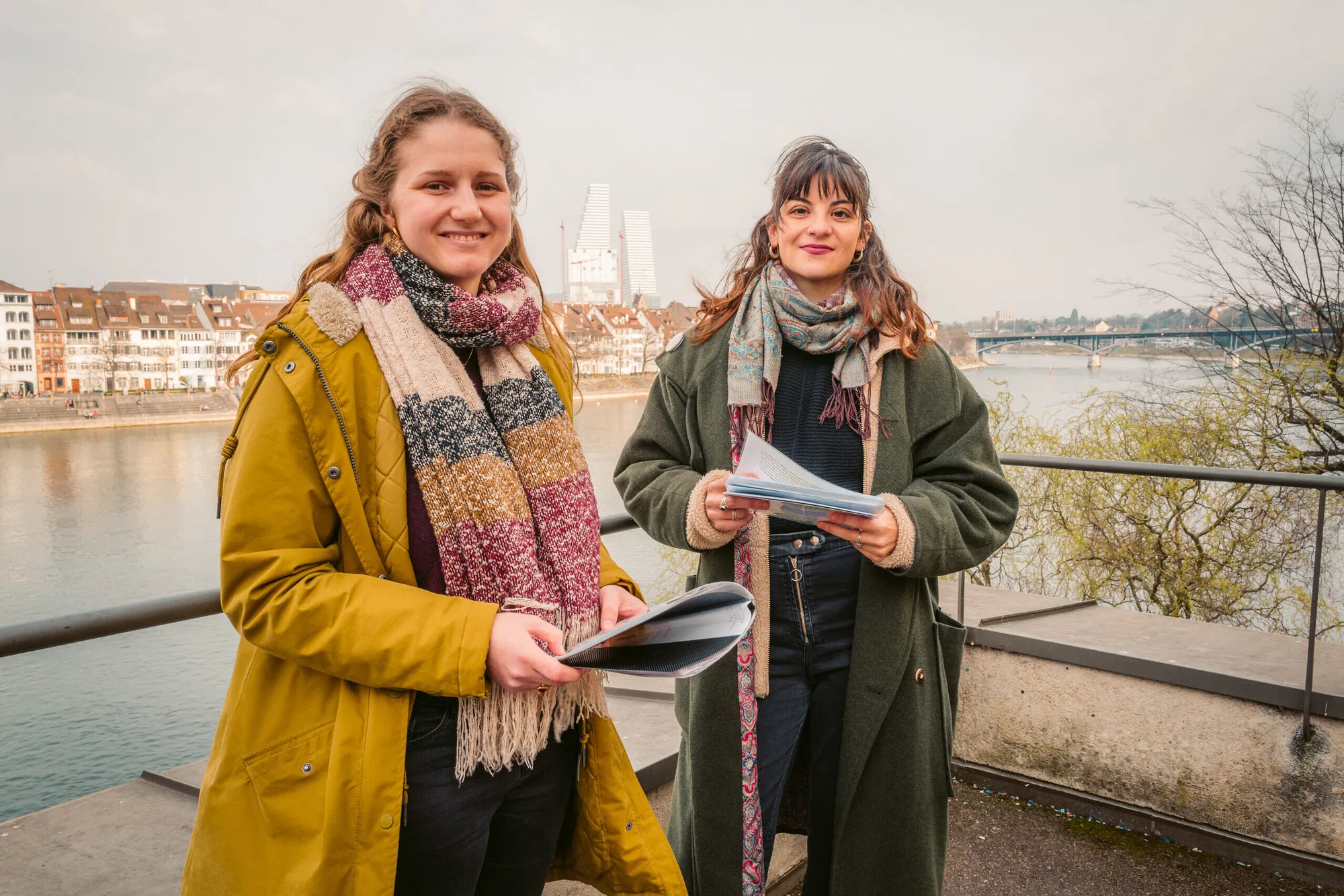
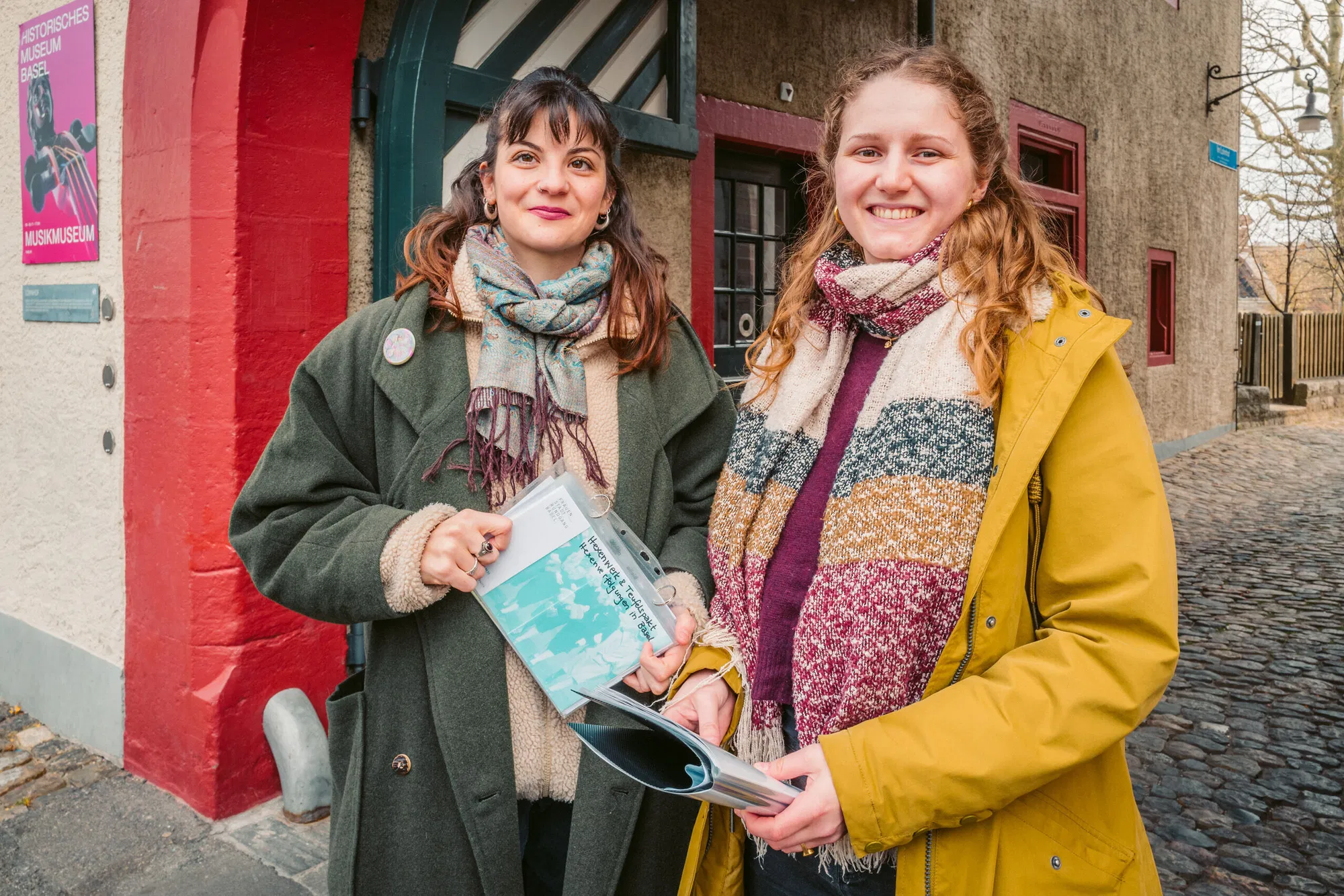
They are usually women and always well-versed in history: the city tour guides of the “Frauenstadtrundgang” association, who have been recounting Basel’s history from a different perspective for 30 years now. For a long time only women were allowed to become members of the association, but in 2015 it opened its doors to people of every gender. And the tours, with subjects such as “Sorcery and a Pact with the Devil”, “Unseen and Underpaid” and “St. Johann – the Hotspot” are interesting for men too. The two young historians Tamara and Linda will take you off on a walking tour and give you some insights into Basel’s history.
We don’t differ from the historians in the kind of source material we use, but we consider it from a different perspective, ask different questions.
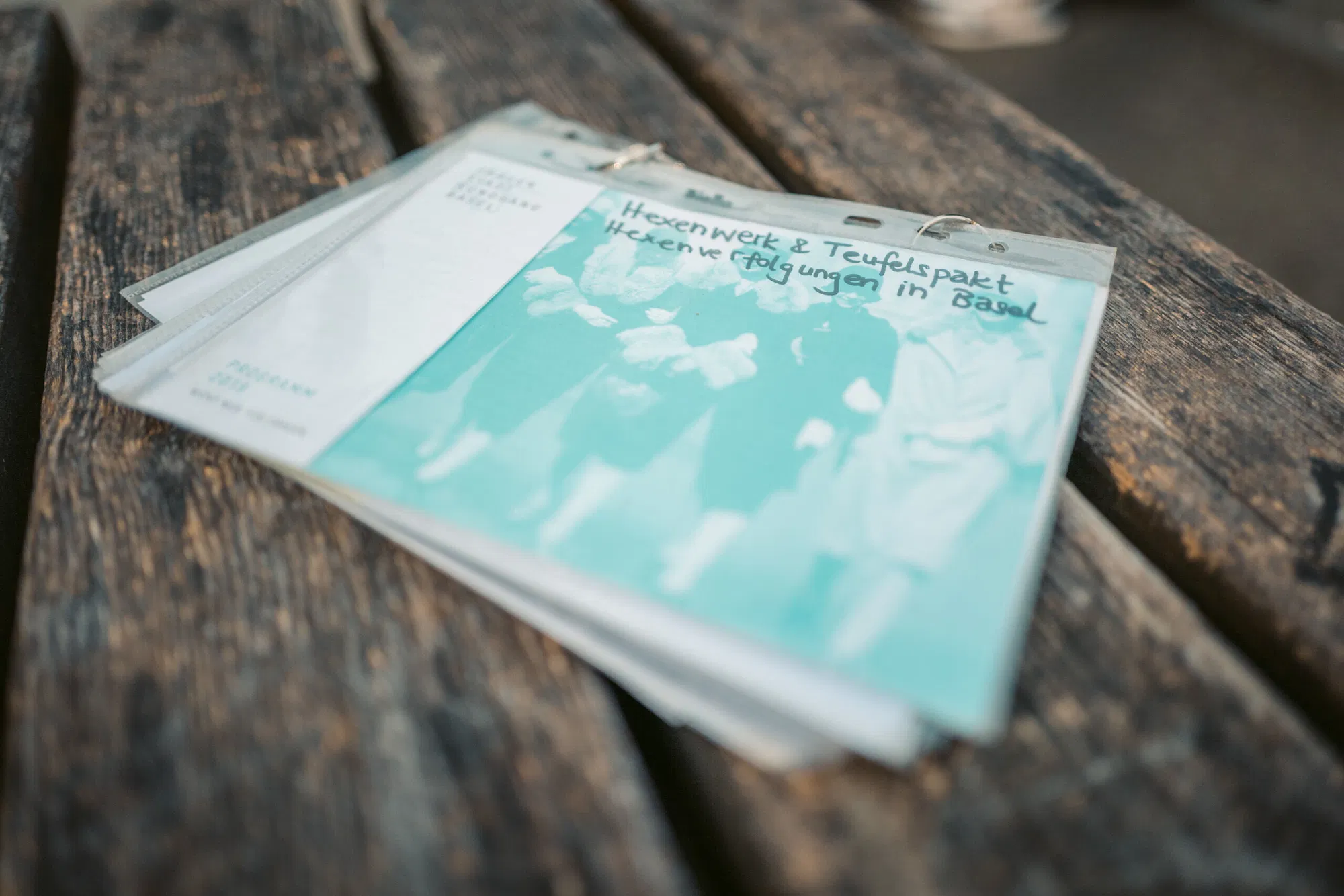
The starting point is the Marktplatz in the direction of the Gerbergasse, the two of them have a bag of props with them as well as a witch’s broomstick, which draws some amused looks from the crowds in the city centre. The official start of the tour about witches is at the Lohnhof. “This tour is always very well attended”, Linda grins, “because of all the bloodletting and murder!” But the tours don’t concentrate exclusively on lurid details. They also touch on topics such as rituals for the dying, care of the elderly and women’s politics. Tamara recalls the tragic fate of black housekeepers who were brought from Africa to Europe in the wake of the missionary work there in the 19th century. “They had to look after the wealthy families of Basel, but no-one took care of them. One of the girls was just 12 years old when she came to Basel…”
Old sources, new points of view
Linda tells the story of a memorable incident which occurred during the period of the Schwarzenbach initiative in 1970. This highly controversial ballot was aimed at reducing the proportion of foreigners residing in Switzerland to a maximum of ten percent. “An event was organised at Basel’s Exhibition Hall by ‘National Action’, James Schwarzenbach’s party. But the whole thing escalated quite badly. There was a lot of heated heckling, young people were berating old people, and the old people scolding the young. One elderly lady even whacked a guy over the head with her umbrella – completely unimaginable these days!”
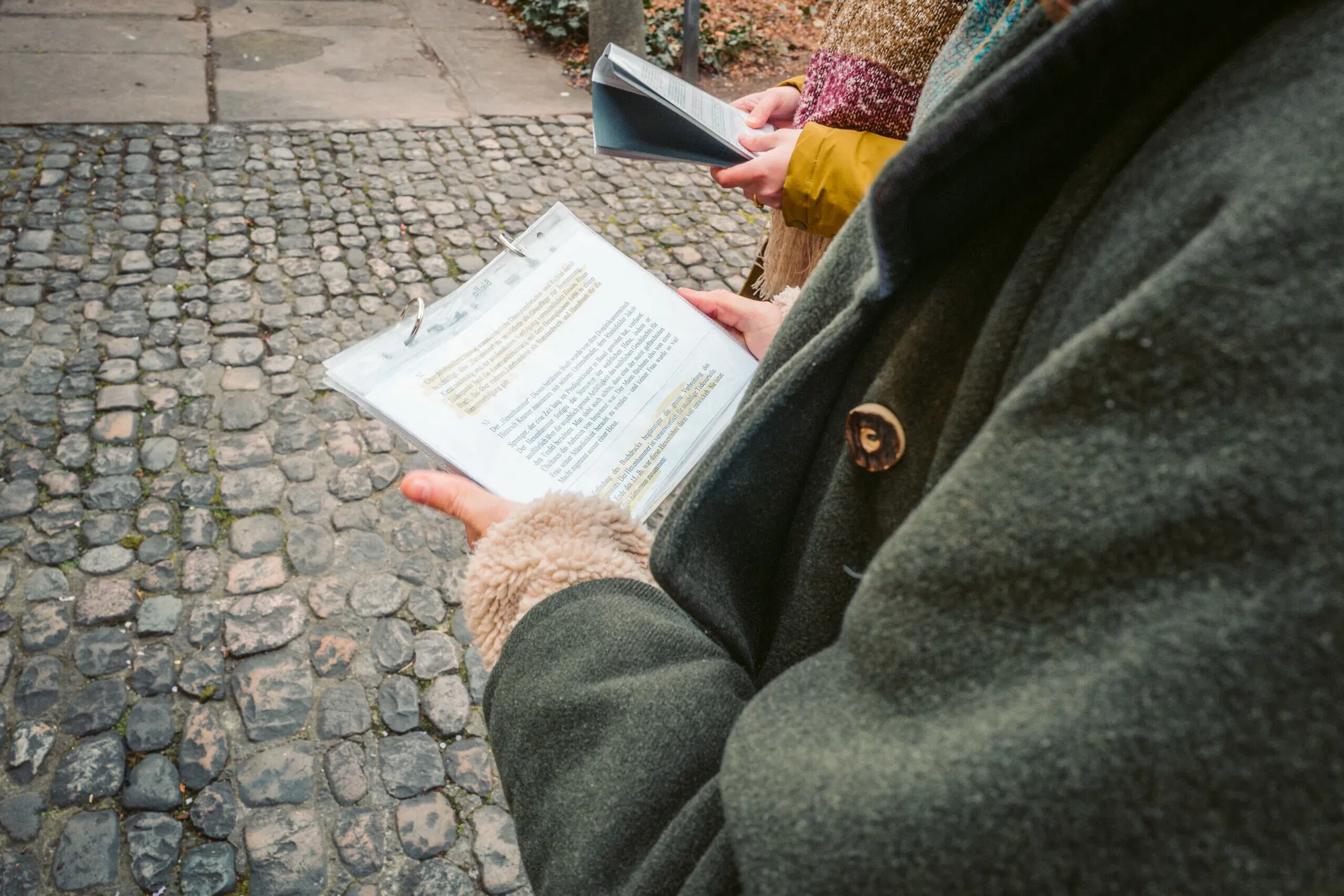
How on earth do you come up with this kind of story? “Research!” Linda smiles. “You have to delve into the subject and then, somewhere or other in a book in a cellar of the library, or in the city archives, you will stumble on something quite fascinating”, adds Tamara. “We don’t differ from the historians in the kind of source material we use, but we consider it from a different perspective, ask different questions.” explains Linda. The walk continues in the direction of the Kohlenberg. The two of them don a kerchief and a bonnet and perform a brief sketch in front of the Leonhard High School – the women’s city tour is far from being a dry transfer of knowledge! Some small scenes are even re-enacted, with props. Which also explains the broom.
A focus on gender history
The precondition for actively participating in the Frauenstadtrundgang Association is to be studying for a degree that can enrich the range of topics and perspectives in the preparation of the tours. “During our studies, we often come across topics that we can integrate in the tours”, Tamara tells us. The association was founded in the context of the Swiss National Women’s Strike in 1991. And the tours still pay special attention to gender history these days. But that does not mean that the focus is necessarily on the female gender. “We choose topics that interest us – but they can also be about the environment or migration – and then we look at how it was for the women involved. But we have stops where we address the question of masculinity too and we do try to find queer feminist approaches. Mind you, that is quite a challenge, because our source material usually only refers to men or women and we need new approaches to analysing our source material”, explains Linda.
We continue in the direction of the Barfüsserplatz, up the Streitgasse, down the Freie Strasse. Tamara tells us about the bizarre history of the old Klingental convent. “In the Middle Ages, the nuns here did not lead lives of piety and modesty, on the contrary they lived it up, in the lap of luxury. They had their own maids, bathed in the Rhine, chatted during Mass and one nun apparently even gave birth to a child. The people of Basel were most displeased about all this and wanted to banish the sinful nuns. However, the nuns put up a good fight, lashing out and banging on cooking pots – successfully in the end, because they were allowed to remain in the convent till the death of the last abbess.”
At the end of our tour, we have our sights set on a place of particular horror, near the old University – the small bridge chapel, the “Käppelijoch”. “It was here that women who had been condemned to death by drowning were thrown into the Rhine in those earlier times”, Linda tells us. “The women who were accused of being witches drifted down the Rhine where they were pulled out of the water by the fishermen in St. Johann. In the sources it says that they shook the water out of them. We could consider that an attempt at resuscitation – but we don’t really know for sure. Some of them probably did survive. But they were then chased out of the city.” There is now a memorial plaque on the Mittlere Brücke to commemorate the victims of these crimes.
No, it is certainly not just bright, charming images that the women’s tours convey on their city tours. But you will get a sense of the loneliness, despair, pugnacity and spirit of adventure of days gone by and afterwards you will walk the city with your gaze sharpened and in a spirit of awareness.
The "Frauenstadtrundgang Basel" Association has city tours on offer in various districts and with a variety of topics.
You can book tickets online.
frauenstadtrundgang-basel.ch