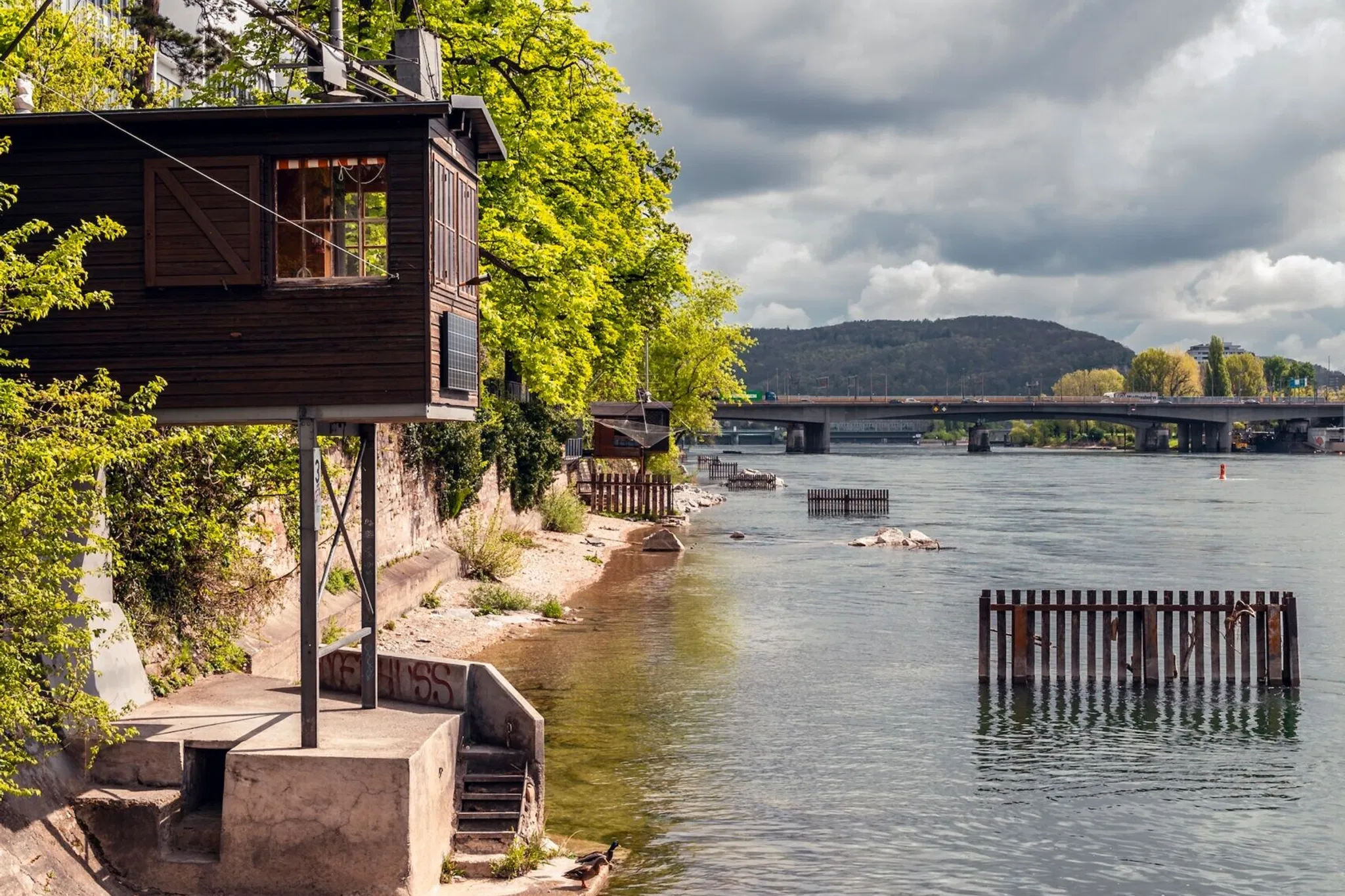
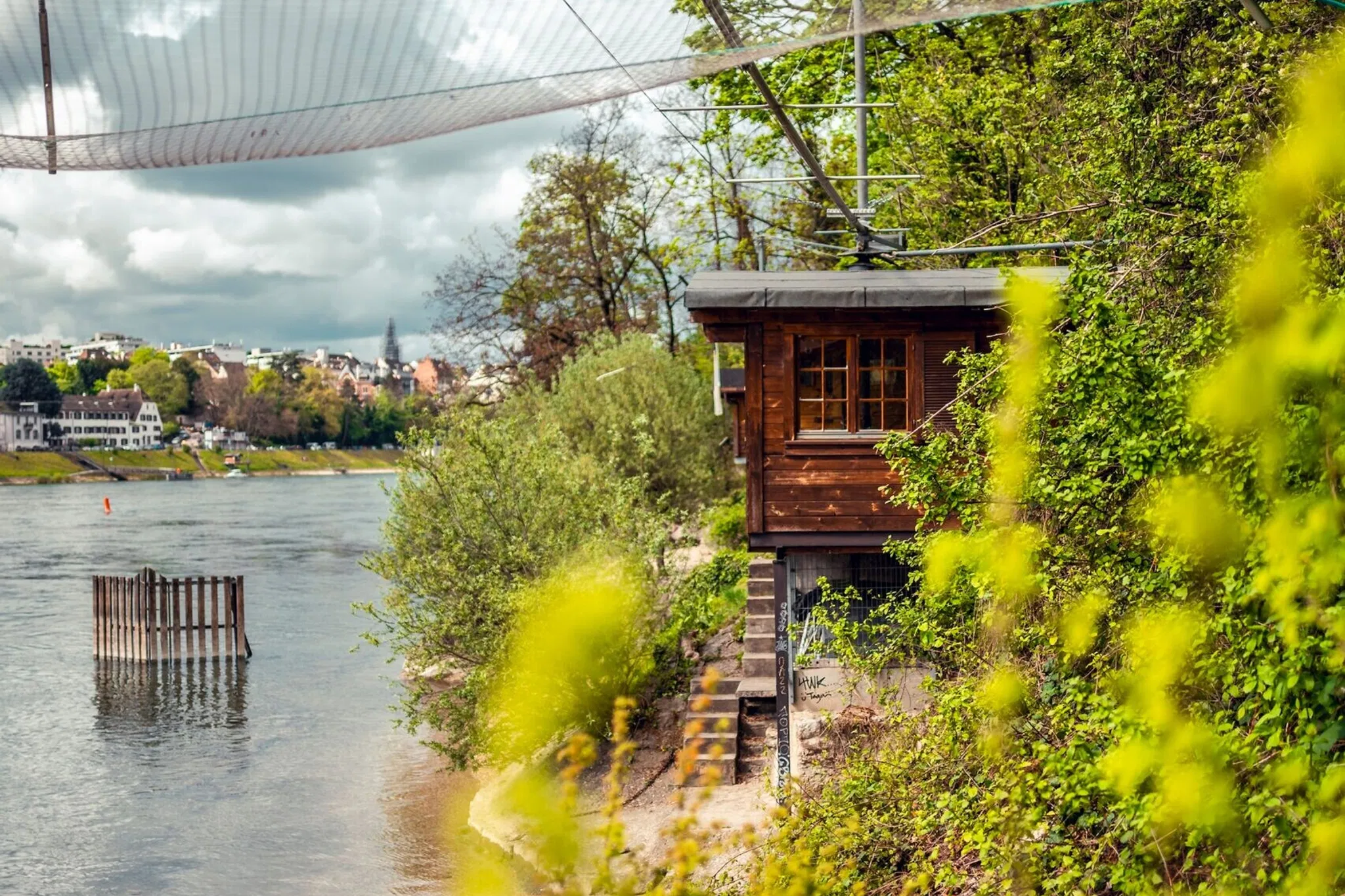
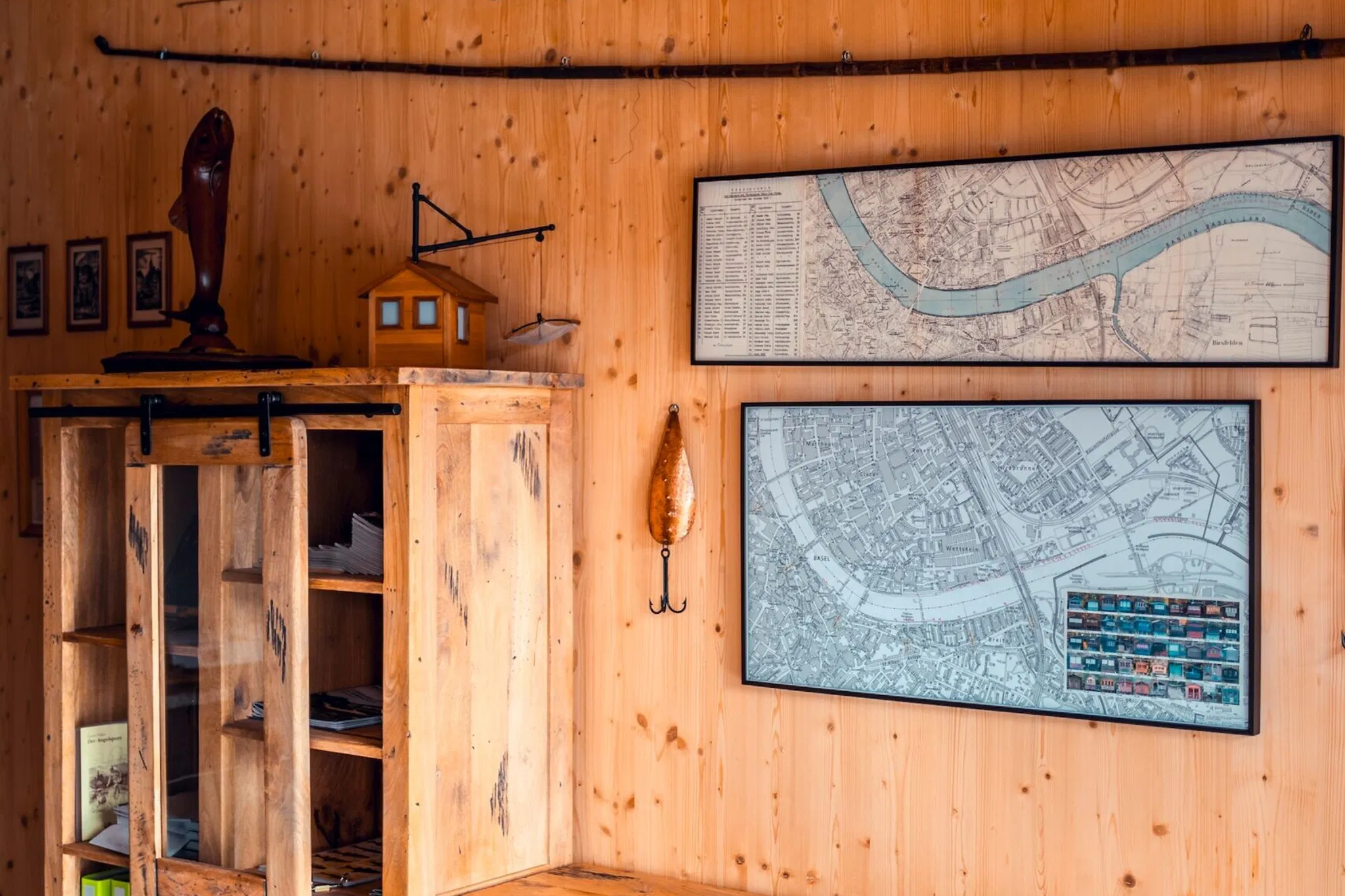
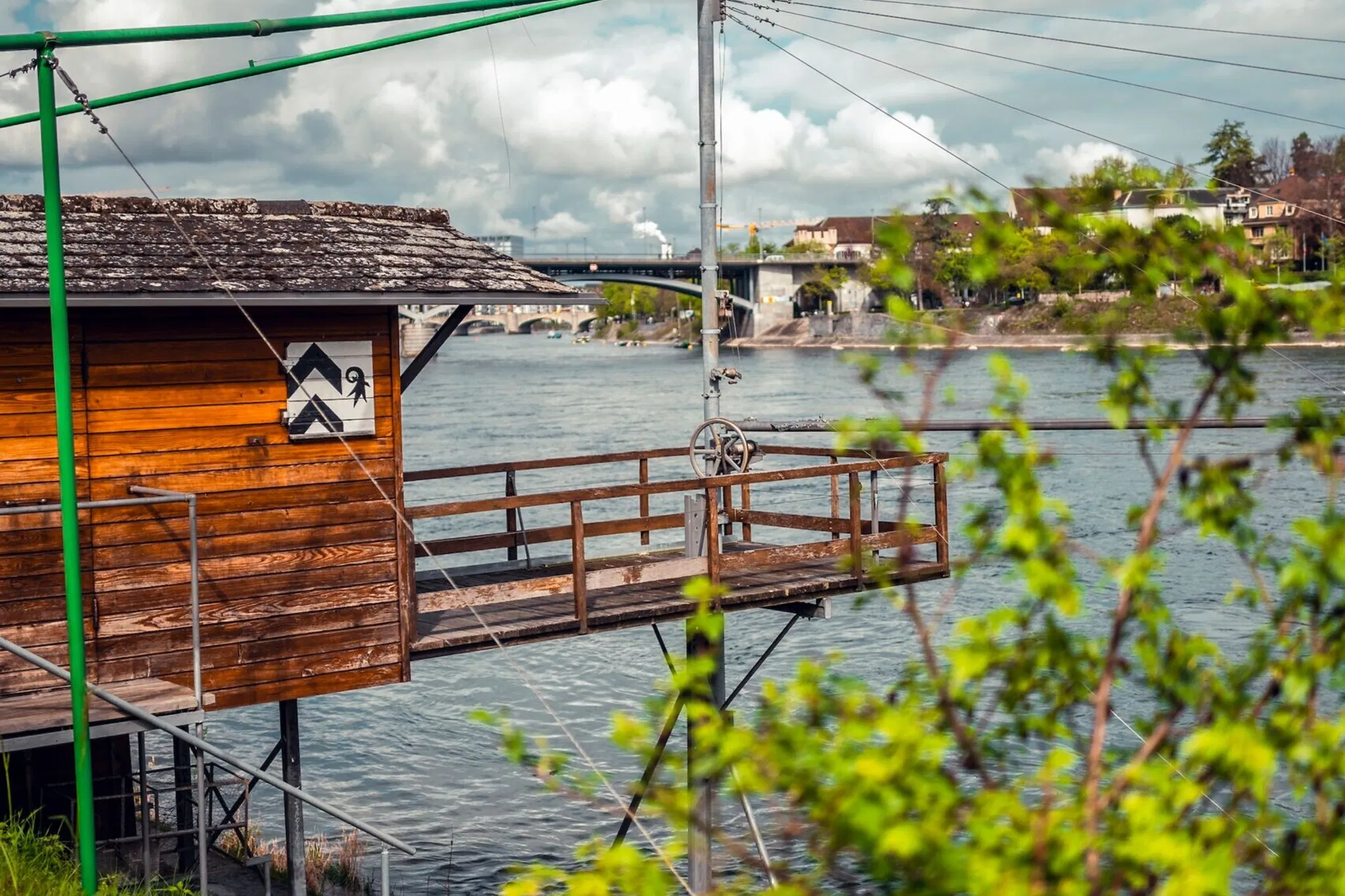
Basel and the Rhine – a love story not just about the ferries, the lively embankments and swimming down the river in the heat of the summer. The picturesque fishing gallows are another distinctive feature of this city at the bend in the Rhine. While the heavy cargo barges passing through represent the great wide world, the fishing gallows are unobtrusive markers, a source of local pride. They are the remnants of a centuries-old tradition of fishing the river with nets suspended from gallows and were recently added to the Swiss Federal Government Office of Culture’s list of “living traditions” worthy of preservation.
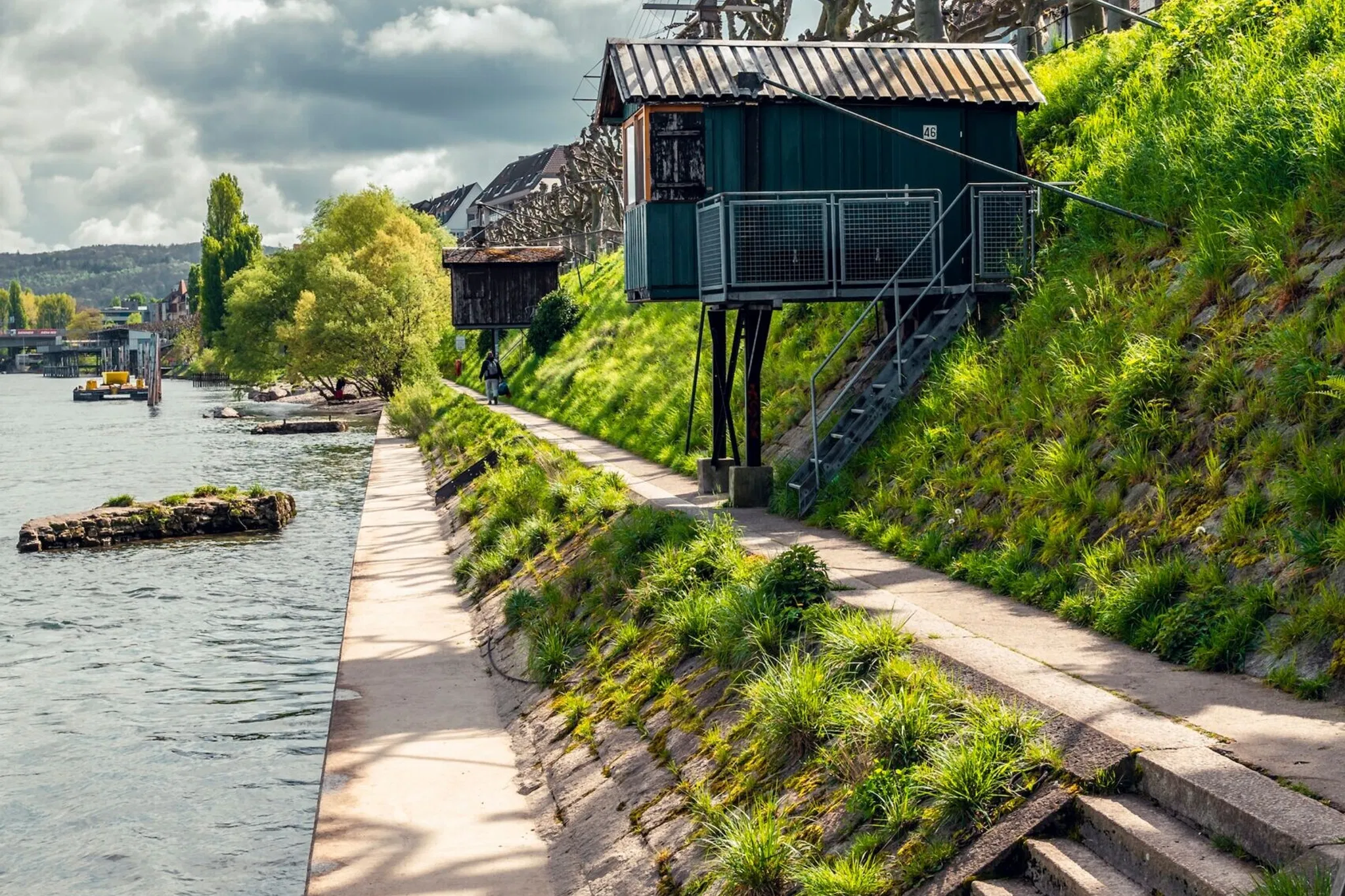
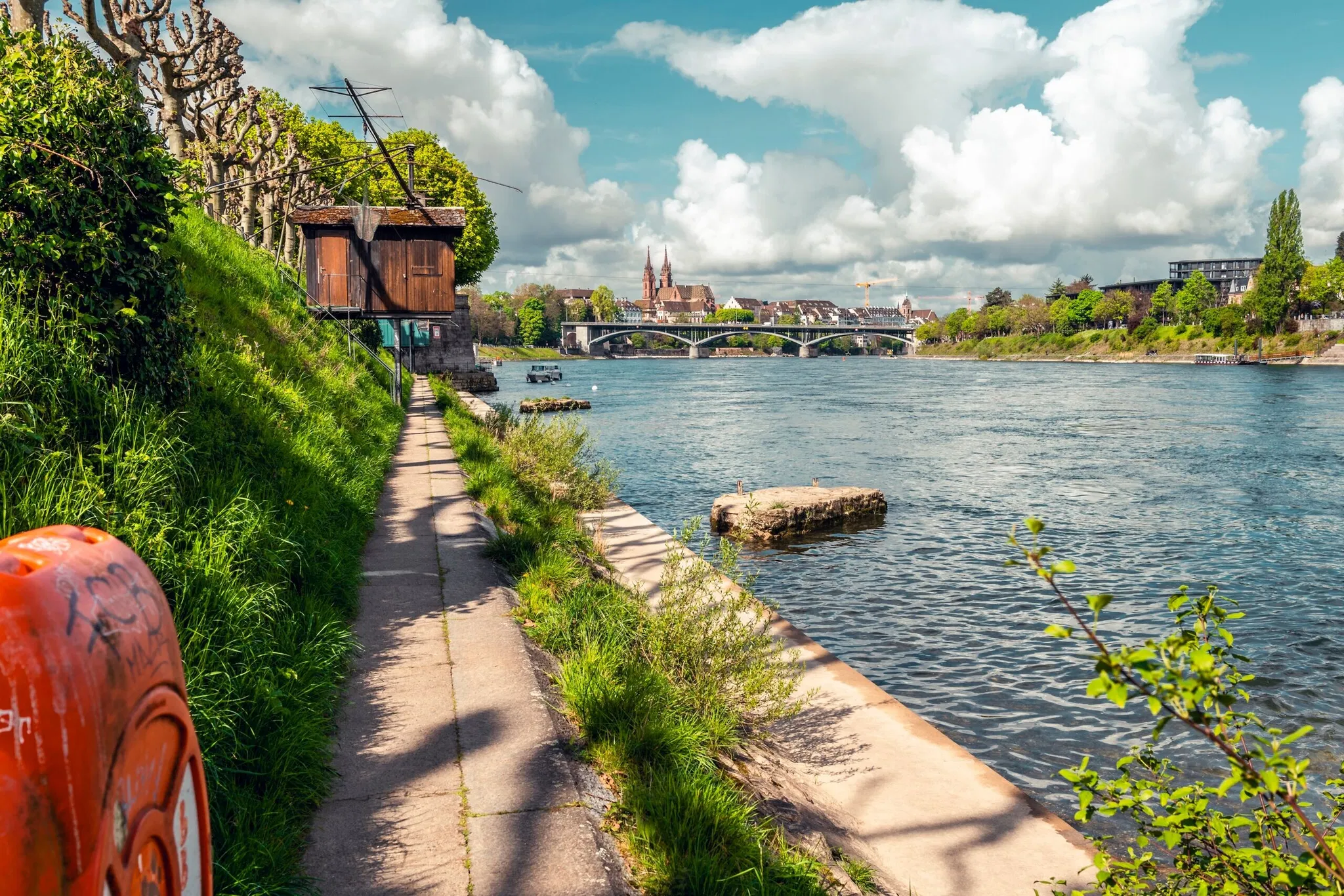
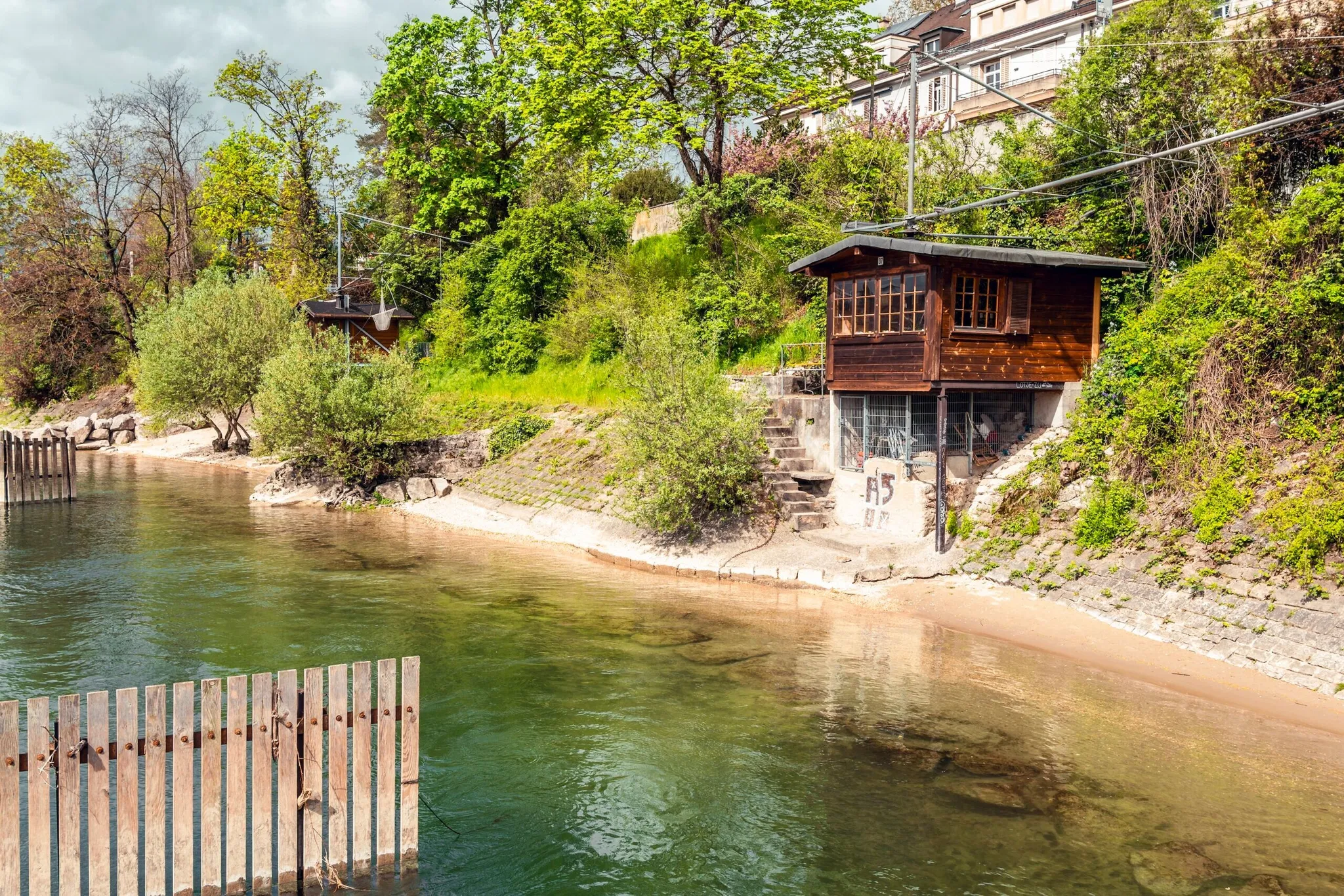
You can enjoy the loveliest view of the fishing gallows if you wander along the banks of the Rhine or if you take a trip down the river on the “Rhystärn”, the tour boat of Basel’s passenger boat service. You will notice how unique each gallows is, and how each one has its own special character. Some stand out thanks to their size and colouring, others are almost swallowed up by the vegetation growing around them, while some have their own private access to the Rhine.
Built on the water
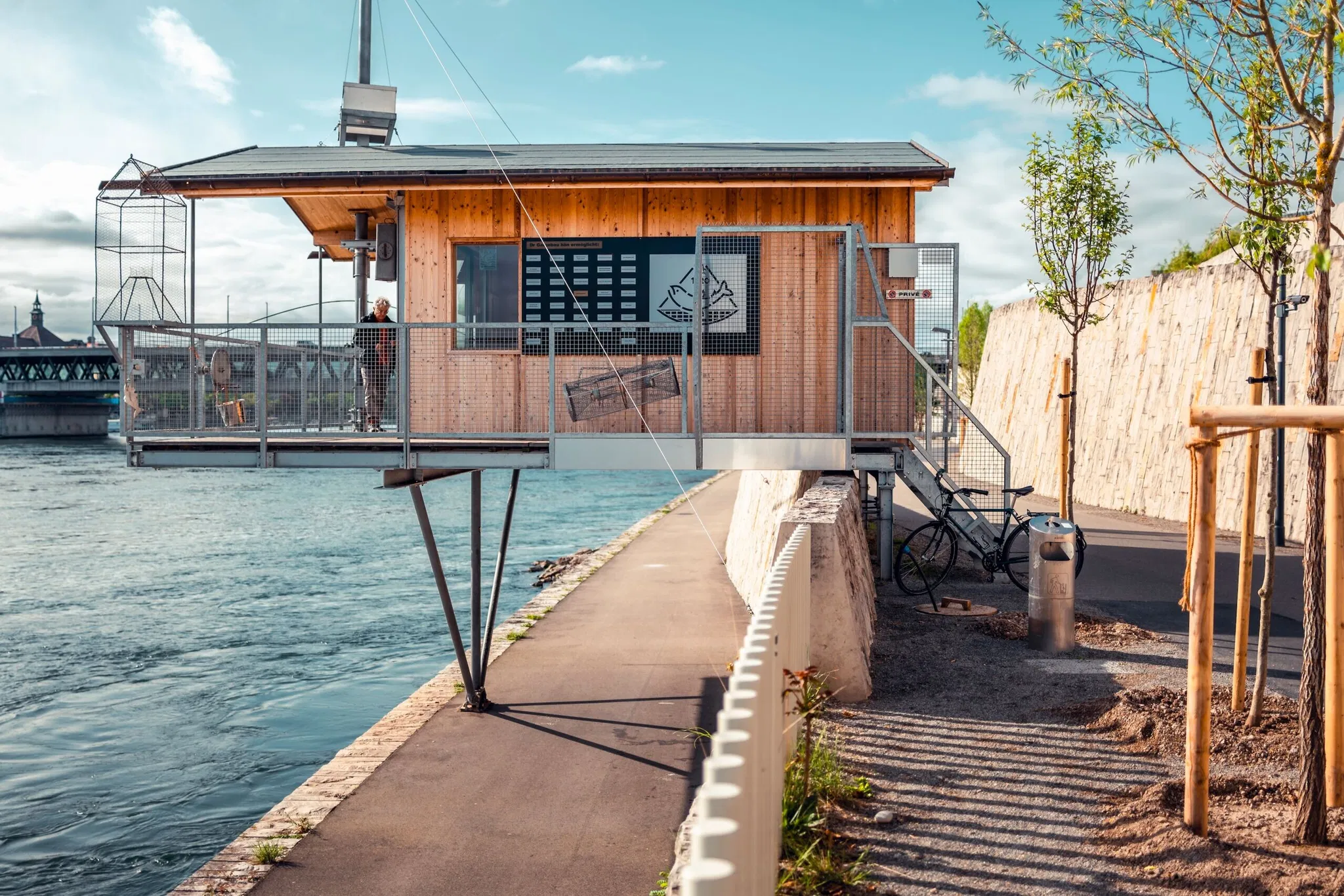
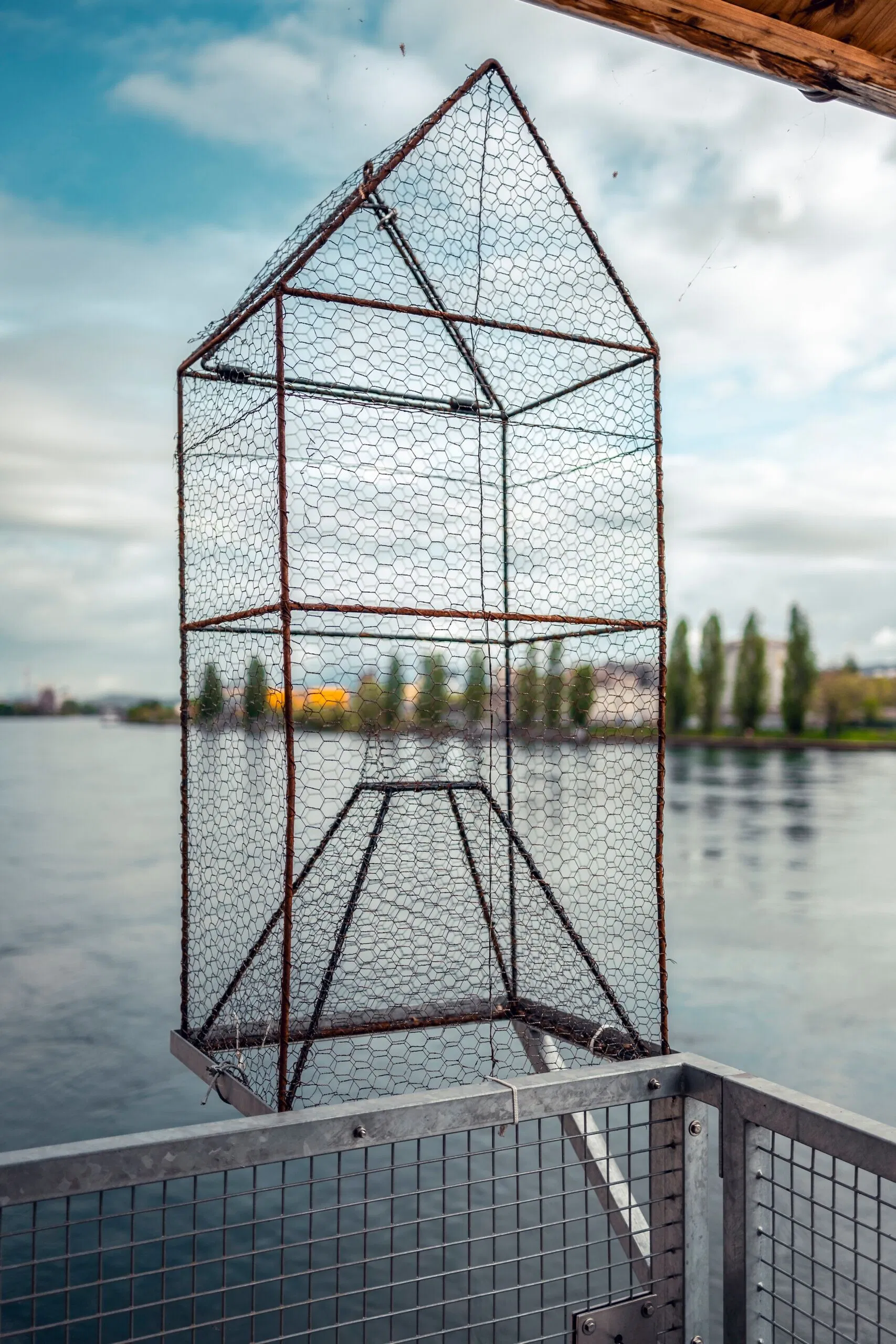
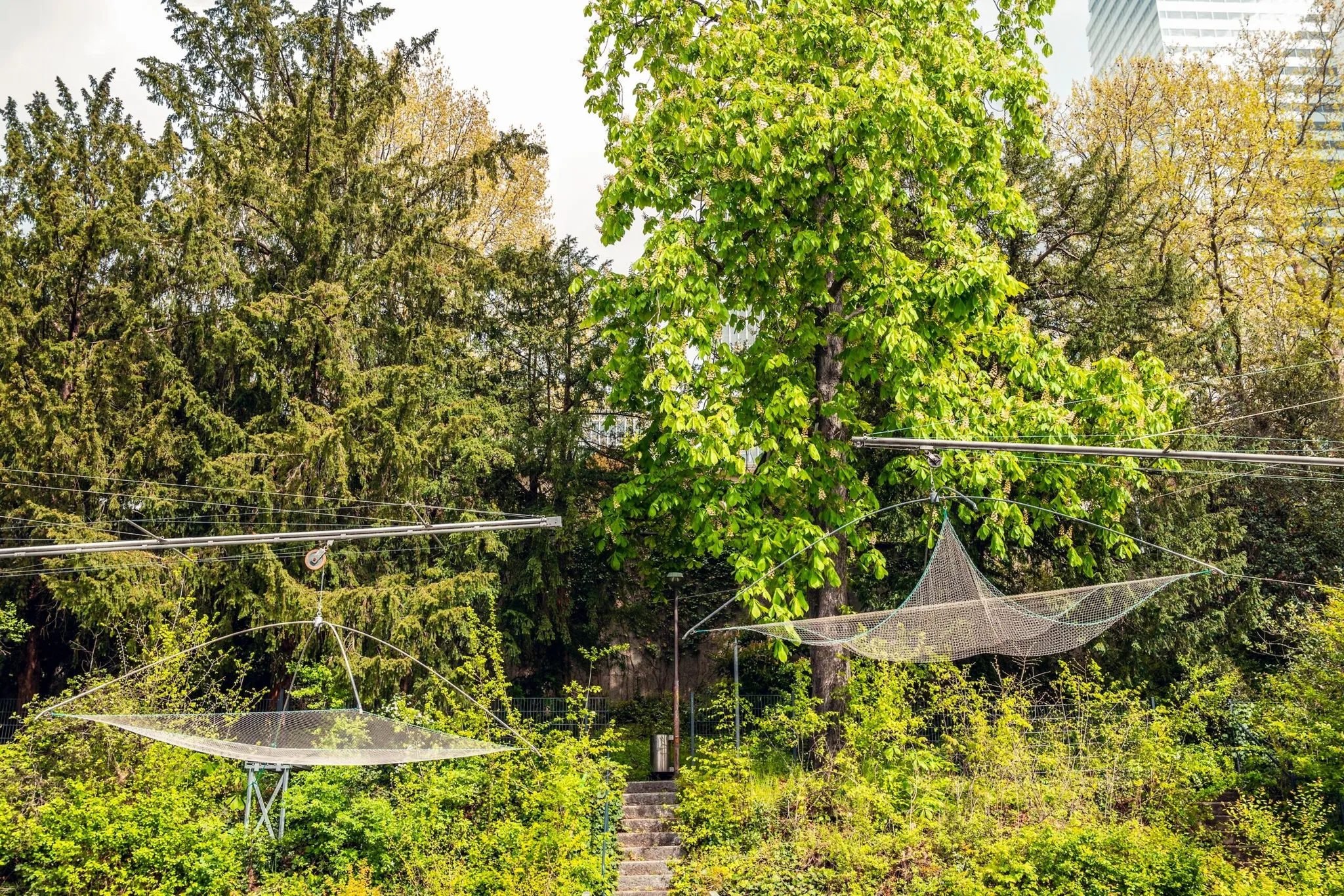
Rising out the water on supporting stilts which are embedded in the steep embankment, the fishing gallows have long been the perfect device for the fisherfolk of Basel to lower their nets out into the Rhine, allowing them to catch large swarms of fish and then hoist them up again with little effort. The gallows emerged in the Middle Ages as so-called “Salmenwaagen” (salmon troughs) or “Fischwaagen” (fish troughs) derived from the word “Woog” in the local dialect. This term refers to “deep points” in the river and is not related to the German word “Waage” meaning a set of scales, as one might be tempted to assume. The term originated at a time when salmon were still abundant in the Rhine and it was possible to make a living from fishing them. The oldest locations of these “Salmenwaagen” can be traced back to the 14th century – and they have been a signature feature of Basel’s cityscape ever since, it's impossible to imagine the city without them.
Over the centuries these devices for hauling up the fish, initially very minimalistic, were gradually perfected and developed into the style of construction we are familiar with today, with the hauling device, the gallows, and a hut perched on a platform supported by stilts. The huts protect the gallows mechanism, anchored into the banks of the Rhine, from the weather. The 19th century was the highpoint with a large multitude of fishing gallows constructed along the upper Rhine between Laufenburg and Basel. More than 50 fishing gallows, scattered along the left and right banks of the Rhine in Basel, have survived. However, the construction of various hydroelectric power stations along the river and poisonous waste from the chemical industries in the area resulted in a sharp decline in the population of fish in the Rhine. For a while there have been a number of projects at a cantonal level and in collaboration with nature conservation and environmental protection organisations, aimed at bringing the salmon and other species of fish back to the bend in the river in Basel.
Preserving our heritage
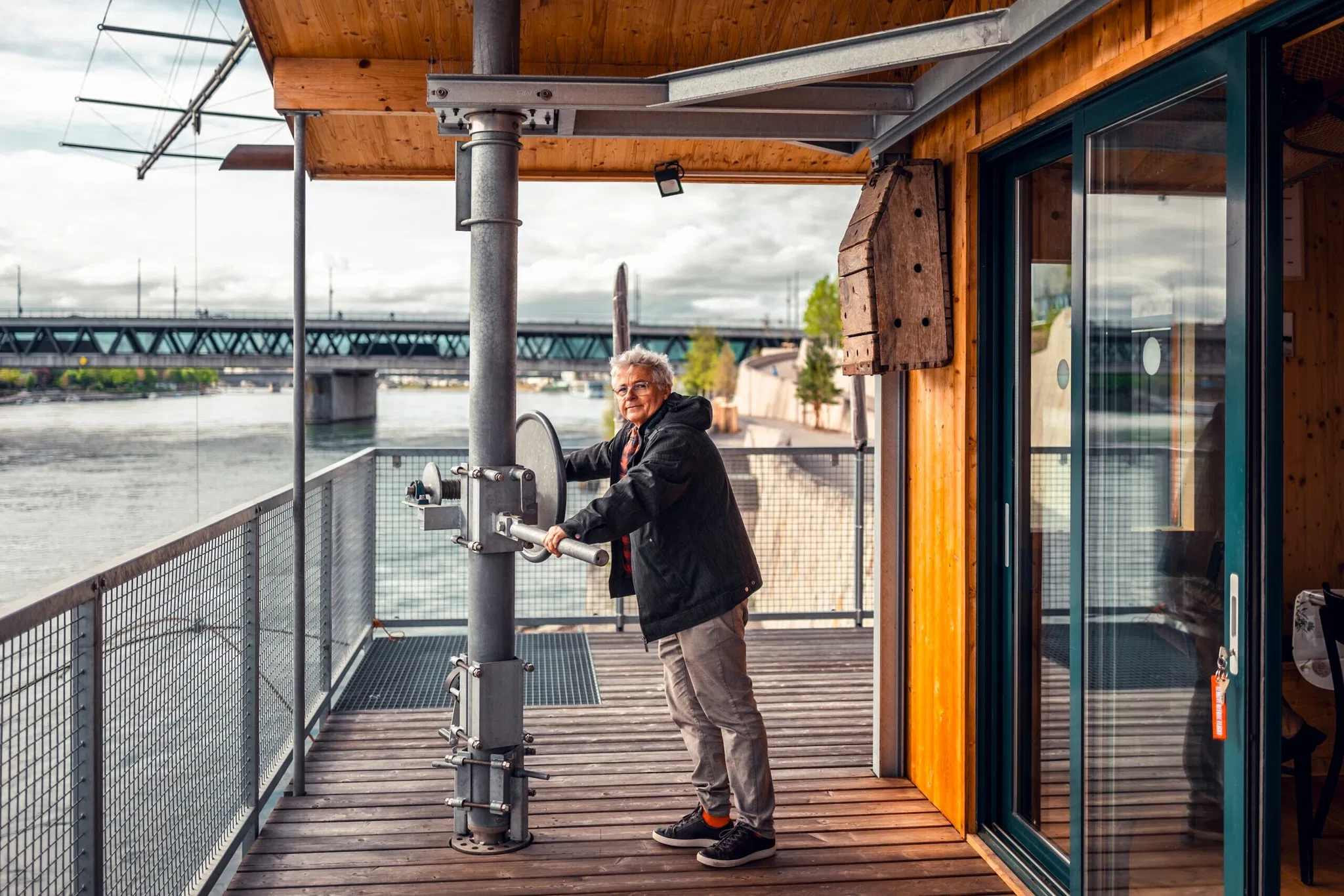
These charming little huts are symbols of the city’s romantic appeal, its history, and our commitment to preserving our heritage. There are plenty of people living in Basel who dream of having their own fishing gallows. What an irresistible notion? Enjoying a delightful sunset on a wonderful summer evening, with a view of the Rhine flowing peacefully by below, while you fish and barbecue with friends? You see! However, the Association of Basel’s Gallows Fisherfolk is dedicated to ensuring that these historic constructions are preserved in the spirit in which they were constructed and continue to function as originally intended, so they do not devolve into mere summer recreation spots along the Rhine. The association is dedicated not just to preserving the fishing gallows themselves, they also campaign against littering along the banks of the Rhine and for the protection of the species that inhabit it and for nature conservation. They also intervene when a fishing gallows becomes vacant, either by purchasing it themselves or mediation – to protect them from property speculators, and to thus preserve their longstanding, traditional purpose. Basel is famous for cherishing its traditions so there is hope that these most romantic emblems of Basel will continue to make their mark on the city’s landscape in their current picturesque form for many years to come.